
Tools
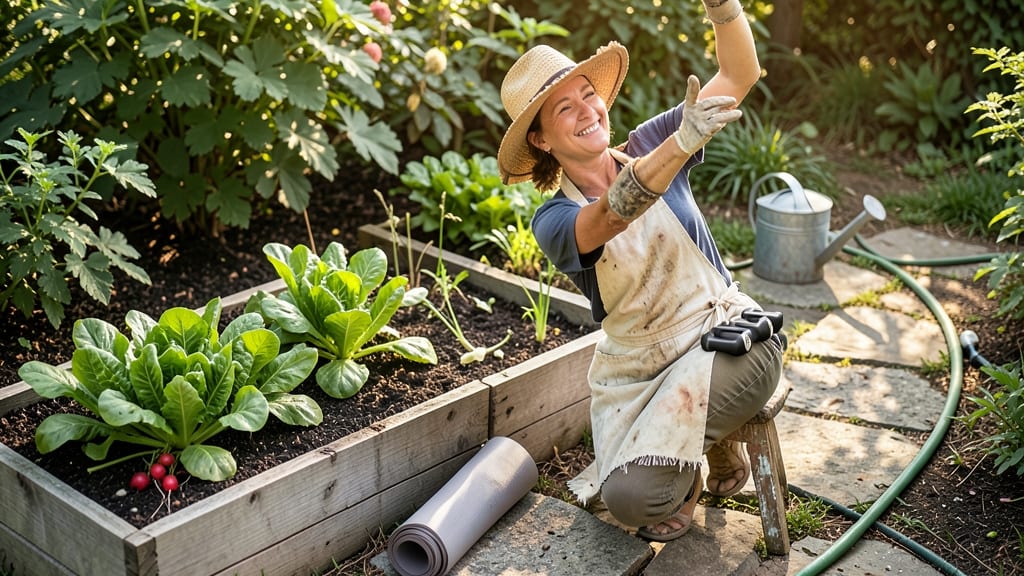
Gardening counts as good exercise because it works your arms, legs, and core while burning 200–400 calories per hour, improves flexibility through stretching motions, and boosts heart health when done continuously.
This outdoor activity isn't just about growing plants—it's a full-body workout disguised as relaxation. 🌱 The constant bending, lifting, and reaching engage muscles you might not use in traditional gym routines, while the rhythmic motions build endurance over time.
I've noticed that even light gardening sessions can elevate my heart rate, especially when tackling larger projects like moving soil or pruning thick branches. The key is consistency: treating it like a workout rather than a chore transforms your yard into a fitness space.
What makes gardening particularly effective is how it combines strength, flexibility, and cardiovascular exercise naturally. Unlike many workouts that isolate specific muscle groups, gardening creates a balanced challenge that improves overall physical health.
For example, pushing a wheelbarrow strengthens your core and legs, while reaching for high branches works your shoulders and back. The beauty of this exercise is that it feels productive while delivering real fitness benefits—no gym membership required!
💡 In This Article
- How Gardening Works as a Full-Body Workout
- Maximizing Exercise Benefits While Gardening
How gardening works as a full-body workout
Gardening activates muscles you might not even realize you're using. When you dig or pull weeds, your quadriceps, hamstrings, and glutes engage to stabilize your stance and generate force—similar to squats but with dynamic movement.
Meanwhile, your core muscles work overtime to maintain balance while bending or twisting, especially when reaching for tools or plants.
Even your shoulders and upper back get a workout from lifting bags of soil or maneuvering pruners, with studies showing gardening can engage up to 200 muscles depending on the tasks you perform.
The calorie-burning potential comes from how these movements create continuous motion. A 30-minute session of moderate gardening (like planting flowers or weeding) burns about 150-200 calories, while more intense tasks (such as hauling mulch or digging trenches) can push that to 300-400 calories per hour.
This aligns with the American College of Sports Medicine's guidelines for moderate physical activity—where gardening often falls into the 3-6 METs (metabolic equivalents) range, comparable to brisk walking or light cycling. The cardiovascular benefits kick in when you sustain these motions for longer periods, gradually increasing your heart rate.
Flexibility improves naturally through gardening's repetitive stretching motions. Reaching for high branches stretches your hamstrings and calves, while kneeling to plant seeds engages your hip flexors and lower back. Over time, these movements enhance your range of motion—something many traditional workouts overlook.
What's fascinating is how gardening combines strength, endurance, and flexibility in one activity, making it a functional, whole-body exercise that mimics real-life movements better than many gym routines. 🌿
The intensity varies dramatically by task. Light gardening (like trimming or watering) may feel more like a leisurely walk, while heavy-duty work (digging, moving rocks, or carrying bags of compost) can rival a strength-training session.
For example, a study in the Journal of Physical Activity and Health found that digging for 30 minutes burns roughly the same calories as a 20-minute jog—but with added resistance benefits from the soil's weight.
Even "passive" tasks like raking provide resistance training when you adjust your grip or lean into the motion.
One often-overlooked benefit is the low-impact nature of gardening. Unlike running or jumping, which can stress joints, gardening's varied movements distribute impact across multiple muscle groups while protecting your knees and ankles. This makes it an excellent option for people recovering from injuries or those with joint concerns.
The outdoor setting also adds mental health perks—sunlight exposure boosts vitamin D levels, while fresh air improves lung capacity over time, creating a synergistic effect where physical and mental benefits reinforce each other.
To visualize the muscle engagement, imagine this breakdown during a typical gardening session:
- Legs: Digging (quads, hamstrings), kneeling (calves, shins)
- Core: Twisting motions (obliques, lower back), stabilizing posture
- Arms/Shoulders: Lifting tools (biceps, deltoids), pushing wheelbarrows (triceps)
- Grip Strength: Holding pruners or trowels (forearms, hands)