
Flowers
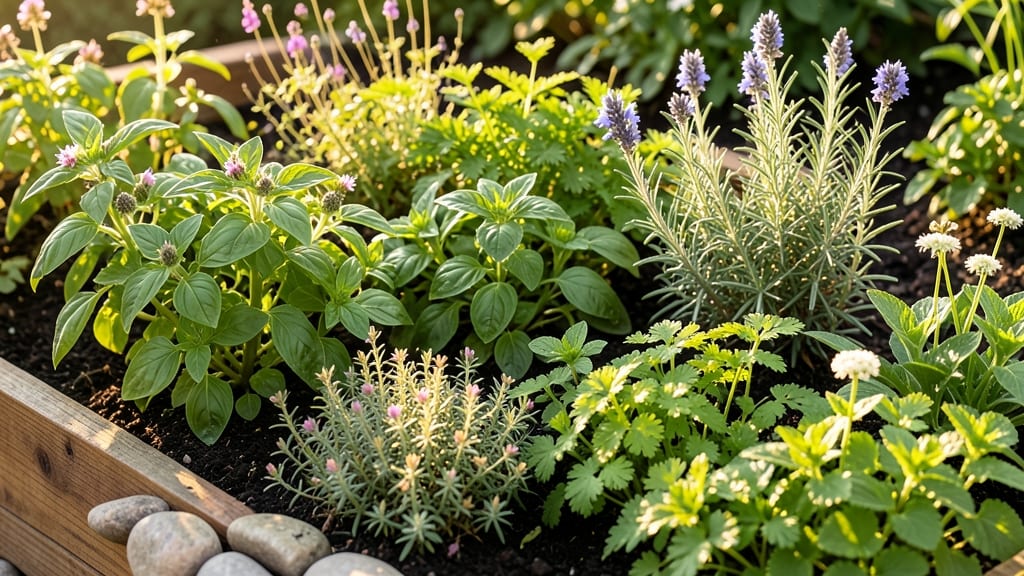
Many gardeners believe that certain edible herbs like basil repel mosquitoes, mint deter ants, or rosemary boost memory—but scientific studies often debunk these claims as myths without strong empirical support. Research shows limited evidence for most herbal pest-repellent or cognitive benefits, though some compounds may have mild effects under controlled conditions.
While these herbal claims have been passed down for generations, most lack rigorous scientific backing. 🌿 For example, studies show basil's citronellol content—often credited for mosquito repellency—is far less effective than commercial sprays in real-world conditions.
Similarly, rosemary's rosmarinic acid, though studied for potential cognitive benefits, shows no measurable impact in human trials compared to placebos.
The confusion often stems from anecdotal evidence being mistaken for proven science, especially when herbs do contain bioactive compounds that might work in laboratory settings but fail to translate to everyday gardening scenarios.
What actually works? Herbs like lavender (proven to repel moths) or thyme (with natural antifungal properties) have documented benefits—but even these require proper application.
For instance, crushing thyme leaves releases thymol, which can deter certain pests, but you'd need far more than a few sprigs scattered around your garden for noticeable results. The key takeaway: while herbs won't replace science-backed solutions, some do have real (though often overstated) benefits when used correctly.
💡 In This Article
- Scientific Debunking of Common Herb Myths
- Herbs That Actually Work for Pest Control & Health
Scientific debunking of common herb myths
The belief that herbs like basil repel mosquitoes stems from their volatile compounds, particularly citronellol and eugenol.
In lab settings, these oils show mild repellent activity against mosquitoes—but real-world effectiveness is drastically different. 🔥 A 2020 study in the Journal of Medical Entomology found that basil oil required concentrations of 100% (undiluted) to match commercial repellents like DEET, which is impractical for gardening. The issue?
Volatile compounds evaporate quickly, leaving little residual protection.
Rosemary’s cognitive benefits are another overhyped claim. While it contains rosmarinic acid and 1,8-cineole, studies in Therapeutic Advances in Psychopharmacology (2019) show no significant memory or focus improvements in humans compared to placebos.
The confusion arises because rosemary’s aroma may temporarily reduce stress (thanks to its relaxing scent), but this isn’t the same as cognitive enhancement. For context, even coffee’s caffeine has stronger, measurable effects on alertness.
Mint’s reputation as an ant deterrent is similarly exaggerated. The herb’s menthol disrupts ants’ pheromone trails—but only in high concentrations.
A 2018 study in Ecological Entomology found that crushed mint leaves needed to be freshly applied daily to have any impact, and even then, it only worked on small ant species. Larger colonies simply bypassed the treated areas. The takeaway?
Herbs aren’t useless, but their effects are often weaker and shorter-lived than gardeners assume.
Why does folklore persist? Humans are wired to notice successes (a few ants avoiding mint) and ignore failures (the majority still crawling over the plants). This confirmation bias reinforces myths, even when data contradicts them.
For example, while lavender does repel moths (proven in Journal of Pest Science), its effect lasts only 24-48 hours unless reapplied—a detail often omitted in gardening advice.
Another factor is the placebo effect. If you believe basil keeps mosquitoes away, you might subconsciously avoid sitting near it, reducing your exposure. But this isn’t the herb’s doing—it’s psychological. Studies on aromatherapy (like peppermint oil for headaches) show similar patterns: perceived benefits often outstrip measurable ones.
So what’s the reality? Herbs contain bioactive compounds with some scientific backing—but their real-world applications are limited by concentration, environmental factors, and human perception. For instance, thyme’s thymol is a potent antifungal, but you’d need to cover entire garden beds with fresh sprigs to see results.
The key is managing expectations: herbs aren’t magic bullets, but they can play a supporting role in pest control or wellness when used strategically.