
Advice
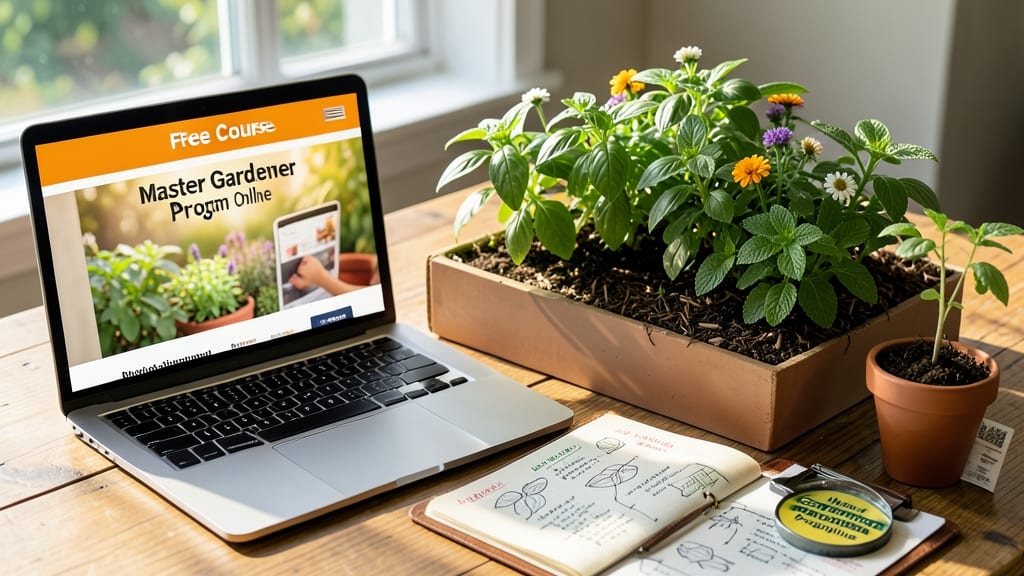
Free online master gardener courses exist through university extension programs like Penn State’s Master Gardener Online, delivering self-paced lessons on plant science, pest control, and eco-friendly gardening—though official certification often requires a fee.
University extension programs offer these courses as a public service, blending research-backed knowledge with practical skills. 🌱 The curriculum typically includes plant biology, soil health, and organic pest management—topics that help gardeners troubleshoot problems without harmful chemicals.
Many programs also partner with local nurseries to provide real-world resources, making the learning experience hands-on even from home.
For those seeking certification, some programs waive course fees but charge for exams or mentorship. Others provide free access to all materials while offering paid upgrades for official credentials. Always verify the provider’s affiliation with a land-grant university to ensure credibility.
💡 In This Article
- How University Extension Programs Offer Free Gardening Education
- Top Free Online Gardening Courses for Beginners and Experts
How university extension programs offer free gardening education
University extension programs provide free gardening education as part of their public service mission, rooted in the 1862 Morrill Act that established land-grant universities. These programs receive federal and state funding to share research-based knowledge with communities, bridging the gap between academic science and everyday gardening.
For example, Penn State Extension developed its Master Gardener Online course to reach gardeners nationwide, leveraging digital platforms to reduce costs while maintaining high-quality content. This model ensures that even rural gardeners—who might lack access to local experts—can learn from university-backed resources. 🌱
The curriculum design balances theory and practice by integrating interactive modules, video demonstrations, and downloadable guides. Courses typically cover 10-15 core topics, including plant physiology, soil science, and integrated pest management, with each module taking 2-4 hours to complete.
What sets these programs apart is their use of peer-reviewed research—lessons are updated annually to reflect the latest findings, unlike many commercial courses that rely on outdated or anecdotal advice. For instance, Penn State’s program includes modules on climate-smart gardening, teaching techniques to adapt to changing weather patterns.
Accredited pathways often require a fee for certification, but the free coursework remains accessible to all. This two-tiered system allows learners to sample content first before committing to exams or mentorship programs.
For example, Cornell’s Learn@Home offers free courses on topics like composting and pruning, while its paid certification adds hands-on workshops and a final project. The key difference lies in credibility: university-affiliated courses carry the weight of institutional research, whereas non-accredited programs may lack scientific rigor or local relevance.
Always check for logos like the National Gardening Association or state extension seals to verify legitimacy.
Partnerships with local organizations further enhance these programs. Many universities collaborate with master gardener volunteers to create regional forums where students can ask questions and share photos of their gardens. This community aspect turns passive learning into an active network—something you won’t find in standalone online courses.
For example, UC Master Gardeners pairs its online modules with virtual office hours led by certified experts, offering personalized feedback on everything from pH testing to disease diagnosis. This hands-on support is a hallmark of extension programs, making them uniquely valuable for both beginners and seasoned gardeners.
Another advantage is the flexible pacing of these courses. Unlike rigid semester-based classes, extension programs let you learn at your own speed, with some offering mobile-friendly formats for on-the-go access.
For instance, Penn State’s platform allows you to pause videos, bookmark lessons, and even download materials for offline study—a feature critical for gardeners juggling seasonal tasks. This adaptability ensures that even busy professionals or retirees can engage without feeling overwhelmed. The result?
A learning experience tailored to real-life gardening challenges, not just textbook theory. ✨
For those skeptical about free education, remember: these programs don’t cut corners. The instructors are often PhD-trained horticulturists or certified master gardeners who volunteer their time to mentor students. The trade-off? You’ll need to self-direct your learning—there’s no instructor-led chat or graded assignments in the free tiers.
But for the cost of zero dollars, you gain access to knowledge that would otherwise require hundreds in tuition. It’s a win-win for both your garden and your wallet.