
Tools
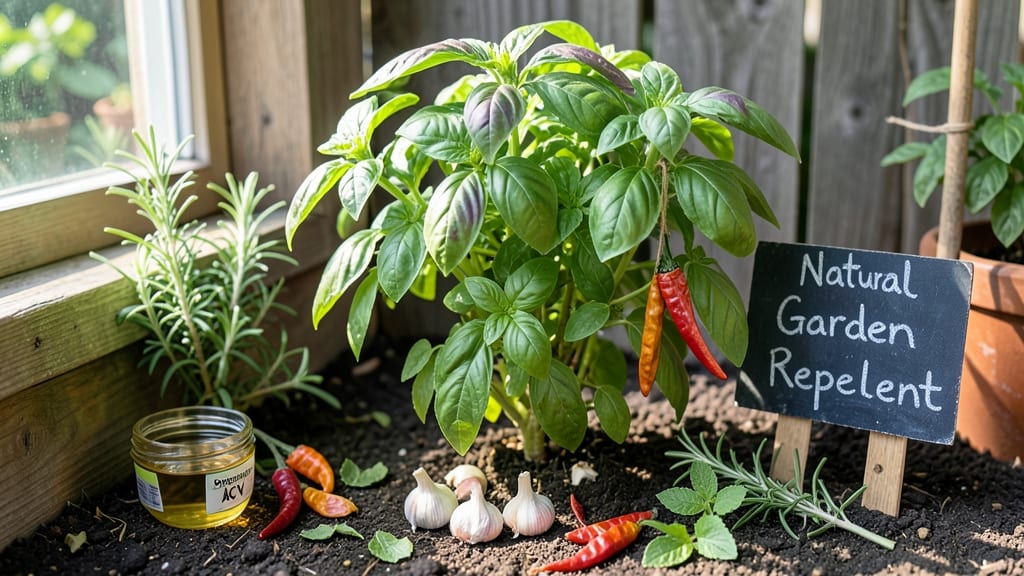
Creating natural garden repellents effectively deters pests like aphids, deer, and rabbits using plant-based ingredients such as garlic, chili peppers, or essential oils—these blends form safe sprays that protect your garden while being non-toxic to humans and pets when prepared correctly. Always test on a small plant area first.
These homemade sprays work by leveraging the natural chemical properties of plants that pests find offensive. 🌿 For example, the sulfur compounds in garlic disrupt aphid feeding patterns, while capsaicin in chili peppers creates a barrier that deer avoid.
I've found that combining ingredients like citrus oils with water creates a potent, long-lasting solution when stored in a spray bottle. The key is consistency—reapply every 7-10 days during peak pest seasons, and always use in the early morning or evening when pests are most active.
What sets these repellents apart is their dual benefit: they protect your plants while avoiding the harsh chemicals found in commercial pesticides. Many gardeners swear by adding a few drops of dish soap to the mix—it helps the solution stick to plant surfaces longer.
Just remember to shake well before each use, as some ingredients may separate over time.
💡 In This Article
- How Essential Oils and Plant Extracts Work as Pesticides
- Best Homemade Garden Repellent Recipes by Pest Type
How essential oils and plant extracts work as pesticides
Natural repellents disrupt pests through chemical signals that mimic predator cues or create sensory discomfort. Take capsaicin in chili peppers—it triggers burning sensations in mammals like deer and rabbits, while also repelling insects by overstimulating their olfactory receptors.
Similarly, garlic's sulfur compounds (like allicin) interfere with aphids' ability to detect host plants, confusing their feeding patterns. These compounds work best when applied directly to foliage or soil, where pests encounter them during foraging.
The effectiveness varies by pest type because different species rely on distinct senses.
For example, deer avoid strong smells like citrus oils (limonene) or predator urine, while flying insects (such as aphids) are deterred by visual cues like neem oil's yellow residue that disrupts their landing patterns. 🌿 The key is understanding each pest's sensory vulnerabilities—deer rely primarily on scent, while insects combine smell with visual and tactile cues.
This is why a deer repellent might use rotten egg smell (hydrogen sulfide), while an aphid spray focuses on sticky, aromatic oils.
Scientific studies show that these natural compounds often work synergistically when combined. A 2019 study in the Journal of Economic Entomology found that mixing neem oil with garlic extract increased aphid deterrence by 40% compared to either ingredient alone.
The reason? Neem's azadirachtin disrupts insect hormones, while garlic's sulfur compounds create a double barrier that pests find overwhelming. However, not all combinations work—some essential oils (like eucalyptus) can harm beneficial insects if overused.
Temperature and humidity also affect performance. Most natural repellents work best in moderate climates (50-85°F), where evaporation rates are balanced. In hot, dry conditions, oils may evaporate too quickly, while in high humidity, they can dilute and lose potency.
This is why early morning applications are ideal—the cooler temperatures help ingredients adhere better to plant surfaces. Always store repellents in dark glass bottles to prevent oil degradation from sunlight.
What most gardeners overlook is the psychological impact on pests. For instance, rabbits avoid areas where they detect fox or coyote urine because it signals danger. Similarly, deer learn to avoid plants with strong, unfamiliar scents through associative memory.
The more consistently you apply these repellents, the stronger this learned avoidance becomes. 💫 This makes regular reapplication (every 7-10 days) just as important as the initial spray.
For best results, pair these repellents with cultural controls like companion planting. For example, marigolds (which contain pyrethrin) naturally repel nematodes while their scent confuses aphids. The combination of chemical repellents and physical barriers creates a multi-layered defense that's far more effective than either method alone.
Always test new blends on a small leaf first—some plants (like lavender) are sensitive to essential oils.