
Planting
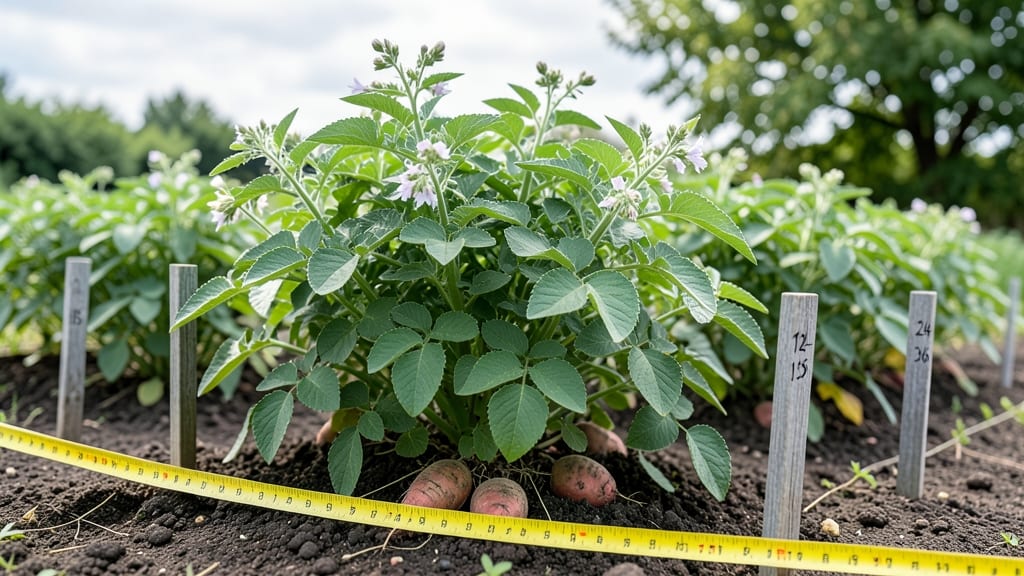
Spacing potatoes in your garden the right way is the difference between a bountiful harvest and a handful of small, misshapen tubers 🥔.
Struggling to get a bountiful potato harvest? The secret isn’t just in the soil—it’s in the spacing. Too close, and you’ll battle blight and stunted growth; too far apart, and you waste precious garden real estate. I’ve seen both mistakes firsthand, and the results are frustrating.
This guide breaks down the ideal spacing for rows, hills, and depth, tailored to your potato variety and garden size. Whether you’re working with a small raised bed or a full plot, you’ll learn how to maximize yield without inviting disease into your crop.
From adjusting spacing for early vs. late varieties to fixing common mistakes, you’ll walk away with a clear plan to grow healthier, bigger potatoes—and fewer headaches at harvest time.
Optimal potato spacing by variety: rows, hills, and depth explained
Potatoes thrive when given the right space to grow, but spacing needs vary dramatically between early-season, mid-season, and late-season varieties. Cramming plants too close leads to disease outbreaks and stunted tubers, while spacing them too far wastes garden real estate.
The key is balancing air circulation, soil access, and tuber expansion—and it all starts with understanding your potato's growth habits.
Most gardeners plant potatoes in hills or rows, but the dimensions change based on maturity. Early varieties like Yukon Gold need less room than late-season Russets, which send vines sprawling and develop larger tubers.
Even the planting depth matters: too shallow, and tubers turn green; too deep, and they struggle to emerge. Let's break down the science-backed spacing for each type to maximize your harvest.
Why spacing matters: Proper spacing ensures tubers aren't competing for nutrients, reduces blight risk by improving airflow, and makes harvesting easier. For example, early potatoes (60-75 days to harvest) can handle tighter spacing, while late potatoes (90+ days) need room to grow massive tubers. Think of it like giving each plant its own "territory" underground and above.
For row spacing, aim for 18-36 inches between rows depending on variety. This gives you room to hill soil (mound soil around stems) as plants grow, encouraging more tuber formation. Early varieties can handle 12-inch rows, while late-season types need 36 inches to prevent vine competition.
Pro tip: Use a stake or marker to track row centers—this keeps spacing consistent and makes future hill-building easier.
When building hills, start with a 12-inch base for early potatoes and expand to 24 inches for late varieties. Hills should be 4-8 inches tall (depending on maturity) and spaced to match row widths.
For example, if rows are 24 inches apart, place hills 12 inches from each row edge. This "centered" approach maximizes soil contact for tubers while minimizing waste. Think of hills as mini-mounds that guide tuber growth downward.
Depth is often overlooked, but planting too shallow (2 inches) risks green tubers (toxic solanine), while planting too deep (6+ inches) can delay emergence. Aim for 3-5 inches deep, with the rose end up (the side with sprouts).
Use your finger to create a small trench, place the seed potato with sprouts facing up, then cover with soil. For heavy clay soils, add compost or sand to improve drainage—this prevents rot and encourages even tuber formation.
One common mistake is assuming all potatoes need the same spacing. For instance, fingerling varieties (like French Finger) can be planted 4 inches apart in rows 12 inches apart, while Russet Burbanks need 18 inches apart in 36-inch rows.
Always check the seed packet for variety-specific guidance. If you're mixing types, group them by maturity to simplify care—early potatoes can be harvested first, leaving room for later varieties to fill the space.
To visualize spacing, imagine a grid system: rows run north-south for even sunlight, and hills follow an egg-crate pattern within rows. This creates uniform airflow and makes it easier to spot pests or diseases early.
For example, in a 10x10-foot plot, you could fit 4 rows of late potatoes (36-inch spacing) with 4 hills per row, yielding about 16 plants. Adjust based on your garden size—small gardens benefit from vertical growing or interplanting with shallow-rooted crops like lettuce.
Finally, don’t forget to hill soil as plants grow—this is how you create more space for tubers. When vines reach 6 inches tall, mound soil around the stem up to the leaves.
Repeat every 2-3 weeks until the hill reaches 8-12 inches tall. This simple act can double your yield by encouraging tubers to form at multiple soil levels. Just avoid piling soil against
How to adjust spacing for small gardens vs. large plots
Your garden size shouldn’t limit your potato harvest. Whether you’re working with a 4x4-foot raised bed or a 100-square-foot plot, adjusting spacing is key to maximizing yield. In small spaces, every inch counts, while large plots need strategic spacing to prevent disease and competition.
For urban containers or small raised beds, I recommend planting seed potatoes 6-8 inches apart in rows just 12 inches apart. This tight spacing works because containers limit root spread, and potatoes grow vertically. Just be ready to harvest earlier to avoid overcrowding underground.
In large commercial plots, standard spacing of 12-18 inches apart in 3-foot rows is ideal. This gives tubers room to grow without competing for nutrients, reducing blight risk. For early varieties, closer spacing (12 inches) works, while late-season types benefit from wider gaps (18 inches).
🌱 Spacing Cheat Sheet for Potatoes
| Garden Type | Plant Spacing | Row Spacing | Best For |
|---|---|---|---|
| Urban Containers | 6-8" | 12" | Early varieties |
| Small Raised Beds | 8-12" | 18" | Mid-season types |
| Large Plots | 12-18" | 36" | Late-season varieties |
💡 Pro Tip: Use companion planting (e.g., beans or marigolds) to save space and deter pests in tight gardens.
For small gardens, try interplanting potatoes with fast-growing crops like radishes or lettuce. These shallow-rooted plants mature before potatoes need full space. In larger plots, stagger planting times by 2-3 weeks to extend harvests and avoid overcrowding at peak growth.
Always hill soil around plants as they grow to encourage deeper tuber formation. In containers, mound soil to the rim of the pot by harvest time. This trick boosts yield even in limited space by directing energy downward.
Remember: disease prevention is just as important as yield. Tight spacing increases humidity, creating perfect conditions for blight. Always space rows wider than plants to improve airflow, and avoid planting potatoes in the same spot yearly to break disease cycles.