
Landscaping
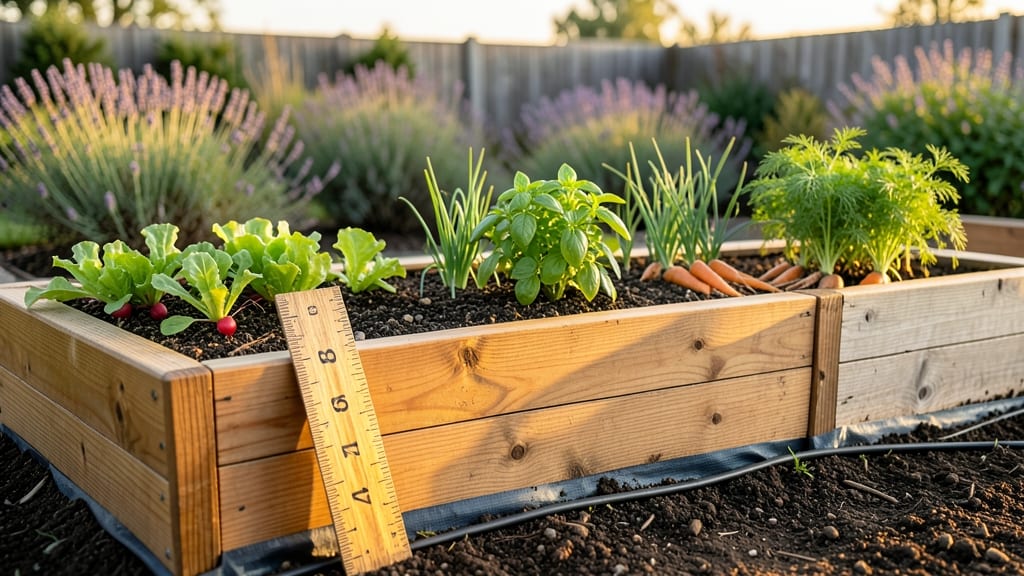
The ideal raised garden bed height depends on your plants, soil needs, and how you plan to use the space.
Struggling to decide how tall your raised garden bed should be? The right height can mean the difference between thriving plants and wasted space—or even poor drainage that stunts growth.
Too shallow, and your deep-rooted veggies like tomatoes or carrots won’t get the space they need. Too tall, and you might deal with uneven soil moisture or back strain when tending to your 🌱 garden. Finding the balance is key to a productive—and easy-to-maintain—garden.
In this guide, I’ll break down the science behind optimal raised bed heights, how they impact drainage and plant growth, and how to customize your design for accessibility or specific crops.

Standard raised garden bed height guide for root depth & plant growth
Choosing the right raised garden bed height isn’t just about aesthetics—it directly impacts your plants’ root development and overall health. Most gardeners default to 6-12 inches for shallow-rooted plants like lettuce or herbs, while deeper beds (12-18 inches) support heavy feeders like tomatoes or carrots.
The key is matching your bed height to the root depth requirements of what you’re growing.
For example, carrots need at least 12 inches of soil to grow fully, while basil thrives in just 6-8 inches. A bed that’s too shallow can stunt root growth, while one that’s too deep may waste space and increase moisture retention risks.
Let’s break down the science behind these heights and how they affect your garden’s success.
Here’s a quick reference for ideal raised bed heights based on plant types, including common vegetables, herbs, and flowers:
A 12-inch bed is the most versatile choice for most home gardens. It accommodates 75% of common vegetables while keeping costs down on materials like lumber or bricks. For instance, tomatoes and peppers benefit from this depth because their roots spread wide but don’t need extreme depth.
Meanwhile, shallow-rooted herbs like thyme or oregano can share the space without competition.
If you’re growing deep-rooted plants like potatoes or artichokes, consider a 18-inch bed. These plants need extra room to develop their storage roots or taproots.
For example, asparagus crowns require at least 12 inches of loose soil to establish properly, but deeper beds (18+ inches) yield faster and more abundant spears. Just be mindful of moisture retention—deeper beds can stay soggy longer if drainage isn’t addressed.
For accessibility, a 6-inch bed might seem tempting, but it’s only suitable for shallow-rooted annuals like radishes or lettuce. Even then, you’ll need to rotate crops frequently to avoid soil depletion.
I’ve found that adding a 4-inch layer of compost to a 6-inch bed can extend its usability for slightly deeper-rooted plants like green beans or bush peas.
Don’t overlook the materials you’re using for your raised bed. Cedar or redwood are popular choices, but their thickness affects the usable soil depth.
For example, a 2x6 board is about 1.5 inches thick, so a bed framed with these boards will have less soil volume than one built with 1x12 boards. Always account for this when planning your bed’s dimensions.
Another critical
How raised garden bed height affects drainage & soil temperature
Choosing the right raised garden bed height isn’t just about aesthetics—it directly impacts how well your plants thrive. The soil temperature and drainage efficiency vary dramatically between shallow and deep beds, especially in different climates.
For example, a 6-inch bed warms up faster in spring, while a 12-inch bed retains moisture longer and resists erosion better during heavy rains.
Deeper beds also create a microclimate that protects roots from extreme temperature swings. In hot summers, deeper soil stays cooler longer, while in cold winters, it insulates roots better than shallow beds.
Meanwhile, shallower beds dry out faster, which can stress shallow-rooted plants like lettuce or herbs but works well for drought-tolerant varieties.
| Height Range | Drainage Efficiency | Soil Temperature | Best For |
|---|---|---|---|
| 6–9 inches | Moderate (faster drying) | Warms quickly in spring | Herbs, lettuce, strawberries |
| 10–12 inches | Good (slower drainage) | Stable, less extreme temps | Vegetables, flowers, perennials |
| 14–18 inches | Excellent (deep root zone) | Cooler in summer, warmer in winter | Trees, shrubs, deep-rooted veggies |
One of the biggest myths is that taller beds always mean better drainage. While it’s true that deeper beds reduce erosion and improve water retention, they can also become waterlogged if not amended with compost or sand.
I’ve found that adding a 2-inch layer of gravel at the bottom of deeper beds helps prevent soggy soil while still allowing roots to spread.
For soil temperature control, shallower beds are ideal in cold climates because they warm up faster in spring, giving early starts to cool-season crops like peas or spinach.
In contrast, deeper beds in hot climates protect roots from overheating, which is why I always opt for 12-inch beds in my Zone 8 garden during summer months.
If you’re growing deep-rooted plants like asparagus or tomatoes, a 14-inch bed is non-negotiable—their roots need that extra space to establish. But for shallow-rooted herbs like thyme or oregano, a 6-inch bed is perfect and warms up faster for earlier harvests.
Always consider your local climate and plant needs before finalizing height.
Pro tip: If you’re unsure, start with a 10-inch bed—it’s versatile enough for most vegetables while balancing drainage and temperature well. You can always adjust with mulch or shade cloth later if needed. 🌱