
Tools
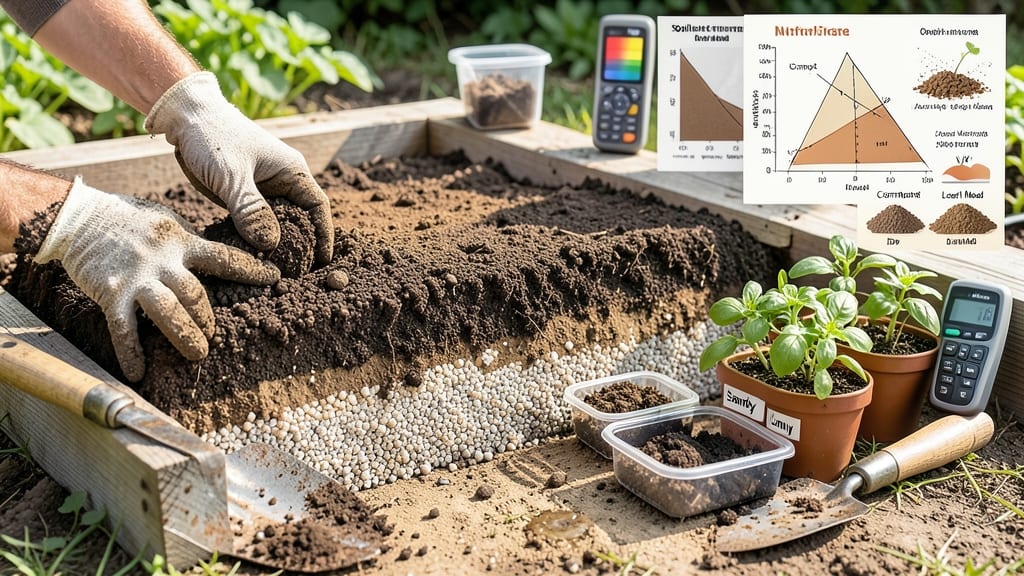
For raised vegetable gardens, the ideal soil composition blends equal parts topsoil, compost, and coarse sand or perlite to balance drainage and nutrient availability, while adjusting ratios for specific plants like nutrient-hungry leafy greens or root crops needing looser soil.
The perfect soil mix for raised vegetable beds isn't one-size-fits-all. 🌱 A balanced foundation of topsoil (for structure), compost (for nutrients), and perlite/sand (for aeration) creates an environment where roots thrive, but different plants have unique needs.
Leafy greens like spinach benefit from extra compost to support rapid growth, while root vegetables such as carrots require looser soil to prevent deformities.
The key is testing your soil's pH and adjusting with amendments like lime or sulfur before planting—most vegetables prefer a slightly acidic to neutral range between 6.0 and 7.0.
What sets raised beds apart is their ability to maintain consistent moisture and temperature. Unlike in-ground gardens, you can control the soil's texture from day one, which is especially valuable in heavy clay or sandy native soils.
I've found that adding worm castings or aged manure further boosts microbial activity, breaking down organic matter faster and feeding plants continuously. For containers or smaller raised beds, consider pre-mixed organic vegetable garden soil blends that already include these components in optimal ratios.
💡 In This Article
- Key Soil Components for Raised Garden Success
- Custom Soil Mixes for Different Vegetable Types
Key soil components for raised garden success
The foundation of any thriving raised vegetable garden begins with understanding how each soil component plays a distinct role. Topsoil provides the structural base, offering essential minerals and a stable framework for root development.
A high-quality topsoil typically contains about 5-10% organic matter, which improves water retention while preventing compaction. For example, a 1 cubic yard of good topsoil might contain roughly 10-15 pounds of nitrogen, 5-10 pounds of phosphorus, and 10-20 pounds of potassium—critical nutrients for early plant growth.
Compost acts as the nutrient powerhouse, supplying microorganisms that break down organic material into plant-available forms. Well-aged compost can raise soil fertility by 2-3 times compared to native soil, while also improving moisture retention.
The texture of compost varies—coarse compost adds structure, while fine compost enriches the soil more uniformly. Vermicompost (worm castings) takes this further by containing beneficial microbes and enzymes that enhance root growth. When mixed at 20-30% by volume, compost creates an ideal balance between fertility and aeration. 🌱
Drainage and aeration come from amendments like perlite or coarse sand, which prevent waterlogging while allowing roots to access oxygen. Perlite expands when heated, creating tiny air pockets that improve root respiration—critical for deep-rooted plants like tomatoes.
A mix with 10-20% perlite can reduce compaction by up to 40%, while also preventing nutrient leaching during heavy rains. Vermiculite, another popular amendment, holds water and nutrients near plant roots, making it ideal for container gardens where moisture control is essential.
Organic matter isn't just about nutrients—it's about creating a thriving ecosystem.
Healthy soil contains billions of microbes per gram, including bacteria, fungi, and protozoa that decompose organic material and make nutrients available to plants. Mycorrhizal fungi, for instance, form symbiotic relationships with plant roots, increasing nutrient absorption by 20-30%.
Adding compost or well-rotted manure kickstarts this activity, while avoiding fresh manure prevents harmful ammonia buildup that can burn plant roots. The goal is a 5-10% organic matter content, which improves soil structure, water retention, and microbial diversity.
pH balance is often overlooked but crucial—most vegetables thrive in a 6.0-7.0 range. Soil testing reveals whether amendments like lime (to raise pH) or sulfur (to lower pH) are needed. For example, blueberries require pH 4.5-5.5, while tomatoes prefer 6.0-6.8.
Adjusting pH before planting ensures nutrients like nitrogen, phosphorus, and iron remain available to plants rather than becoming locked out in the soil.
Finally, consider the texture—ideal raised bed soil should resemble a crumbly, moist sponge when squeezed. This balance prevents water from pooling at the roots while retaining enough moisture for consistent growth. For heavy clay soils, adding 50% sand or perlite can transform compacted earth into a loamy, workable medium.
The result? Roots grow deeper, plants access nutrients more efficiently, and your garden becomes a self-sustaining ecosystem. 💫