
Tools
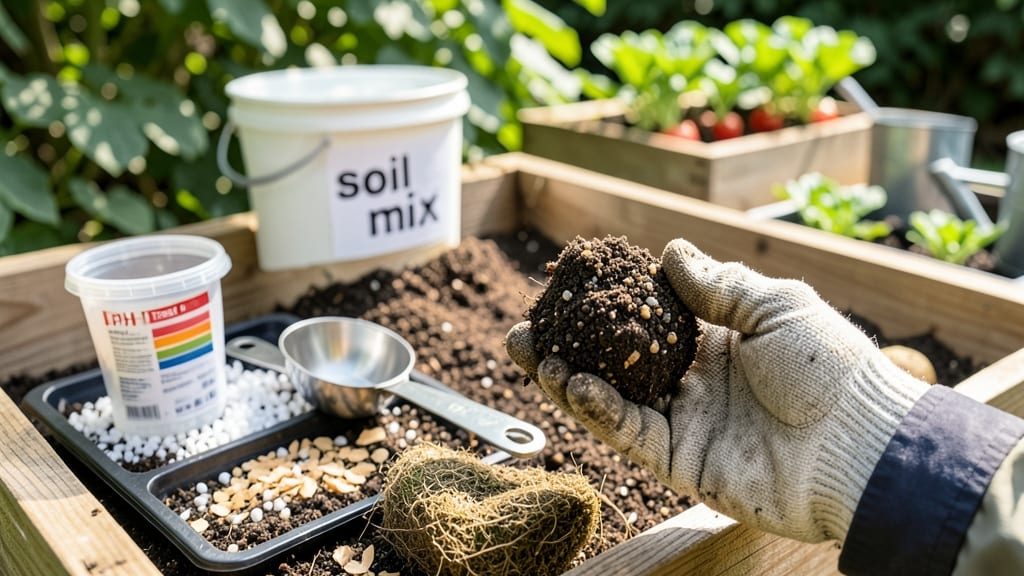
A soil mixture for vegetable gardens should combine topsoil, compost, and coarse sand or perlite in a 60-30-10 ratio for optimal drainage, aeration, and nutrient retention. Adjust based on your climate and plant types for best root development and yield.
Creating the right soil mixture for vegetable gardens starts with understanding how each component works together.
The 60-30-10 ratio balances structure and nutrition—topsoil provides the base, while compost feeds roots with organic matter and sand/perlite prevents compaction. 🌱 Different vegetables thrive in slightly varied mixes: leafy greens prefer moisture-rich blends, while root crops need faster-draining soil.
Testing your local soil’s pH (ideal: 6.0–7.0) helps fine-tune the mix further, ensuring nutrients are available when plants need them most.
For heavy clay soils, adding 30% perlite improves aeration, while sandy soils benefit from extra compost to retain moisture. Worm castings or peat moss can further enhance fertility for nutrient-hungry crops like tomatoes or peppers.
The key is customization—what works for a container garden in Arizona may differ from a raised bed in Oregon.
💡 In This Article
- How to Balance Soil Texture for Vegetable Root Health
- Layering Techniques for Custom Vegetable Garden Soil
How to balance soil texture for vegetable root health
The science behind your garden's success lies in soil texture, which directly impacts root oxygenation and nutrient uptake. Vegetable roots need a balance of air pockets (25-30% porosity) for oxygen and water retention without becoming waterlogged.
Topsoil provides the structural base, but its particle size distribution (typically 40% sand, 40% silt, 20% clay) often needs adjustment. Sandy soils drain too quickly, while clay soils compact and suffocate roots.
That's where the 30% compost comes in—it adds organic matter that improves water-holding capacity by 50% compared to mineral soil alone.
Coarse sand or perlite (the 10% component) plays a critical role in preventing compaction by creating larger air spaces between particles. Perlite, in particular, expands when heated to 1600°F during processing, creating a lightweight, porous structure that mimics natural aeration.
This is why container gardens often use perlite—it maintains 50% more air space than sand while being sterile and pest-free. The ideal texture should feel like a moist sponge: firm enough to hold shape when squeezed but crumbly enough to allow roots to penetrate easily.
pH levels between 6.0–7.0 ensure nutrients like nitrogen, phosphorus, and potassium are available in their most usable forms. For example, tomatoes thrive at pH 6.0–6.8, while blueberries need 4.5–5.2—this is why soil testing is crucial before planting.
You can test pH with a simple kit or send a sample to a local extension office.
If your soil is too acidic, add lime; if alkaline, use sulfur or elemental S. The goal is to create an environment where beneficial microbes can flourish, breaking down organic matter into plant-available nutrients.
Different vegetables have specific needs: leafy greens like lettuce prefer 40% organic matter for moisture retention, while root crops like carrots need 20% sand/perlite to prevent forking. Heavy feeders like corn benefit from additional worm castings (10% of the mix), which contain 5x more nutrients than regular compost.
The texture should also support microbial activity—healthy soil has 1 billion microbes per gram, which decompose organic matter and cycle nutrients for your plants.
Consider the sensory experience: healthy soil smells earthy with a hint of decaying organic matter (like a forest floor after rain), not foul or chemical. When tilled, it should break apart easily without clumping. If it feels gummy or smells like rotten eggs, it's too compacted or anaerobic.
The right texture creates a self-sustaining ecosystem where roots grow freely, microbes thrive, and nutrients cycle naturally—leading to 30-50% higher yields in optimal conditions.
For container gardens, this balance is even more critical since you can't amend the entire soil volume. Start with a sterile potting mix (50% peat moss or coco coir, 30% compost, 20% perlite) and add 1 cup of worm castings per 5 gallons for extra fertility.
The key is monitoring: if water runs straight through within minutes, add more compost; if it pools on top, incorporate sand or perlite. 🌱