
Tools
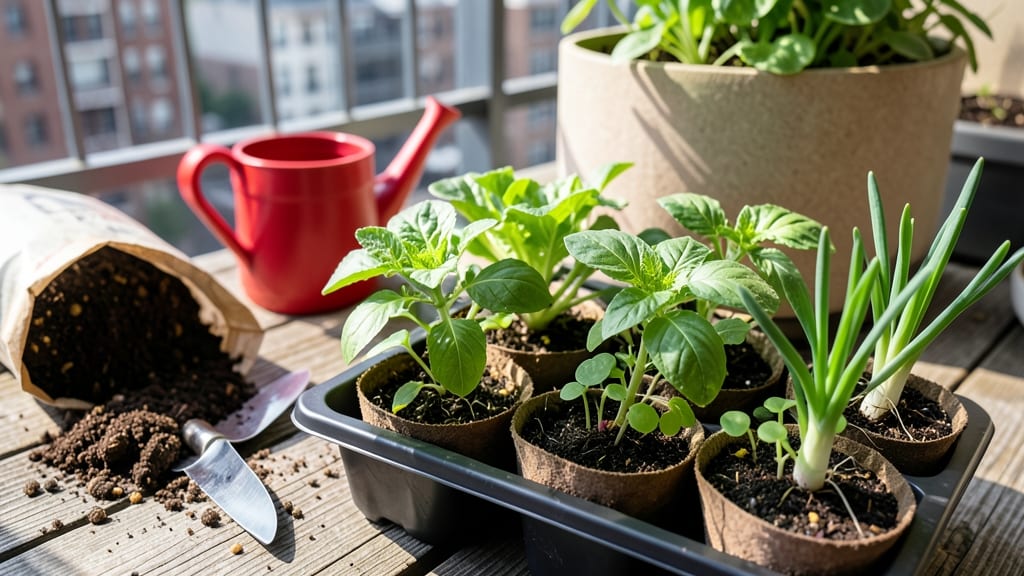
For urban gardening, select fast-growing seeds designed for small spaces like leafy greens (lettuce, spinach), herbs (basil, chives), and compact vegetables (radishes, bush beans). Opt for dwarf or bush varieties and look for 'early harvest' labels to get the most from limited growing areas.
Urban gardening thrives on efficiency, so seed selection is all about speed and space savings. 🌱 The right varieties can transform a tiny balcony into a productive harvest—think radishes in 30 days or bush beans in 60 days—while maximizing every inch of container or vertical space.
I always prioritize seeds labeled "compact" or "dwarf," as these are specifically bred to stay small without sacrificing yield. For example, cherry tomatoes like 'Tiny Tim' produce abundant fruit in 5-gallon pots, while 'Baby Bok Choy' matures in just 28 days for quick greens harvests.
What sets successful urban gardeners apart is their attention to seed packet details. Look beyond just the plant name to check days to maturity and plant spacing requirements—these numbers tell you exactly how much time and space each variety will demand.
Many urban seed packets now include container size recommendations, which can save you from trial-and-error planting. Pro tip: Start with seeds that offer multiple harvests, like lettuce or green onions, to get continuous yields from the same small footprint.
💡 In This Article
- Fast-Growing Urban Garden Seed Selection Criteria
- Top 10 Urban Garden Seeds for Small Yields
Fast-growing urban garden seed selection criteria
Urban gardening demands seeds that deliver results quickly and efficiently, which is why days to maturity is the most critical factor.
Fast-growing varieties like radishes (ready in 25-30 days) or bush beans (harvestable in 50-60 days) maximize your small space by turning it into productive growing areas faster than slower-maturing crops.
The science behind this is simple: shorter growth cycles mean you can succession plant—sow new seeds every 2-3 weeks—to maintain continuous harvests throughout the growing season. This is especially valuable in urban environments where space is limited and growing seasons may be short.
Seed packet labels contain hidden clues that reveal a variety's suitability for urban spaces. Look for plant spacing recommendations—many urban-friendly seeds are bred to grow just 4-6 inches apart, perfect for 5-10 gallon containers.
For example, 'Cherry Belle' radishes need only 1 inch between plants, while 'Blue Lake Bush Beans' thrive with 4 inches of spacing. These compact varieties prevent overcrowding, which leads to competition for nutrients and light, stunting growth.
The container size listed on packets (often marked with a pot icon) tells you exactly how much root space each plant needs—critical information when selecting pots or vertical planters.
Temperature sensitivity is another key consideration for urban gardeners. Many fast-growing seeds perform best in cool weather (like spinach and lettuce), while others thrive in warm conditions (like basil and bush beans).
Seed packets often include temperature ranges for germination and growth, which helps you time your plantings to match your local climate.
For instance, 'Black Seeded Simpson' lettuce germinates best at 60-70°F but bolts (goes to seed) quickly in temperatures above 80°F, making it ideal for spring or fall planting in most urban areas. This attention to temperature ensures your seeds don't waste precious space struggling to grow.
Vertical gardening opens up new possibilities for space-efficient seed selection. Look for vining plants that can be trained upward, like pole beans or cucumbers, which produce more in less horizontal space. These varieties grow along trellises or hanging pockets, freeing up valuable ground space for other crops.
The key is choosing seeds labeled as compact vining types, which stay manageable in small containers while still producing abundant yields. For example, 'Contender' bush beans grow just 2 feet tall and produce 10-12 pods per plant, making them perfect for balcony rail planters or vertical pockets.
Don't overlook the power of succession planting—a technique that lets you squeeze multiple harvests from the same small area. Fast-growing seeds like baby leaf lettuce (ready in 30 days) or bush peas (harvestable in 60 days) are ideal for this approach.
By staggering plantings every 2 weeks, you can maintain a steady supply of fresh greens or pods without expanding your garden's footprint. This method is particularly effective in urban settings where space is at a premium and every square inch counts toward productivity.
One often-overlooked detail is seed viability, especially for urban gardeners who may not have access to fresh seeds every year. Check the pack date on seed packets—most seeds remain viable for 1-2 years when stored properly in a cool, dry place.
For long-term storage, consider vacuum-sealing packets or using desiccants to maintain freshness. Fresh seeds germinate faster and more uniformly, giving you a head start in your small-space garden and maximizing your limited growing area's potential. 🌱