
Tools
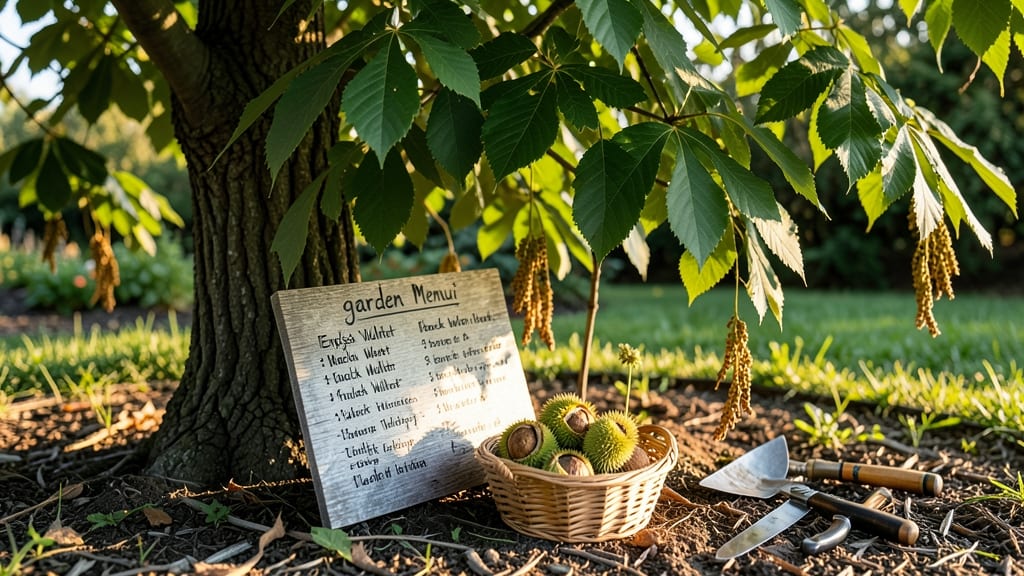
A walnut garden menu creates seasonal harmony by pairing fresh walnuts with dishes like salads, desserts, and rich sauces, while surrounding your trees with complementary plants to maximize yields. Plant walnut trees in early spring for fall harvests and add companion crops in spring or summer.
A walnut garden menu transforms your harvest into flavorful meals while supporting your garden's ecosystem. 🌱 Fresh walnuts shine in autumn dishes like walnut-studded salads or savory pesto, but their versatility extends to winter baking too.
The key is strategic planting: walnut trees thrive with clover or strawberries nearby, which improve soil nitrogen while protecting against pests. This dual approach ensures you get both your nuts and companion crops at their peak seasons.
For best results, start walnut trees in early spring—this gives them time to establish roots before fall's harvest. Meanwhile, plant fast-growing companions like lavender or lettuce in spring for summer yields, creating a balanced garden rhythm.
The walnut tree's deep roots won't compete with shallow-rooted plants, making this a win-win for both your table and your soil.
💡 In This Article
- Best Companion Plants for Walnut Trees in a Home Garden
- Seasonal Walnut Harvest Recipes for Garden-Fresh Meals
Best companion plants for walnut trees in a home garden
Walnut trees thrive when paired with the right companions because they share nutrients and protect each other from pests. Their deep roots (reaching 3-5 feet) create a microclimate that benefits shallow-rooted plants like strawberries and lavender.
These companions also help neutralize juglone—a natural toxin walnut trees release that can inhibit some plants. Strawberries, for example, are juglone-resistant and even improve soil nitrogen through their leaf litter, while lavender deters pests like aphids that might target walnut leaves.
The science behind this synergy involves mycorrhizal fungi—beneficial soil organisms that connect walnut roots with companions. This fungal network transfers water and nutrients between plants, particularly during dry spells when walnuts need deep hydration.
For instance, clover fixes atmospheric nitrogen, enriching the soil for walnut trees, while lettuce or radishes grow quickly in the walnut's dappled shade. Plant these companions 10-15 feet away from the tree's trunk to avoid root competition but stay within the canopy's protective shade.
Seasonal timing matters too. Start walnut trees in early spring (March-April) when soil temperatures reach 60°F, giving them a full growing season before fall harvests.
For companion crops, sow fast-growing lettuce or radishes in spring (they mature in 30-45 days) and strawberries in late summer (they establish roots before winter). This staggered planting ensures you harvest both walnuts (September-October) and companion crops throughout the year without overcrowding.
What most gardeners overlook is the juglone sensitivity of certain plants. Avoid planting tomatoes, potatoes, or blackberries near walnuts—their foliage can yellow and wilt from juglone exposure. Instead, opt for juglone-tolerant herbs like rosemary or thyme, which thrive in the walnut's dappled shade and repel pests.
These herbs also pair beautifully in walnut-based dishes, creating a seamless transition from garden to kitchen.
Consider this practical tip: If you're short on space, use container gardening for companions like basil or chives. Place these near the walnut's base where light filters through, and they'll grow lushly while adding flavor to your walnut harvest.
The key is balancing the walnut's needs with companions that complement its growth cycle—both above and below ground.
For advanced gardeners, try intercropping with cover crops like buckwheat in early summer. Buckwheat blooms quickly, attracts pollinators, and suppresses weeds before being tilled into the soil to boost organic matter. This method mirrors natural forest ecosystems where diverse plant layers coexist harmoniously, just like your walnut garden menu.
The result? A self-sustaining garden where walnuts and companions support each other, reducing the need for fertilizers or pesticides. Your harvest won't just be bountiful—it'll be a testament to nature's balance. 🌿