
Tools
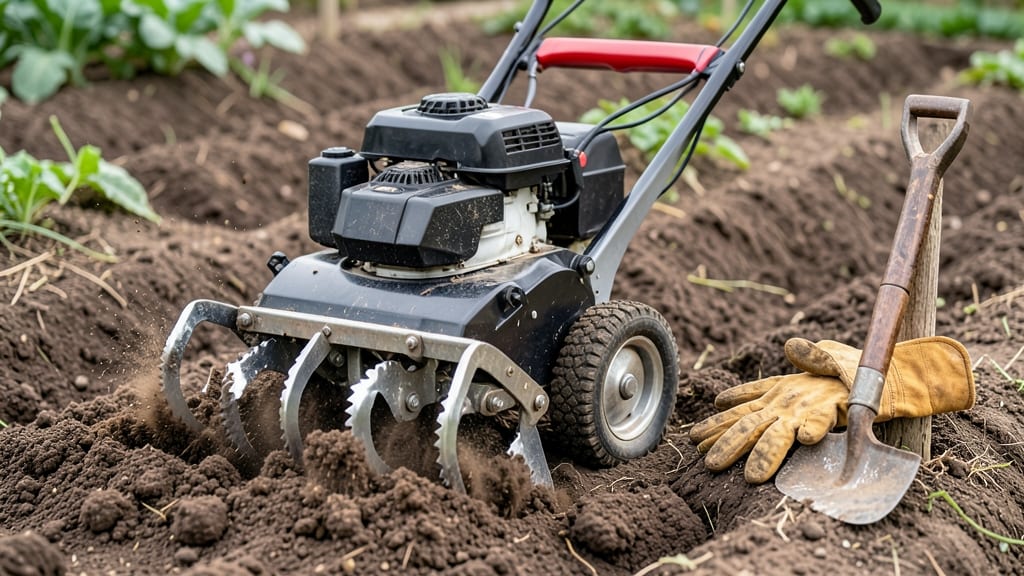
A garden cultivator is used for breaking up soil, aerating garden beds, and preparing planting areas while minimizing compaction. It efficiently loosens dirt, removes weeds, and blends organic matter for healthier plant growth without deep tilling.
A garden cultivator transforms your soil without the heavy work of tilling.
These tools create fine, crumbly soil perfect for planting by gently turning the top layer, which improves drainage and oxygen flow to roots. 🌱 Unlike tillers that flip soil aggressively, cultivators work just below the surface, preserving beneficial organisms and preventing erosion.
This makes them ideal for both vegetable gardens and flower beds where you want to maintain soil structure while adding compost or mulch.
Beyond basic soil prep, cultivators excel at weed control by uprooting young weeds before they establish deep roots. They're also perfect for creating furrows in raised beds or mixing in organic amendments like leaf mold or aged manure.
The key advantage? You get professional results with less physical effort and soil disruption than traditional digging methods.
💡 In This Article
- How Cultivators Improve Soil Health and Plant Growth
- Top 5 Advanced Uses for Garden Cultivators Beyond Tilling
How cultivators improve soil health and plant growth
A garden cultivator works by mechanically breaking up soil in shallow layers—typically 2-4 inches deep—using rotating tines or blades. This process disrupts compacted soil layers called "hardpan," which often form from foot traffic or heavy machinery.
When these layers break, roots can penetrate deeper, accessing moisture and nutrients more efficiently. Studies show plants grown in aerated soil can grow up to 30% faster due to improved root expansion and microbial activity.
The key difference from tillers lies in the depth and method: cultivators gently loosen the topsoil without flipping it over, preserving soil structure and beneficial organisms like earthworms and mycorrhizal fungi.
Unlike manual digging, which creates uneven clumps, cultivators create a fine, crumbly texture similar to what you'd find in premium potting mixes. This texture improves water infiltration, reducing runoff and erosion while maintaining moisture retention—critical for drought-prone areas.
For organic matter integration, cultivators excel at blending compost or aged manure into the topsoil layer. The rotating tines create a "mixing action" that evenly distributes nutrients without burying them too deep.
For example, when preparing a 10x10-foot bed, a cultivator can incorporate 2-3 cubic feet of compost in about 10 minutes, compared to 30+ minutes with manual methods. This uniform distribution supports microbial activity, which breaks down organic matter into plant-available nutrients.
Another critical benefit is weed suppression. Cultivators uproot young weeds by severing their root systems before they establish deep anchors. Research shows that regular cultivating can reduce weed biomass by up to 70% in vegetable beds.
The shallow disturbance also prevents weed seeds from being buried too deeply, where they might germinate later. This makes cultivators ideal for organic gardens where chemical herbicides aren't an option.
Consider the science: soil aeration increases oxygen levels in the root zone, which is essential for root respiration. Compacted soil can have oxygen levels as low as 5-10%, compared to 20-25% in well-aerated soil.
This oxygen boost helps roots absorb nutrients more efficiently, leading to healthier plants with stronger stems and larger yields. For container gardens, cultivators can also be used to refresh spent potting mixes by breaking up compacted roots and redistributing nutrients.
The texture difference is noticeable too. After using a cultivator, soil feels light and fluffy—almost like fresh breadcrumbs—rather than the dense, cloddy consistency you get from tilling. This texture improves seedling emergence rates by 20-40% because seeds aren't buried too deeply or surrounded by compacted soil.
For gardeners with heavy clay soils, cultivators can transform unworkable ground into plantable beds within minutes.