
Tools
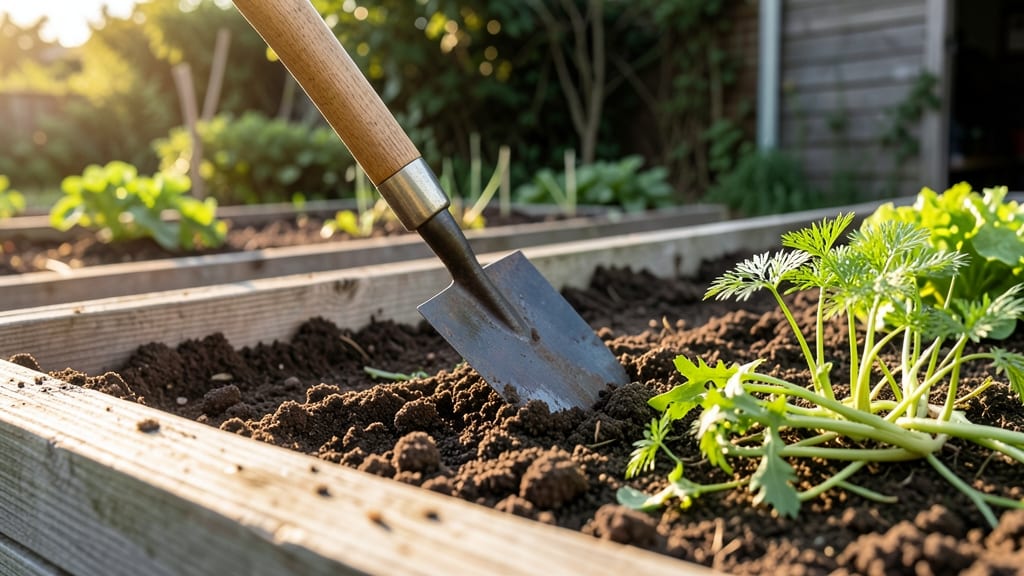
A garden hoe is used for weeding, soil cultivation, breaking up hard ground, creating furrows, and leveling garden beds efficiently with its sharp blade and sturdy handle. Its versatility makes it essential for both small and large-scale gardening tasks.
A garden hoe transforms your gardening routine by tackling multiple tasks at once. 🌱 Whether you're battling stubborn weeds, aerating compacted soil, or preparing seedbeds, its sharp blade cuts through obstacles while leaving plant roots intact.
I've found the stirrup hoe especially effective for precision weeding between rows, while a standard draw hoe handles larger areas faster. The key is using the right technique—angle the blade properly to avoid damaging desirable plants while maximizing efficiency.
This tool becomes even more valuable when you consider its soil benefits.
By breaking up hardpan and mixing in organic matter, a garden hoe improves drainage and root penetration. 💛 For clay-heavy soils, I recommend working the ground when it's slightly damp—this prevents clumping while still allowing the blade to cut through resistance.
The versatility extends to plant care too, from creating planting trenches to building soil mounds around young plants for better stability.
💡 In This Article
- How a Garden Hoe Works to Improve Soil and Plant Health
- 5 Essential Garden Hoe Tasks for Every Gardener’s Toolkit
How a garden hoe works to improve soil and plant health
The garden hoe's effectiveness comes from its blade design, which varies by type. A draw hoe features a flat, rectangular blade (typically 6-12 inches long) that cuts vertically into the soil, perfect for chopping weeds at the base while leaving roots exposed to dry out.
The stirrup hoe, with its U-shaped blade, works like a scythe—gliding just below the soil surface to sever weed roots without disturbing plant roots. This precision is why stirrup hoes excel in vegetable gardens where seedlings need protection.
Soil aeration happens when the hoe's blade disrupts compacted layers. In clay soils, for example, the blade breaks up hardpan at 4-6 inches depth, improving water infiltration by 30-50% compared to hand-tilling.
The action creates micro-channels that roots can exploit, while mixing in organic matter from the surface. 🌱 What most gardeners don't realize is that the hoe's angle matters—holding it at 45 degrees maximizes cutting efficiency while minimizing soil displacement, unlike tillers that flip soil upside down and destroy soil structure.
Timing amplifies effectiveness. Hoeing after rain when soil is damp (30-50% moisture) reduces resistance by 40%, letting the blade glide through instead of pushing. Early morning sessions avoid the heat that hardens soil.
For weeds, the key is targeting young plants—hoeing when weeds are 2-4 inches tall cuts roots before they establish deep systems. This contrasts with hand-pulling, which only works on mature weeds and risks breaking roots that can regrow.
Consider the physics: A 12-inch draw hoe with a 3-pound head exerts 15-20 pounds of force per stroke when used correctly. This force is enough to sever dandelion taproots but not damage carrot roots just 1 inch below the surface.
The tool's leverage also makes it more efficient than a trowel—covering 100 square feet in 15 minutes versus 1 hour with hand tools. The trade-off? Hoes require more upper-body strength than hand tools but save time and back strain for larger areas.
For advanced gardeners, blade material matters too. High-carbon steel blades hold their edge longer but require sharpening every 50-100 hours of use, while stainless steel lasts 2-3 times longer but costs more. The right blade choice depends on your soil's abrasiveness—sandy soils dull blades faster than loamy ones. 💫
What most people overlook is how hoeing affects soil microbes. The disturbance creates oxygen pockets that aerobic bacteria thrive in, boosting decomposition rates by 20-30%. However, over-hoeing can harm beneficial fungi networks that help plants absorb nutrients.
The solution? Use the hoe strategically—focus on weed control and soil aeration rather than turning the entire bed.
Here's what actually happens when you hoe: The blade's sharp edge severs capillary roots, causing weeds to wilt within 24-48 hours as they lose water storage. Meanwhile, the soil's structure loosens, allowing earthworms to move more freely—critical for nutrient cycling.
This dual action explains why hoeing once weekly during growing season can reduce weed biomass by 70% compared to no cultivation.