
Tools
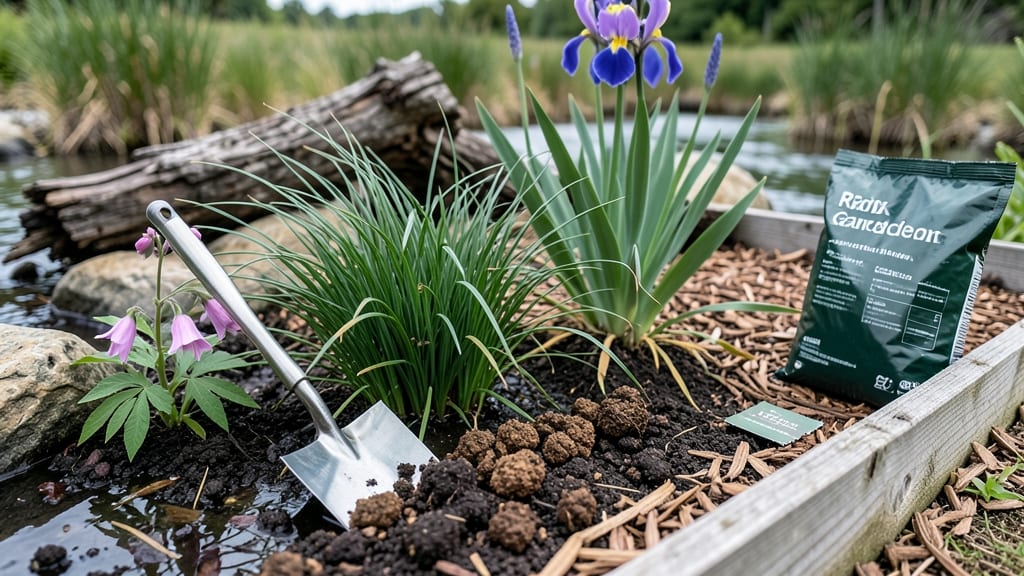
A rain garden soil mix requires a balanced blend of 60% native topsoil, 30% organic compost, and 10% coarse sand or perlite to ensure proper drainage while retaining moisture for drought-tolerant plants. Adjust ratios based on clay or sandy soil conditions for optimal water absorption and root health.
A rain garden's success depends on its ability to manage water efficiently while supporting plant roots. The 60% native soil foundation provides essential minerals and microbial life, while organic compost enhances water retention and nutrient availability.
The 10% sand or perlite prevents compaction, creating air pockets that roots need to thrive. 🌱 For clay-heavy soils, increase the perlite to 15% to improve drainage, and in sandy soils, add 5% more compost to boost moisture retention.
This balance mimics natural ecosystems, ensuring your rain garden remains resilient during heavy rains and dry spells.
When mixing, start with a 2-3 inch gravel base layer for additional drainage, then blend your soil components thoroughly. Test the mix by pouring water over it—ideal drainage means water absorbs within 15-30 minutes without pooling.
Adding a 1-inch mulch layer on top helps regulate temperature and conserve moisture, reducing maintenance needs. For best results, mix in a slow-release fertilizer during planting to support early root establishment.
💡 In This Article
- Why Soil Composition Matters in Rain Gardens
- Step-by-Step Guide to Mixing Rain Garden Soil
Why soil composition matters in rain gardens
Rain gardens thrive because their soil acts like a natural sponge—absorbing excess water during storms while slowly releasing moisture to roots during dry spells. The 60% native soil foundation provides the essential microbial community that breaks down organic matter and cycles nutrients.
These tiny organisms, including bacteria and fungi, create a symbiotic relationship with plant roots, enhancing nutrient uptake and disease resistance. Without this biological activity, even the best-mixed soil would struggle to support plant health over time. 🌱
The 30% organic compost component works like a moisture reservoir. Compost holds 3-5 times its weight in water while also improving soil structure by binding particles together. Think of it as the "sponge layer" that prevents water from running off too quickly.
For example, a mix with 50% compost would retain water far longer but risk compaction, while 20% compost offers better drainage but less moisture storage. The ideal balance depends on your local rainfall patterns—heavy rain areas need more compost, while arid climates benefit from slightly less.
Coarse sand or perlite makes up the remaining 10% and serves as the "air highway" for roots. These materials create macropores—large air spaces that prevent soil compaction and allow oxygen to reach roots.
In clay-heavy soils, where particles pack tightly, adding 15% perlite can improve drainage by 40-50%, reducing the risk of root rot during prolonged rains. Conversely, sandy soils benefit from 5% additional compost to boost water retention, as sand alone drains too quickly to support most rain garden plants. 💧
Soil texture plays a critical role in flood resilience. Loamy soils—ideal for rain gardens—contain 40% sand, 40% silt, and 20% clay, striking a balance between drainage and water retention. Sandy soils drain too fast (water moves through in <5 minutes), while clay soils hold water like a dam (taking >2 hours to drain).
The right mix transforms heavy clay into a workable medium by breaking up dense particles, while sandy soils gain the ability to store moisture for plants. This texture adjustment is what makes rain gardens effective at reducing runoff in urban areas.
Native soil also supports local plant ecosystems by providing the specific microbes and minerals native species have evolved to use. For instance, plants like switchgrass or coneflowers thrive in soil with high fungal activity, which helps them access phosphorus—a nutrient often locked away in organic matter.
Importing soil from another region can disrupt this balance, leading to poor plant performance. Always use locally sourced native soil when possible to maintain this ecological harmony. 🌿
One often-overlooked factor is the seasonal behavior of soil components. In winter, organic matter breaks down more slowly, so compost contributes less to water retention. That's why many gardeners add a thin layer of mulch in fall to protect soil structure during freeze-thaw cycles.
Meanwhile, summer heat can cause compost to dry out faster, increasing the need for regular watering. Understanding these seasonal shifts helps you adjust your soil mix for year-round performance. 🌡️