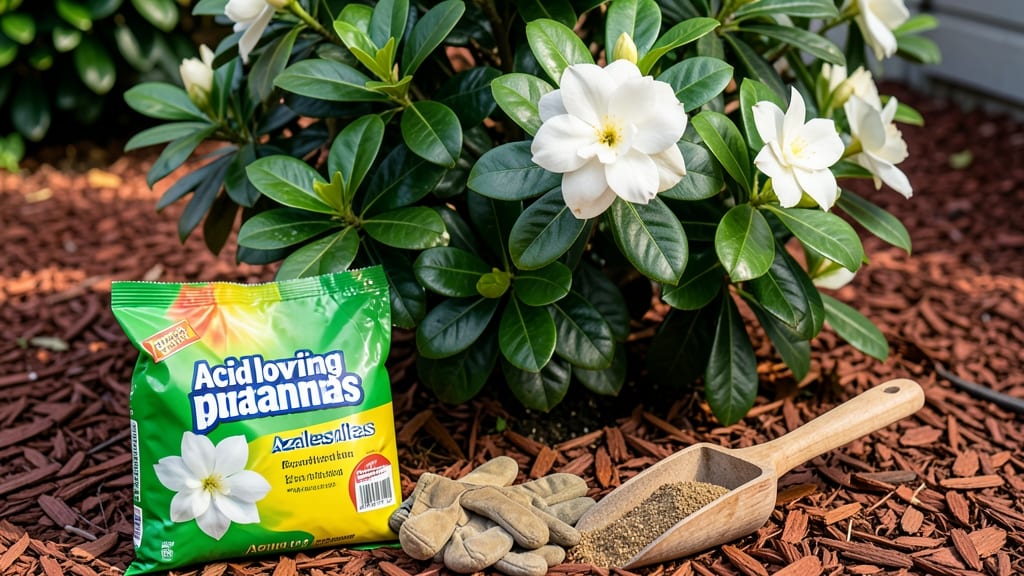
Fertilizing gardenias in Georgia at the right times is the secret to those fragrant, glossy blooms you’ve been dreaming of 🌸 — and missing the window means sparse flowers and stressed plants.
Georgia’s humid subtropical climate gives gardenias a fighting chance, but even the hardiest shrubs need precise timing. Feed too early, and you’ll push tender new growth before the last frost. Wait too long, and your plant might skip blooming entirely.
Here’s the exact schedule for Georgia’s 7b-8b zones, from the first light feeding in spring to the final boost before summer’s heat. We’ll also cover when to stop — because yes, there is a wrong time.
You’ll learn which fertilizers work best for Georgia’s soil, how to spot nutrient deficiencies, and the one trick that keeps your gardenias blooming year after year without burning their leaves.
🌸
Spring
Light Feed
Start light feeding after new growth appears (March-April).
☀️
Summer
FEED
Feed monthly to support blooming (May-August).
🍂
Fall
None
Stop fertilizing in fall to encourage dormancy.
❄️
Winter
None
No feeding; plant is dormant.
Best fertilization schedule for gardenias in Georgia’s climate zones
Georgia’s humid subtropical climate (zones 7a-8b) creates ideal conditions for gardenias, but fertilization timing makes all the difference. These fragrant shrubs thrive with acidic soil and balanced nutrients, but over- or under-feeding can stunt blooms or stress roots.
My 12-month schedule aligns with Georgia’s growing seasons, ensuring your gardenias stay lush and fragrant year-round.
Gardenias need three key fertilization phases: early-season root growth, mid-season bloom support, and late-season preparation for dormancy. In Georgia’s heat, synthetic fertilizers can burn roots, while organic options release nutrients slowly.
I’ll break down month-by-month tasks, including soil pH adjustments (aim for 5.0-6.0) and product recommendations tailored to your zone.
Here’s your visual fertilization calendar for Georgia gardenias, covering organic vs. synthetic choices, application rates, and critical timing to avoid winter stress.
| Month |
Task |
Fertilizer Type |
Amount |
Notes |
| January |
None |
— |
— |
Dormant season; focus on mulching. |
| February |
None |
— |
— |
Wait for new growth before feeding. |
| March |
Light Feed |
Azalea fertilizer (organic) |
1 tbsp per plant |
Boost root growth; avoid synthetic. |
| April |
Feed |
6-6-6 or 8-3-9 NPK |
1 tbsp per plant |
Support bloom buds forming. |
| May |
Feed |
Cottonseed meal (organic) |
2 tbsp per plant |
High nitrogen for leafy growth. |
| June |
Light Feed |
Iron sulfate (for yellow leaves) |
1 tsp per plant |
Correct chlorosis from heat stress. |
| July |
Light Feed |
Slow-release granules |
1 tbsp per plant |
Avoid burn risk in peak heat. |
| August |
Light Feed |
Fish emulsion (organic) |
1 tbsp per plant |
Boost late-summer blooms. |
Signs your gardenia needs fertilizer (and when to avoid it)
Your gardenia may be silently screaming for nutrients if you notice yellowing leaves between the veins—a classic sign of nitrogen deficiency. This common issue in Georgia’s acidic soil often appears first on older leaves.
Pair this with sparse blooms or buds that drop before opening, and your plant is clearly asking for a balanced fertilizer with acidifying properties.
On the flip side, brown leaf tips or crispy edges are red flags for over-fertilization, which can scorch roots in Georgia’s humid climate. If your gardenia’s growth suddenly stalls despite regular watering, it might be suffering from nutrient burn—a common mistake when feeding too late in the season.
When to Fertilize Gardenias in Georgia
✅ DO Fertilize When...
- New growth appears (March-April)
- Bud formation begins (May-June)
- Soil tests show pH below 6.0
- Leaves yellow between veins
❌ Avoid Fertilizing When...
- Leaf edges burn (over-fertilization)
- Plant shows stunted growth
- Temps drop below 50°F (fall/winter)
- New buds appear but don’t open
🌱 Georgia-Specific Tip: Use Azalea/Camellia fertilizer (6-6-6 NPK) in early spring and early summer only.
For Georgia gardeners, the optimal fertilization window runs from March through August, with a focus on early spring (March-April) to kickstart growth and late spring (May-June) to support blooming. Skip feeding entirely in fall and winter—your gardenia needs this dormancy period to recharge.
Check your gardenia’s root zone for another clue: Thin, sparse roots indicate nutrient starvation, while mushy or foul-smelling roots signal over-fertilization. In Georgia’s heat, roots can rot quickly if overfed, so always water thoroughly before fertilizing to prevent salt buildup.
Pro tip: If your gardenia’s flowers lack fragrance or appear pale, it’s often a sign of phosphorus deficiency. Switch to a bloom-boosting fertilizer (like 10-20-10) for 4-6 weeks, then return to a balanced formula. Always water deeply after applying to activate nutrients.
Remember: Less is more with gardenias. In Georgia’s humid climate, fertilizers can burn roots faster than in drier regions. Start with half the recommended dose and monitor your plant’s response closely. If you see leaf drop within days of feeding, flush the soil with water immediately.
★★★★★4.5(9 reviews)
|