
Picking
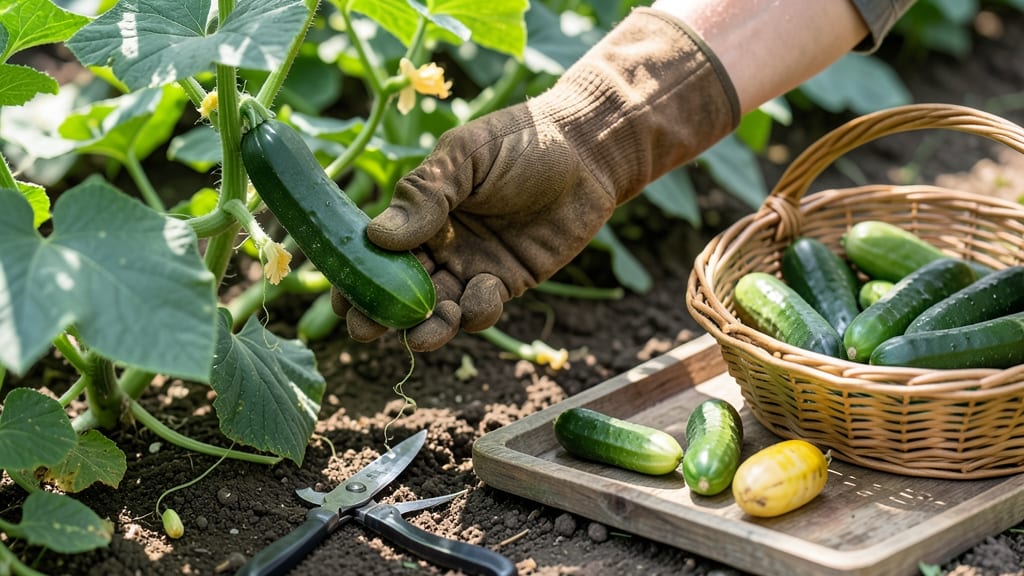
Harvesting cucumbers from your garden at the right time means the difference between a crisp, sweet bite and a bitter, seedy disappointment — and the key signs are easier to spot than you think.
Picture this: you’ve been watching your 🥒 vines grow, but suddenly those cucumbers you planted in April are swelling faster than you can keep up. If you wait too long, they’ll turn yellow, hard, and bitter — or worse, attract pests.
But harvest too early, and you miss out on the full flavor and size potential.
Below, I’ll walk you through the three foolproof cues to know when your cucumbers are ready to pick, plus how often to check your plants and what mistakes to avoid. Whether you’re growing slicing, pickling, or long English varieties, these tips will ensure your harvest is always at its peak.
You’ll also learn how climate and variety type play a role, so you can adjust your timing for the best results — no more guessing, just crisp, homegrown perfection every time.
How to check cucumber ripeness: the 3 key signs for perfect harvest timing
Mastering the art of harvesting cucumbers at peak ripeness transforms your garden from a bitter disappointment into a crisp, sweet victory. The difference between perfect pickling cucumbers and overripe, seedy messes often comes down to three key indicators: size, color, and firmness.
Ignoring these cues can lead to wasted effort—or worse, cucumbers that turn yellow and mushy before you can use them.
I’ve learned the hard way that waiting too long turns cucumbers into watery, seedy giants, while harvesting too early means underdeveloped flavor and stunted growth. The secret lies in consistent monitoring and knowing the subtle differences between varieties—especially slicing vs. pickling types.
Let’s break down the exact visual and tactile clues you need to harvest cucumbers at their prime.
The first sign to watch is size. For slicing cucumbers, aim for 6–8 inches—any longer and they’ll be seedy and watery. Pickling varieties, however, should be harvested at 2–4 inches to maintain their crunch and tang.
Measure with your hand: a slicing cucumber should span from your wrist to your elbow, while a pickling cucumber fits in your palm.
Next, check the color consistency. Mature cucumbers should be a deep, even green—no pale patches or yellowing. Dull spots signal sunburn or overripeness, while uneven coloring often means the cucumber didn’t get enough light.
Pro tip: Glossy skin is a good sign, but waxy buildup can indicate disease, so inspect the surface closely.
Firmness is where most gardeners trip up. A ripe cucumber should feel firm but yield slightly when pressed with your thumbnail—like a well-inflated balloon. If it’s rock-hard, it’s underripe; if it dents easily, it’s overripe.
For pickling cucumbers, they should feel almost crisp and snappy, while slicing types can have a slight give without being mushy.
Don’t overlook the stem end, a hidden clue many miss. When a cucumber is ready, the stem end will turn yellow or brown—this is nature’s harvest signal. If it’s still green and fresh-looking, the cucumber needs more time.
Twisting gently at the stem can also help: if the skin separates cleanly, it’s ripe; if it resists or tears, it’s not ready yet.
One of my biggest mistakes was assuming all cucumbers ripen at the same rate. Long English varieties (like 'Levant') can grow up to 2 feet long before reaching peak flavor, while bush varieties (like 'Bush Champion') mature faster.
Always check your seed packet or plant tag for variety-specific guidance—some even recommend harvesting every other day to keep production steady.
Overripe cucumbers are a heartbreak waiting to happen. They develop large, dark seeds and a bitter, watery texture, making them nearly unusable. Worse, they attract pests like cucumber beetles and spread diseases to other plants. I once left a batch too long, and by
Best practices for harvesting cucumbers: when, how often, and what to avoid
Harvesting cucumbers at the right time keeps them sweet, crisp, and free from bitterness. Daily checks are ideal during peak production to avoid overripe fruit, which can deter pests like cucumber beetles and attract diseases like powdery mildew.
I’ve found that morning harvests work best—cooler temps mean firmer cucumbers and less stress on the plant.
Most slicing cucumbers are ready when they reach 6-8 inches long with a deep, even green color. Pickling varieties, like Boston Pickling, should be harvested smaller—around 2-4 inches—for that perfect crunch. Ignoring these cues leads to tough, seedy cucumbers that taste disappointingly bland.
⚠️ callout-warning ⚠️
Leaving cucumbers on the vine past their prime attracts cucumber beetles and squash vine borers, which lay eggs in overripe fruit. These pests can devastate your entire crop in weeks. Harvest every 1-2 days during peak season (July-August) to prevent infestations.
🔍 Signs of pest risk: Yellowing vines, chewed leaves, or small holes in fruit.
When harvesting, always twist gently at the stem—never cut—unless you’re dealing with a stubborn cucumber. Twisting mimics natural detachment and reduces stress on the plant. I’ve seen gardeners accidentally sever vines with scissors, which can stunt future growth.
For heirloom or long English varieties, use clean pruners if twisting doesn’t work.
Frequency matters just as much as timing. Every other day is the sweet spot during hot summers, while weekly harvests may suffice in cooler climates. I’ve noticed my Armenian cucumbers produce prolifically when picked daily—they’re prolific vines that reward consistent attention. Skipping harvests slows production and encourages bitterness.
Store freshly picked cucumbers in a cool, dark place (not the fridge) to maintain crispness. Never wash before storing—moisture speeds up rot. For long-term storage, wrap in a damp paper towel inside a plastic bag to preserve freshness for up to a week.
Overripe cucumbers release ethylene gas, so keep them separate from other produce.
Watch for yellowing leaves or drooping vines, which signal stress from over-harvesting or disease. If your plants look exhausted, cut back on frequency temporarily. I once over-harvested my Lemon cucumbers in August, and the vines wilted by Labor Day.
A short break with extra water and compost revived them just in time for a late-season harvest.