
Planting
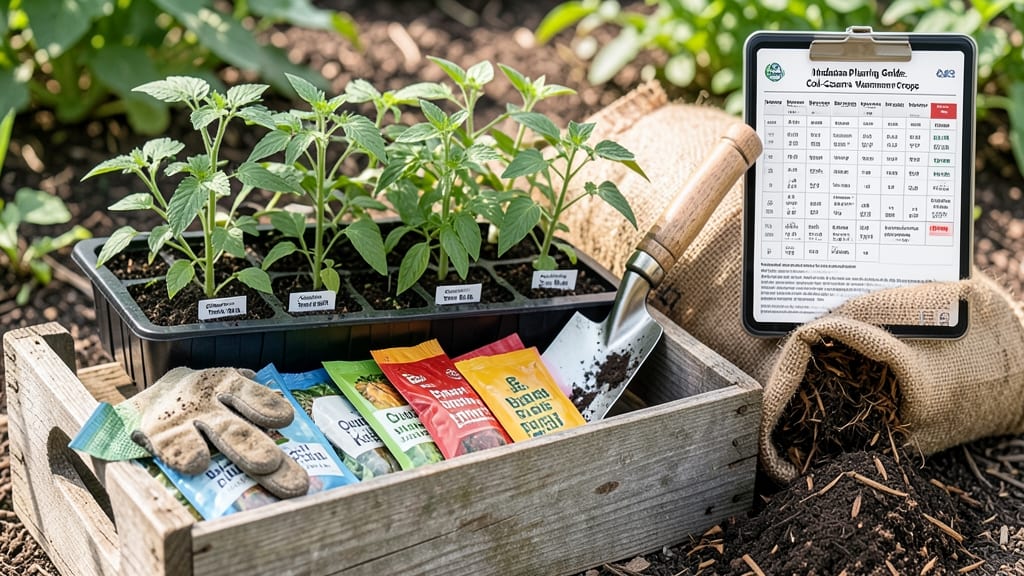
Planting a garden in Indiana at the right time means the difference between a bountiful harvest and a sad pile of frost-killed seedlings.
Indiana’s unpredictable frost dates can make or break your garden—plant too early, and a late freeze wipes out your hard work. Too late, and you miss peak harvests.
Here’s your precise planting timeline, tailored to Indiana’s USDA zones 5b-6b and frost patterns, so you can grow a thriving garden with confidence.
Most Indiana gardeners wait until mid-April to start planting after the average last frost, but the exact timing depends on what you’re growing.
Cool-season crops like spinach and peas can handle light frosts, while warm-season favorites like tomatoes and peppers need the soil to warm up to 50°F before going in.
Below, I’ll break down the best planting windows for spring and fall, plus tips for adjusting your schedule if the weather throws you a curveball. Ready to turn your Indiana garden into a year-round success?
Indiana’s frost-free dates by region: when to start planting
Indiana spans USDA Hardiness Zones 5b-6b, meaning frost dates vary dramatically from the northern panhandle (Zone 5b) to the southern tip (Zone 6b). These differences can shift your planting window by 2-3 weeks, so knowing your exact region is critical.
For example, Northern Indiana typically sees its last frost around May 10-15, while Southern Indiana averages April 20-25—a full month difference!
Microclimates further complicate timing. Urban areas like Indianapolis and Fort Wayne often experience earlier last frosts due to heat retention, while rural farmland can stay colder longer. Always check local weather stations or use Purdue Extension’s frost date maps for precision.
I’ve planted cool-season crops too early in Zone 5b only to lose them to late frosts in early May—don’t make that mistake!
| Region | USDA Zone | Avg. Last Frost | Avg. First Frost | Plant Warm-Season Crops | Plant Cool-Season Crops |
|---|---|---|---|---|---|
| Northern Indiana (Kokomo, Fort Wayne) | 5b | May 10-15 | October 10-15 | May 20-June 1 | March 15-April 15 |
| Central Indiana (Indianapolis, Muncie) | 6a | April 25-May 5 | October 5-10 | May 10-May 20 | March 1-April 10 |
| Southern Indiana (Evansville, Louisville area) | 6b | April 15-20 | October 15-20 | April 25-May 10 | February 20-March 20 |
*Adjust dates 1-2 weeks earlier for urban areas, later for rural high elevations.
For cool-season crops like lettuce, spinach, and peas, I recommend starting seeds 4-6 weeks before your last frost date. In Zone 5b, that means sowing by March 15, while Zone 6b gardeners can begin as early as February 20.
These crops thrive in 40-60°F soil, so test your soil temperature with a soil thermometer—if it’s below 40°F, wait a few days.
Warm-season crops like tomatoes, peppers, and cucumbers need soil temperatures above 60°F to germinate. In Northern Indiana, hold off until May 20 at the earliest, while Southern Indiana can plant by April 25.
I’ve learned the hard way that rushing tomato seedlings into cold soil leads to blossom end rot—patience pays off!
Indiana’s frost-free growing season typically spans 160-180 days, but this varies by year. Use row covers or cold frames to extend your season by 2-3 weeks in spring and fall.
For example, I’ve successfully grown bush beans in Zone 6a until October 1 using floating row covers—a game-changer for late-season harvests!
Urban gardeners should account for the "heat island effect", where cities stay 5-10°F warmer than rural areas. This can push last frost dates 3-5 days earlier. If you’re in Indianapolis, check the Purdue Climate Smart Agriculture tools for hyper-local data.
I once planted peppers in my downtown lot 10 days early because I assumed it was rural—the late frost ruined my crop.
For perennials and shrubs, plant in spring (after last frost) or early fall (6 weeks before first frost). In Zone 5b, that means May 15-June 15 or September 1-15.
I’ve had the best success with asparagus crowns planted in early spring—they establish roots before summer heat sets in.
Always have a backup plan for late frosts. Keep frost cloth on hand and monitor the National Weather Service’s frost advisory for your county.
I’ve saved tomato plants multiple times by covering them with old bedsheets during 32°F nights—a few minutes of effort can mean pounds of tomatoes!
Finally, remember that Indiana’s frost dates shift yearly. Over the past decade, the average last frost in Zone 6a has crept 5 days earlier due to climate change. Stay flexible and adjust your planting dates annually based on recent trends. Happy gardening!
Best planting schedule for Indiana’s top garden crops
Indiana’s gardeners know timing is everything—plant your tomatoes too early, and a late frost can ruin them. But get the schedule right, and you’ll enjoy a bounty of fresh produce all season. The key is understanding which crops thrive in cool spring soil and which need warm summer heat.
I’ve broken down the best planting windows for 12 must-grow crops, including succession planting tips to keep your harvests coming.
Start with cold-hardy crops like lettuce and peas as soon as the soil is workable in early spring. These can handle light frosts and even improve with cooler weather.
Meanwhile, heat-loving plants like peppers and eggplants need to wait until after the last frost, when soil temperatures consistently reach 60°F or higher. Let’s dive into the month-by-month schedule to maximize your garden’s potential.
- 🌱 March-April: Direct sow spinach, radishes, and peas as soon as soil thaws (cover with row fabric if frost threatens).
- 🌱 Mid-April: Plant lettuce, kale, and onions after last frost (use cold frames for early starts).
- ☀️ Late April-May: Transplant tomatoes, peppers, and cucumbers after soil warms to 60°F+ (harden off seedlings first!).
- 🌱 May-June: Succession plant beans, carrots, and beets every 2-3 weeks for continuous harvests.
- ☀️ July: Direct sow fall crops like broccoli and cabbage for late-summer harvests (they’ll thrive in cooler fall temps).
- 🌱 August-September: Plant garlic and spinach for fall/winter harvests (garlic needs 60+ days to mature).
- ⏰ Pro Tip: Use succession planting for fast growers like bush beans and radishes—sow new seeds every 2 weeks to avoid gluts.
For tomatoes and peppers, don’t rush—these heat lovers need warm soil to prevent blossom-end rot. Wait until late May or early June when nighttime temps stay above 55°F. I’ve had the best luck with cherry tomatoes and jalapeños because they’re more forgiving than fussy varieties.
If you’re eager to start, grow seedlings indoors under grow lights 6-8 weeks before the last frost.
Don’t overlook succession planting—it’s the secret to a never-ending harvest. For example, after harvesting your first batch of bush beans in July, sow another round in early August for a fall crop.
The same goes for lettuce and spinach: plant a second batch in late summer for crisp fall salads. Just be sure to choose fast-maturing varieties to beat the first frost in October.
Indiana’s fall planting is often overlooked, but it’s a game-changer. Broccoli, kale, and carrots planted in August will thrive in cooler weather and give you harvests well into October. Use row covers to extend the season even further—just remove them during the day to prevent overheating.
And if you’re feeling adventurous, try garlic planted in October for a summer harvest the following year.
Remember, Indiana’s frost dates vary yearly, so always check your local Purdue Extension updates or use a soil thermometer to confirm conditions. With this schedule, you’ll avoid the heartbreak of lost plants and enjoy a garden that produces from spring to fall. Happy planting! 🌱