Planting
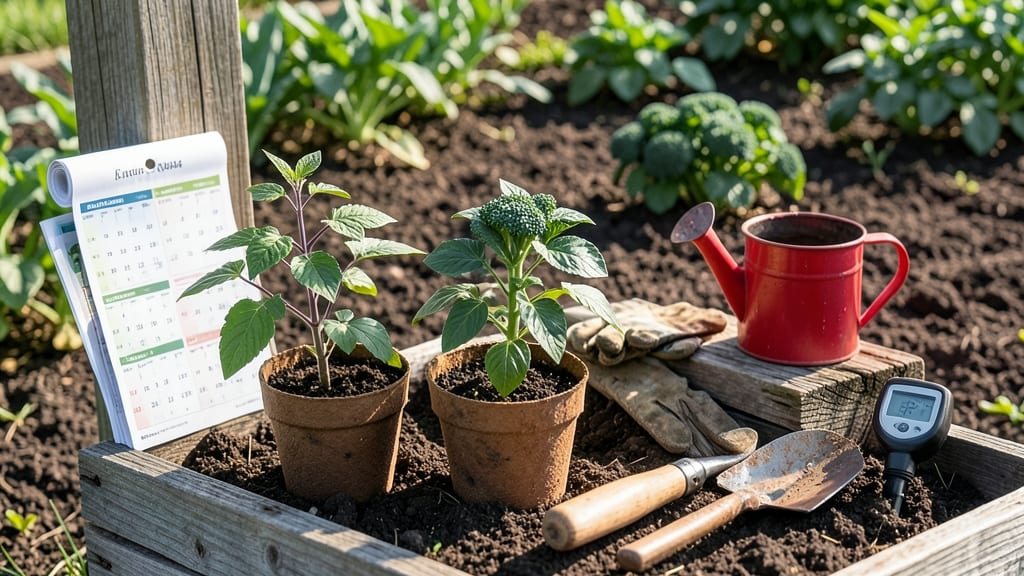
Planting a vegetable garden in California at the right time means the difference between a bountiful harvest and a sad, wilted disappointment.
California’s diverse microclimates—from coastal fog to desert heat—mean your vegetable garden’s success hinges on planting at the perfect time. Get the exact zero-frost start dates for your region to maximize yields and avoid costly mistakes.
If you’ve ever rushed to plant tomatoes only to watch them bolt in the heat, or struggled with lettuce that bolts before you even taste it, you know timing is everything.
The key is understanding your local frost-free dates and adjusting for microclimates that can vary by just a few miles.
In this guide, I’ll break down the best planting windows for your specific California region—whether you’re in the cool coastal zones, the hot Central Valley, or the desert areas—so you can start your garden with confidence and enjoy a harvest all season long.
California’s 5 planting zones: zero-frost start dates by region
California’s diverse microclimates create unique gardening challenges—what works in San Francisco’s coastal fog fails in Palm Springs’ desert heat. Understanding your zero-frost start dates is critical for frost-sensitive crops like tomatoes, peppers, and cucumbers.
These dates mark when soil warms enough to support germination without frost risk.
Below, I’ve broken down California into five key planting zones, each with distinct frost patterns and ideal planting windows. Urban heat islands (like Los Angeles) can shift these dates by 2-3 weeks earlier than rural areas. Always verify your exact last frost date using local weather records.
Key crops like tomatoes and eggplants need soil temps above 60°F to thrive, while cool-season veggies (e.g., kale) tolerate lighter frosts. Desert regions (Zone 5) can plant 6-8 weeks earlier than coastal areas (Zone 10).
Use this summary-table to find your region’s zero-frost windows and adjust for microclimates. For example, Sacramento’s Central Valley (Zone 3) has a March 15 start date, while San Diego’s coastal zone (Zone 4) waits until April 15.
| Zone | Region | USDA Zone | Zero-Frost Start (Warm Crops) | Cool-Season Start | Notes |
|---|---|---|---|---|---|
| 1 | High Sierra (e.g., Lake Tahoe) | 5-6 | May 15 | March 1 | Short season; use row covers |
| 2 | Foothills (e.g., Sacramento) | 8-9 | March 15 | February 1 | Central Valley heat accelerates growth |
| 3 | Central Valley (e.g., Fresno) | 9-10 | February 28 | January 15 | Urban areas plant 2 weeks earlier |
| 4 | Coastal (e.g., San Diego) | 10-11 | April 15 | October 15 | Fog delays soil warming |
| 5 | Desert (e.g., Palm Springs) | 11-12 | January 10 | September 1 | Year-round growing possible |
How to adjust planting times for your local microclimate
California’s microclimates can vary dramatically even within a single city—coastal areas like San Francisco may experience delayed spring planting due to fog, while inland regions like Sacramento enjoy earlier soil warming.
To fine-tune your schedule, start by checking your last frost date using the Old Farmer’s Almanac calculator, then adjust by 1-2 weeks based on your neighborhood’s unique conditions.
For example, urban heat islands in Los Angeles can push planting dates 2-3 weeks earlier than rural areas, while coastal fog belts may require waiting until mid-April instead of March.
Always verify soil temperatures—most vegetables need 60°F+ for optimal germination, which coastal regions often hit 4-6 weeks later than inland areas.
Use row covers or cold frames to extend your growing season by 3-4 weeks in both directions. These tools create a microclimate of their own, trapping heat and protecting tender seedlings from late-spring frosts or early-fall chills.
I’ve successfully grown tomatoes in March in the Central Valley using floating row covers, while coastal gardeners often wait until May without them.
- 1. Coastal Delays: Wait until mid-April for frost-sensitive crops like peppers and eggplants—coastal fog often lingers until then.
- 2. Inland Heat Spikes: Plant warm-season crops (tomatoes, cucumbers) 2-3 weeks earlier in desert-adjacent areas like Palm Springs.
- 3. Urban Heat Islands: Cities like Sacramento can be 5-10°F warmer than rural areas—adjust planting dates 1 week earlier.
- 4. High-Elevation Adjustments: Areas like Lake Tahoe (USDA Zone 6) may need to wait until late May for tomatoes.
- 5. Row Cover Magic: Extend spring starts by 3 weeks and fall harvests by 4 weeks with lightweight covers.
Don’t rely solely on USDA zone maps—they’re too broad for California’s diverse topography. Instead, observe your garden’s natural cues: when dandelions bloom (sign of 60°F soil) or hummingbirds return (indicating warmer nights).
I once planted basil too early in San Jose because I ignored these signs, only to have it bolt in 3 weeks from the unexpected nighttime chill.
For succession planting, use a planting calendar tailored to your elevation and aspect. South-facing slopes warm up 2 weeks faster than north-facing gardens, so adjust accordingly.
My backyard in Santa Barbara gets full sun year-round, allowing me to plant winter greens in October and summer squash in March—something that wouldn’t work in shadier, cooler Eureka.
Pro tip: Keep a garden journal for 2-3 years to track your local microclimate quirks. Note when frost hits unexpectedly, how soil warms, and which varieties thrive.
Last year, my cherry tomatoes in Fresno ripened 2 weeks earlier than the seed packet suggested—now I adjust my schedule accordingly. Your data will become more valuable than any generalized planting chart. 🌱