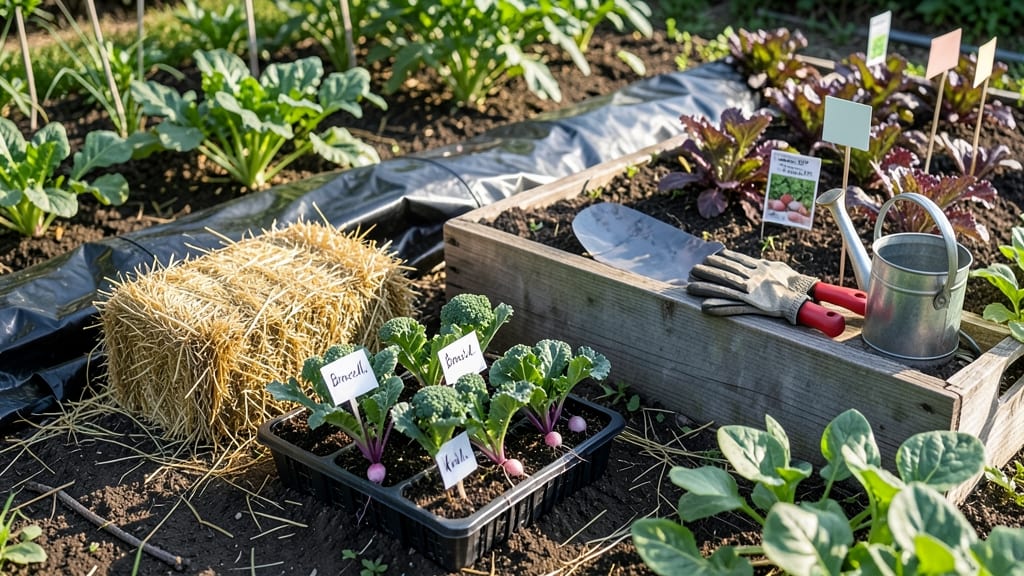
Planting a winter garden in Florida between September and November unlocks a bounty of cool-season crops before summer’s relentless heat returns.
Picture this: crisp 🥬 greens like spinach and kale thriving in your backyard while your neighbors swelter through summer’s humidity. But timing is critical—plant too early, and you’ll battle heat stress; too late, and the harvest window shrinks.
Florida’s mild winters mean no frost to worry about, but the real enemy is the creeping warmth that cuts harvests short.
This guide breaks down the exact planting windows by region (North, Central, and South Florida), the top 10 crops that perform best, and pro tips to stretch your harvest into March. No more guessing—just a foolproof plan for a winter garden that outlasts the heat.
Ready to grow? I’ll walk you through soil prep, shade strategies, and succession planting so you can enjoy fresh veggies straight from your garden—without the summer struggle.
Jan
❄️
Feb
❄️
Mar
🌱
Apr
🌱
May
🌸
Jun
☀️
Jul
☀️
Aug
🌱
Sep
🥬
Oct
🥬
Nov
🥬
Dec
🌱
Best planting timeline for Florida winter gardens by month
Florida’s winter garden thrives when you align planting with the state’s unique microclimates and cool-season thresholds. Unlike northern states, Florida’s winters are mild, but heat-sensitive crops still need precise timing to avoid summer’s relentless sun.
North Florida (Zones 8a-8b) faces occasional light frosts, while Central (Zone 9a) and South (Zones 10a-11) rarely see frost—just cooler temperatures that slow growth.
For a successful winter harvest, start planting cool-season crops between September and November, with transplants having a narrower window than seeds. Leafy greens like spinach and kale can handle Florida’s winter chill, but root crops like carrots and beets need consistent soil temps above 50°F.
Below, I break down the optimal planting months by region, including when to sow seeds vs. transplant seedlings for maximum yield.
| Month |
North FL (Zones 8a-8b) |
Central FL (Zone 9a) |
South FL (Zones 10a-11) |
Notes |
| August |
Start seeds for late crops (e.g., radishes, turnips) |
Transplant broccoli, cabbage; sow leafy greens |
Plant peas, lettuce, spinach (seeds) |
Use shade cloth to prevent bolting |
| September |
Sow seeds for carrots, beets, onions |
Transplant kale, collards; sow peas |
Direct-sow broccoli, cauliflower (seeds) |
Soil temp should be 60-75°F for germination |
| October |
Transplant cabbage, brussels sprouts; sow spinach |
Peak month for transplants (e.g., lettuce, kale) |
Sow radishes, turnips for early harvest |
Mulch to protect from cool nights (30-40°F) |
| November |
Last chance for seeds (e.g., mustard greens) |
Transplant hardy greens (e.g., collards) |
Direct-sow peas, fava beans |
Avoid planting heat-lovers (e.g., tomatoes, peppers) |
| December-January |
Protect from light frost with row covers |
Harvest leafy greens; sow successive crops |
Continue harvesting peas, lettuce |
Use drip irrigation to avoid soil compaction |
| February-March |
Remove row covers as temps rise |
Top 10 cool-season crops that grow best in Florida’s winter
Florida’s winter garden thrives when you choose the right crops—those that tolerate mild temperatures but won’t bolt in the first hint of warmth. The top 10 cool-season crops for Florida’s winter are selected for their heat tolerance, productivity, and ease of growth.
These varieties outperform summer crops, giving you fresh harvests from December through March—or even longer with the right care.
I’ve ranked these crops by ease of growth, productivity, and heat sensitivity, so you can prioritize based on your experience level. Whether you’re a beginner or a seasoned gardener, these picks deliver reliable results in Florida’s unique climate.
Here’s my curated list, starting with the easiest and most productive crops for Florida’s winter garden:
🌱 Top 10 Cool-Season Crops for Florida’s Winter
-
🥬 Lettuce (Buttercrunch, Romaine)
Fast-growing, heat-tolerant varieties like Buttercrunch mature in 30-45 days. Ideal for partial shade to avoid bolting. Harvest outer leaves for continuous yield.
-
🌿 Spinach (Bloomsdale, Space)
Thrives in cool weather and tolerates light frosts. Space varieties resist bolting better. Harvest when leaves reach 4-6 inches.
-
🥬 Kale (Winterbor, Red Russian)
Hardy and nutrient-dense, kale sweets up after light frosts. Winterbor is a top pick for Florida’s mild winters. Harvest leaves as needed.
-
🥕 Carrots (Danvers, Nantes)
Choose short varieties like Danvers for loose, sandy Florida soils. Plant seeds 1/4 inch deep and thin to 2-3 inches apart.
-
🥬 Swiss Chard (Bright Lights)
Stunning colorful stems and heat-tolerant. Harvest outer leaves to encourage regrowth. Bright Lights variety offers rainbow hues.
-
🥬 Broccoli (Calabrese, Green Magic)
Green Magic is a compact, heat-tolerant variety. Harvest heads when tight and dark green, then let side shoots grow for seconds harvests.
-
🌱 Radishes (Cherry Belle, Easter Egg)
Fastest crop on this list—ready in 25-30 days. Cherry Belle is a classic red variety. Sow every 2 weeks for continuous harvests.
-
🌿 Peas (Sugar Snap, Snow Peas)
Plant Sugar Snap peas in late October for a January-March harvest. Use trellises to save space and improve airflow.
-
🌿 Cilantro (Santo, Calypso)
Fast-growing herb that bolts quickly in heat. Santo variety is slow-bolting. Harvest leaves before flowering for best flavor.
-
🌿 Parsley (Italian Flat-Leaf)
Biennial herb that overwinters well in Florida. Italian flat-leaf has a robust flavor. Harvest stems as needed for continuous growth.
Each of these crops brings something unique to your winter garden—from quick-harvest radishes to nutrient-packed kale and sweet peas. For best results, pair leafy greens with root vegetables to maximize space and diversity.
Pro tip: Start with lettuce, spinach, and radishes if you’re new to winter gardening—they’re the most forgiving and fastest to mature. Once you’ve mastered those, move on to broccoli and peas for a more challenging (but rewarding) harvest.
🌱
★★★★★4.7(11 reviews)
|