
Planting
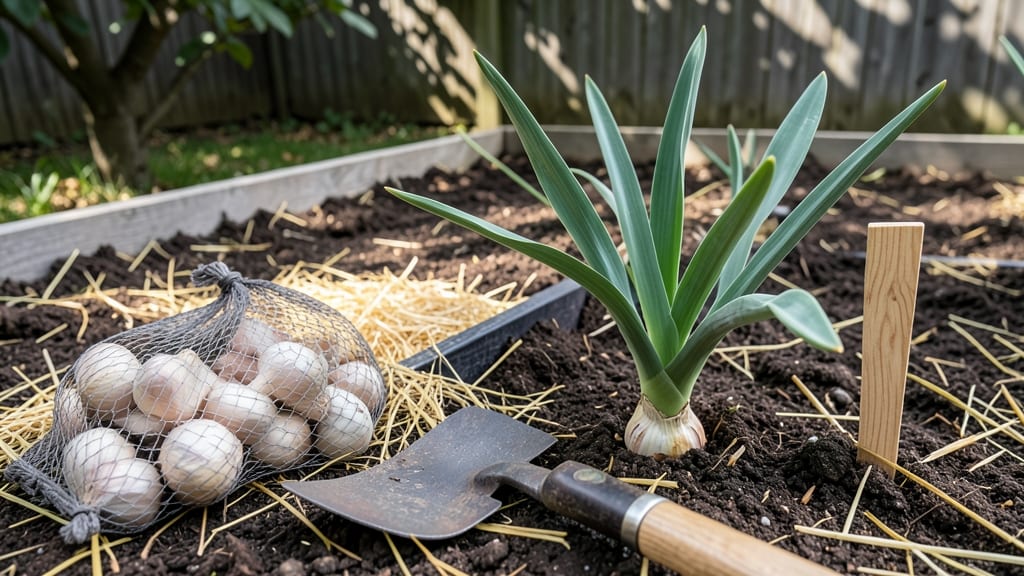
To plant garlic in your garden, choose a spot with well-draining soil, full sunlight exposure (6+ hours daily), and space cloves 4-6 inches apart in raised beds or loose soil. Planting in fall typically produces larger bulbs, while spring planting works better in warmer climates. Steer clear of low-lying areas prone to water accumulation.
Garlic thrives in loose, crumbly soil with a slightly acidic to neutral pH (6.0-7.0), which prevents rot and encourages strong root growth. 🌱 The right sunlight exposure—full sun—is non-negotiable, as garlic needs at least six hours of direct light daily to develop properly.
Many gardeners swear by raised beds for better drainage, especially in regions with heavy rainfall, while mulching with straw helps regulate soil temperature and retain moisture.
Timing matters too: fall planting (4-6 weeks before the ground freezes) gives garlic roots time to establish before winter, resulting in bigger harvests. In warmer climates, spring planting is ideal, but avoid planting too early—garlic prefers cooler temperatures (50-60°F) for optimal bulb formation.
Pro tip: break bulbs into individual cloves and plant the flat side down for consistent growth.
💡 In This Article
- Optimal Soil Conditions and Sunlight for Garlic Growth
- Step-by-Step Guide to Planting Garlic for High Yield
Optimal soil conditions and sunlight for garlic growth
Garlic roots thrive in soil with a pH range of 6.0-7.0, where nutrients like phosphorus and potassium become readily available.
The slightly acidic to neutral environment prevents fungal diseases like white rot, which flourishes in alkaline conditions (pH >7.5). 🌱 Soil texture matters too—garlic hates soggy conditions, so loose, well-draining soil (like sandy loam) is ideal.
In heavy clay soils, amending with 2-3 inches of compost improves aeration and prevents rot.
Sunlight exposure directly impacts bulb size and flavor intensity. Garlic needs 6+ hours of direct sunlight daily to photosynthesize efficiently, converting sunlight into energy for bulb development.
Partial shade (3-5 hours of sun) can produce smaller bulbs with milder flavors, while full sun maximizes allicin production—the compound responsible for garlic's pungent aroma and health benefits. In regions with intense summer heat (like the Southwest U.S.), afternoon shade helps prevent stress.
The timing of planting is closely tied to sunlight and temperature. Fall planting (4-6 weeks before the first frost) gives garlic roots time to establish before winter dormancy, resulting in bulbs that are 30-50% larger than spring-planted varieties.
Spring planting works best in warmer climates (Zones 8-10), where winter frosts aren't severe. The key is planting when soil temperatures are 40-60°F—too warm, and the cloves may rot before sprouting.
Drainage is non-negotiable for garlic. Low-lying areas where water pools create anaerobic conditions that suffocate roots and invite fungal infections. Raised beds solve this problem by elevating plants 6-12 inches above ground level, allowing excess water to drain away.
Mulching with 4-6 inches of straw or leaves after planting helps retain moisture while preventing soil compaction—a common issue in clay-heavy gardens.
Regional climate plays a surprising role in garlic's success. In cold climates (Zones 3-6), hardneck varieties (like 'German White' or 'Music') thrive with winter chilling, while softneck types (like 'Silverskin') prefer milder winters.
The 10-hour daylight threshold in late spring triggers bulb formation, so planting too early in warm climates can lead to bolting (premature flowering). 🌿 For example, in Florida, spring planting in February risks bolting, while fall planting in October yields better results.
One often-overlooked factor is soil temperature at planting time. Garlic cloves won't sprout until soil reaches 40°F, and roots grow best at 50-60°F. Using a soil thermometer ensures you're planting at the optimal window.
In areas with unpredictable weather, covering beds with row covers or black plastic can accelerate soil warming in spring or protect against late frosts in fall.