
Pests
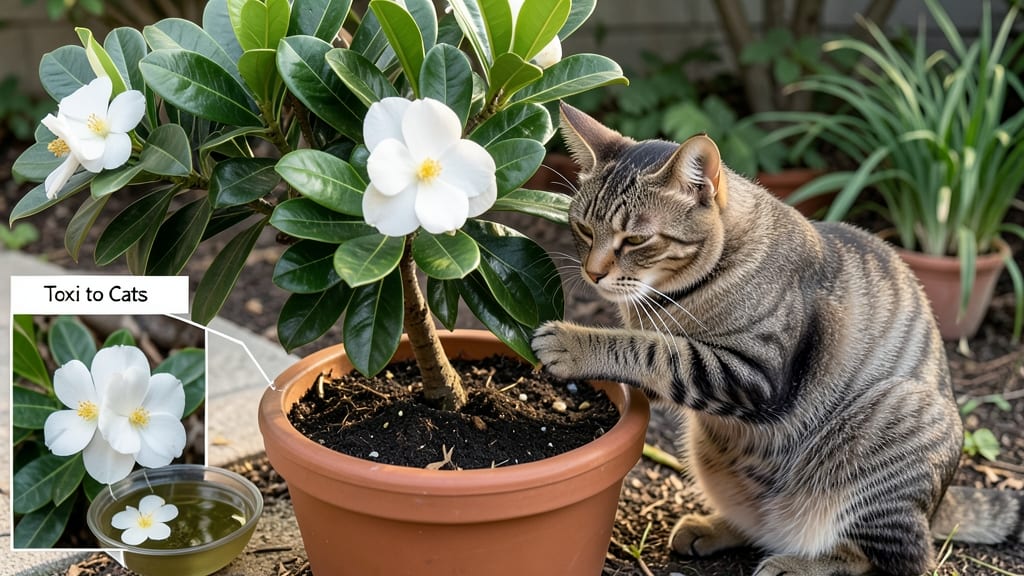
Gardenias are poisonous to cats because they contain saponins and essential oils that trigger vomiting, drooling, and lethargy when ingested. Keep these flowers out of reach of your curious feline friends.
Gardenias pose a serious risk to cats due to their natural chemical makeup.
The saponins in these flowers act as natural detergents, irritating your cat's digestive system and causing severe discomfort. 🐱 Even small amounts of gardenia leaves or petals can lead to more serious symptoms like difficulty breathing or weakness, especially in sensitive cats.
If you suspect your cat has ingested any part of a gardenia plant, contact your vet immediately—early intervention can make all the difference.
The good news is that there are plenty of beautiful, pet-safe alternatives that won't put your feline family members at risk. Plants like spider plants or cat grass not only look lovely but also provide safe options for your cat to nibble on.
Many of these alternatives even mimic the sweet fragrance that makes gardenias so appealing to humans. Always verify a plant's safety before bringing it into your home, as some common houseplants can be just as dangerous.
💡 In This Article
- Toxic Compounds in Gardenias and Their Effects on Cats
- Cat-Safe Garden Alternatives with Similar Fragrance
Toxic compounds in gardenias and their effects on cats
Gardenias contain two primary toxic compounds that pose risks to cats: saponins and essential oils like linalool. Saponins act as natural detergents, creating soapy bubbles when mixed with water—a process that disrupts cellular membranes in your cat's digestive tract.
When ingested, these compounds trigger vomiting within 30-60 minutes, often accompanied by excessive drooling and diarrhea. The irritation isn't just superficial; it can lead to inflammation of the gastrointestinal lining, causing pain and dehydration.
The essential oils, particularly linalool, are even more concerning because they affect your cat's nervous system. These volatile compounds are absorbed through the mouth and respiratory tract, potentially causing lethargy, weakness, or even difficulty breathing in severe cases.
A single leaf containing 0.1-0.5 grams of gardenia material can trigger symptoms in small cats, while larger cats may show signs after consuming 1-2 grams. The liver, which metabolizes these toxins, can become overwhelmed, leading to long-term damage if exposure is repeated.
What makes gardenias particularly dangerous is their fragrance—cats are naturally curious about new scents, often investigating with their mouths. The sweet, floral aroma that humans love is actually a red flag for feline safety.
Unlike humans, cats lack the enzymes to properly break down these compounds, making them far more susceptible to poisoning. Even small amounts of gardenia pollen or crushed leaves can cause symptoms, as the toxins are present throughout the plant, not just in the flowers.
Symptoms vary based on ingestion amount but typically escalate in severity. Mild cases may show only vomiting and drooling, while larger ingestions can progress to seizures or cardiac issues within 6-12 hours.
The ASPCA reports that gardenia toxicity is one of the top 10 plant-related emergencies they treat, with recovery times ranging from 24 hours for mild cases to 3-5 days for severe poisoning.
This is why immediate veterinary care is crucial—some symptoms, like liver damage, may not appear until hours after ingestion.
Interestingly, the toxicity isn't limited to fresh plants. Dried gardenia petals or even gardenia-scented products (like candles or soaps) can still pose risks. The essential oils remain potent even after processing, meaning your cat could still experience symptoms from indirect exposure.
Always store gardenia-related items in sealed, cat-proof containers and keep them out of reach, especially in rooms where your cat spends time.
If you suspect your cat has been exposed, don't wait for symptoms to appear. Induce vomiting only under veterinary guidance—some cases require activated charcoal to bind the toxins before they're absorbed.
The key is acting fast, as the longer these compounds circulate in your cat's system, the more damage they can cause. 🐾