
Pests and Diseases
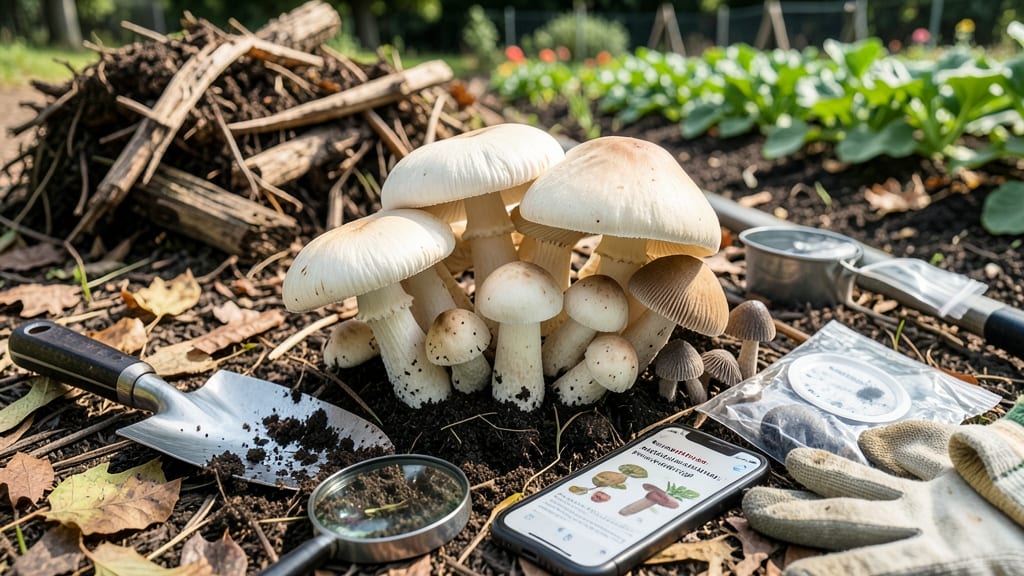
Are mushrooms in my garden bad? They aren’t always—many are harmless or even beneficial, like mycorrhizal fungi that boost plant health, while others may signal decay or toxicity. Identify types before acting: safe mushrooms rarely harm plants, but toxic varieties or excessive growth can indicate soil issues or pests.
Not all mushrooms are harmful—some actually improve your garden's ecosystem.
For example, mycorrhizal mushrooms form symbiotic relationships with plant roots, enhancing nutrient absorption and drought resistance. 🌱 However, toxic varieties like the death cap can pose serious risks to pets and humans, while excessive growth may signal underlying soil problems such as poor drainage or rotting organic matter.
The key is distinguishing between beneficial fungi and those requiring removal based on their appearance and growth patterns.
If you spot mushrooms in your garden, start by identifying them: safe types like oyster mushrooms have delicate gills and grow in clusters, while toxic ones often have smooth caps and grow alone.
For removal, focus on addressing the root cause—whether it's excess moisture, decaying wood, or compacted soil—rather than just eliminating the visible mushrooms. This approach helps maintain a healthy garden ecosystem while preventing future outbreaks.
💡 In This Article
- Types of Garden Mushrooms: Safe vs Toxic and Their Effects
- How to Remove Unwanted Garden Mushrooms Without Harming Soil
Types of garden mushrooms: safe vs toxic and their effects
Garden mushrooms fall into three broad categories: beneficial, neutral, and harmful. Mycorrhizal mushrooms like those in the Amanita genus (excluding toxic species) form symbiotic relationships with plant roots, extending root systems by up to 30% and increasing nutrient uptake.
Their white, fibrous mycelium networks resemble fine cotton threads beneath soil, while their fruiting bodies often appear in spring after rain. 🌿 These fungi trade phosphorus and nitrogen for plant sugars, creating a mutually beneficial partnership that can boost plant growth by 20-40%.
Neutral mushrooms, such as oyster mushrooms (Pleurotus ostreatus), decompose dead plant matter without harming living plants. They grow in dense clusters on wood chips or mulch, with fan-shaped caps and deciduous gills that range from white to gray.
Unlike toxic varieties, these mushrooms rarely exceed 4 inches in diameter and have a mild, earthy flavor. Their presence indicates healthy decomposition but doesn’t affect soil structure or plant health.
Toxic mushrooms, like the death cap (Amanita phalloides), contain amatoxins that can be fatal if ingested. These mushrooms have smooth, olive-green caps and white gills, often growing alone at the base of trees.
Their mycelium can spread up to 3 feet underground, competing with plant roots for nutrients. 🚨 While they don’t directly harm plants, their presence signals poor soil conditions—often high in organic debris or compacted—requiring immediate removal to prevent spore contamination.
Identifying mushrooms starts with their growth pattern: beneficial types form networks, neutral ones cluster, and toxic ones grow singly. Check the gill color (white in toxic species, varied in safe ones) and cap texture (smooth for toxic, scaly for beneficial).
For example, morels have honeycomb caps and grow in disturbed soil, while shaggy mane mushrooms appear after heavy rain and decompose quickly. These visual cues help differentiate harmless fungi from those needing intervention.
Soil conditions play a crucial role in mushroom growth. Excess moisture (above 60% soil saturation) triggers spore germination, while compacted soil restricts root competition, allowing fungal dominance. Toxic species thrive in acidic soil (pH 5.0-6.0), whereas beneficial mycorrhizae prefer slightly alkaline conditions (pH 6.5-7.5).
Testing your soil’s pH and moisture levels can reveal whether mushrooms are a natural part of your ecosystem or a sign of imbalance.
Remember: most garden mushrooms are harmless and even helpful. Only 1-2% of species are toxic to humans, and fewer still harm plants.
Focus on observing growth patterns rather than assuming all mushrooms are dangerous. 🌱 If in doubt, consult a local mycologist or use a field guide to identify species before taking action.