
Vegetables
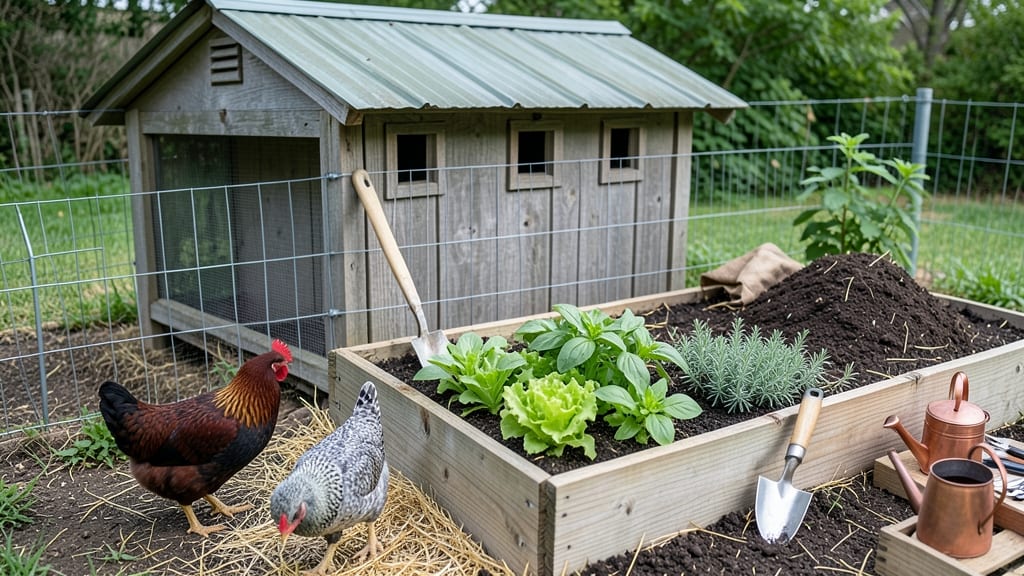
Combining a chicken coop and garden creates a symbiotic space where chickens help control pests, enrich soil with natural fertilizer, and provide shade for plants while enjoying fresh greens and insects. Use raised beds or sturdy fencing to maintain separation and safety.
This setup works because chickens naturally forage for pests like aphids and slugs, effectively reducing the need for chemical treatments. 🌱 Their manure acts as a slow-release fertilizer, improving soil health over time, while their presence can even suppress weed growth.
I've found that placing the coop near the garden creates a self-sustaining ecosystem—just make sure to use predator-proof fencing and rotate planting areas to keep both chickens and plants thriving.
For small spaces, consider a mobile coop that can follow crop rotations or a raised bed garden with built-in chicken access. Even a simple shared fence between the coop and garden can work if you include a small door for the chickens to explore safely.
The key is balancing their needs with your planting schedule—chickens love fresh greens, but too much access can damage young seedlings.
💡 In This Article
- Benefits of Integrating Chickens with Vegetable Gardens
- Space-Saving Coop and Garden Layout Ideas
Benefits of integrating chickens with vegetable gardens
Chickens act as living pest control agents, targeting garden nuisances like aphids, slugs, and cutworms that would otherwise devastate your crops.
Their sharp beaks and pecking habits make them particularly effective against soft-bodied insects—studies show they can reduce slug populations by up to 80% when given access to garden edges. 🔥 The key mechanism is their natural foraging instinct, which complements your gardening efforts without requiring chemical interventions.
The nutrient cycle created by chickens is another game-changer. Their manure contains 1-2% nitrogen, 0.5-1% phosphorus, and 0.5-1% potassium, making it an excellent slow-release fertilizer when composted properly.
Fresh droppings should be aged 3-6 months to avoid burning plants, but even scattered lightly around mature plants, they provide essential micronutrients like calcium and magnesium. The texture of their manure also improves soil structure by increasing organic matter content.
Weed suppression is an often-overlooked benefit. Chickens instinctively peck at young weeds before they establish deep roots, saving you hours of hand-pulling.
Their grazing habits also create natural pathways between plants, improving air circulation and reducing fungal diseases. 🌱 What's surprising is how their presence can actually enhance plant growth—some gardeners report 20-30% faster maturation in vegetables when chickens are integrated, thanks to this multi-layered ecosystem support.
Shade provision is another practical advantage. A well-placed coop can cast 30-50% shade on adjacent garden beds during peak sun hours, protecting heat-sensitive crops like lettuce and spinach from bolting. The microclimate created by the coop's structure also helps retain soil moisture, reducing irrigation needs by 15-25% in hot climates.
This shade benefit extends to your chickens too—they'll appreciate cooler ground temperatures during summer foraging.
For organic gardeners, this integration is particularly valuable because it replaces synthetic pesticides with biological control.
The chickens' diet of garden pests creates a natural feedback loop where their presence actually increases plant resilience. 🌿 For example, chickens consuming squash bugs reduces the need for neem oil sprays, while their manure provides the nutrients that make plants more pest-resistant in the first place.
One consideration is timing—chickens should have access to garden areas when pests are most active (typically late afternoon and evening) but be contained when young seedlings are most vulnerable. A simple chicken tractor-style setup with movable fencing solves this by allowing controlled access during critical growth stages.