
Landscaping
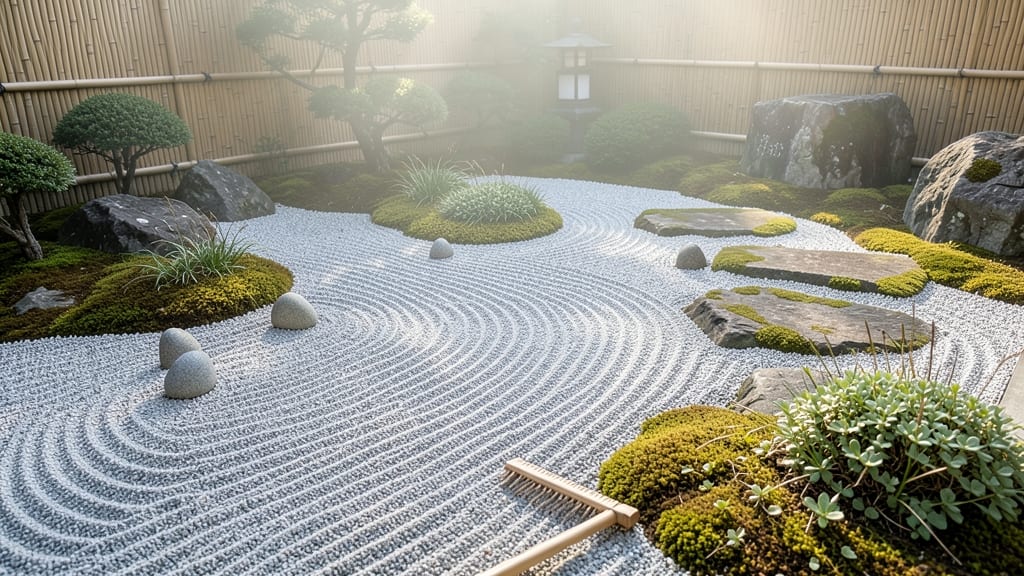
Creating a zen garden requires five essential elements: raked gravel patterns (karesansui), strategically placed stones, minimalist plant choices, a water feature, and a focal point like a gate or lantern. Each component works together to create a space of peace and mindfulness.
The beauty of zen gardens lies in their simplicity and intentional design. 🌿 Unlike traditional gardens that focus on vibrant colors and abundant foliage, zen gardens emphasize open space, natural materials, and deliberate arrangements to evoke calm.
The gravel patterns mimic rippling water, while rocks represent mountains—both key symbols in Japanese philosophy. Whether you're a beginner or refining an existing space, these elements create a meditative atmosphere that connects you to nature's quiet harmony.
What makes this style so special is how it transforms even small spaces into tranquil retreats. A well-placed lantern or stone can instantly shift the energy of your garden, while the careful raking of gravel becomes a mindful practice in itself.
The key is to start with just a few elements—perhaps a single rock and a small patch of moss—before gradually adding more components to build depth and meaning over time.
💡 In This Article
- Zen Garden Design Principles: Symbolism and Balance
- Step-by-Step Zen Garden Layout Guide for Beginners
Zen garden design principles: symbolism and balance
The gravel patterns in a zen garden, known as karesansui (dry landscape), serve as the visual and tactile representation of flowing water. This technique isn't just decorative—it's rooted in Buddhist philosophy where water symbolizes purity and the passage of time.
The raked lines create a rhythmic, meditative effect that mimics the movement of waves or rivers, while the smooth texture of the gravel (typically 1/4 to 1/2-inch rounded stones) invites touch and contemplation. 🌊 The careful arrangement of these patterns often follows natural curves rather than straight lines, mirroring how water finds its own path in nature.
Rocks play an equally crucial role as they embody the five sacred mountains of Japanese mythology, each representing different virtues. A single large rock might symbolize a mountain range, while smaller clusters create balance and depth.
The placement isn't random—it follows the principle of asymmetry where each element has its own space yet contributes to the whole. For example, an odd number of rocks (like three or five) creates more visual interest than symmetrical pairs, reflecting the natural irregularity found in landscapes.
The size matters too: larger rocks (12-18 inches) become focal points, while smaller ones (3-6 inches) fill gaps like pebbles in a stream.
Plants in zen gardens are chosen for their symbolic meanings and minimalist presence. Moss, with its soft green carpet, represents eternal life and the passage of seasons, while bamboo embodies resilience and adaptability.
The key is to select varieties that stay small (1-3 feet tall) to maintain the open, airy feel. Unlike traditional gardens, zen gardens avoid vibrant colors—opt for muted greens, grays, and earthy browns that blend seamlessly with the natural surroundings.
Even the leaves play a role: smooth-edged foliage (like hostas) contrasts with the rough texture of gravel, creating a tactile harmony.
The water feature, whether a small pond or bamboo fountain, introduces the element of sound—a critical component for meditation spaces. The gentle plink-plink of water masks distracting noises while reinforcing the connection to nature. In traditional designs, water represents the cycle of life, with its flow symbolizing impermanence.
A well-placed fountain (12-18 inches tall) can serve as the garden's centerpiece, while a shallow pond (6-12 inches deep) creates a reflective surface that doubles the visual impact. The sound should be soft enough to encourage listening rather than overpowering the space.
Finally, the focal point—often a gate, lantern, or stone lantern (torii)—serves as a spiritual anchor. These elements aren't just decorative; they mark transitions between spaces and invite reflection.
A stone lantern (2-3 feet tall) placed near the garden's entrance can guide visitors inward, while a small gate (3-4 feet wide) creates a sense of journey. The materials should be natural—stone, wood, or unglazed ceramics—to maintain the garden's organic feel.
The placement is deliberate: focal points should be visible from the house but require a few steps to reach, encouraging mindful movement through the space.
What ties all these elements together is the concept of wabi-sabi—embracing imperfection and transience. A slightly uneven rock, a patch of moss growing unevenly, or a crack in the gravel aren't flaws but features that tell a story.
This philosophy extends to maintenance too: the garden should feel lived-in, not manicured. The balance between these components—water, stone, plant, and structure—creates a space that feels both complete and ever-evolving, much like the natural world itself. ✨