
Plants
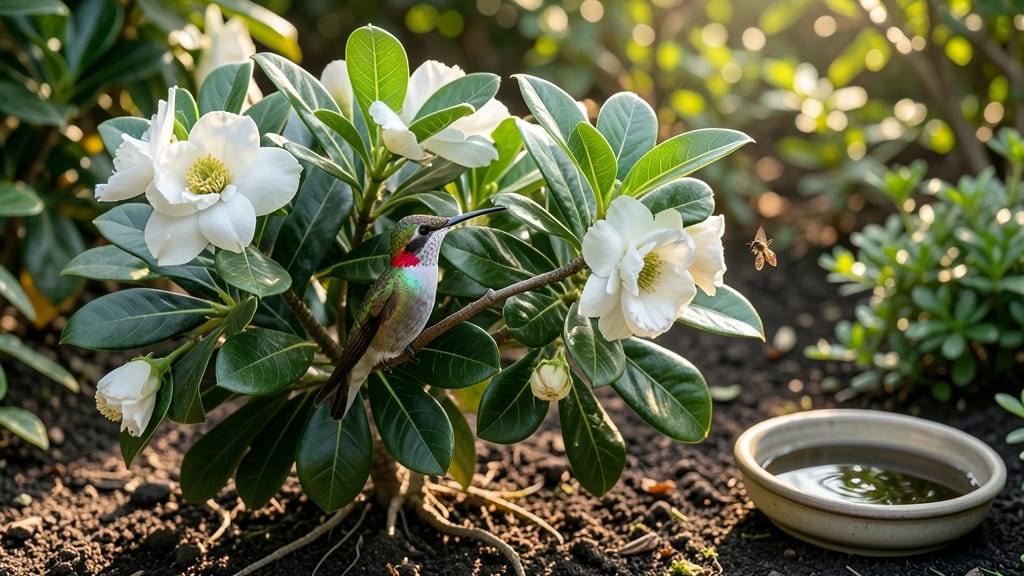
Hummingbirds do like gardenias, especially their fragrant, tubular flowers that provide easy access to nectar—but they favor milder scents and benefit from nearby pollinator-friendly plants like salvias.
Gardenias attract hummingbirds primarily through their nectar-rich, tubular blooms, which match the birds' long beaks perfectly. 🌸 The flowers' sweet fragrance also plays a role, though hummingbirds aren't as scent-driven as other pollinators.
What makes them particularly effective is their continuous blooming habit during warm months—creating a reliable food source. For best results, pair gardenias with salvias or fuchsias, which offer additional nectar options and extend the feeding window throughout the day.
Many gardeners overlook scent intensity when planting for hummingbirds. While gardenias' strong fragrance appeals to humans, hummingbirds actually prefer subtler floral aromas—they're more focused on visual cues and nectar availability. This is why combining gardenias with other nectar plants creates a more dynamic garden ecosystem.
The key is creating a layered planting strategy that provides food sources at different heights and bloom times, ensuring hummingbirds have options regardless of what's currently in peak season.
💡 In This Article
- Why Gardenias Attract Hummingbirds: Fragrance and Flower Structure
- Best Gardenia Pairings for Hummingbird-Friendly Gardens
Why gardenias attract hummingbirds: fragrance and flower structure
Gardenias' appeal to hummingbirds stems from their tubular, nectar-packed flowers, which are perfectly designed for the birds' long, specialized beaks. The average gardenia bloom contains about 0.1-0.3 milliliters of nectar per flower, with sugar concentrations around 20-25% sucrose—a perfect energy-to-volume ratio for hummingbirds.
The tubular shape (typically 2-3 inches long) forces pollinators to dive deep, ensuring they brush against the flower's reproductive parts while feeding.
The flowers' white color and UV patterns also play a crucial role.
While humans see pristine white blooms, hummingbirds perceive UV markings that act as neon signs, guiding them to food sources. 🌸 Gardenias' fragrance, though strong to us, is actually a secondary attractant—hummingbirds rely more on visual cues than scent.
This explains why they visit gardenias alongside other nectar plants, even when gardenias are heavily scented. The key is the accessible nectar, not the aroma intensity.
Contrast this with less attractive flowers like double-impact roses, which often have shorter petal tubes or hidden nectar. Hummingbirds prefer flowers where they can insert their beaks at least 1.5 inches deep without struggling.
Gardenias' continuous blooming habit during warm months (typically May-September) provides a reliable food source, unlike seasonal bloomers that offer only temporary appeal.
What most gardeners don't realize is how gardenias contribute to hummingbird pollination efficiency. As birds feed, they transfer pollen from the flower's anthers to their heads, then deposit it on the next flower's stigma.
This cross-pollination creates stronger, more genetically diverse plants. The birds' high metabolism means they need to visit 1,000-2,000 flowers per day, making gardenias' abundant blooms particularly valuable in their diet.
Interestingly, gardenias' night-blooming varieties (like Gardenia jasminoides 'Radicans') are even more effective for hummingbirds. While most gardenias bloom during the day, these nocturnal varieties provide overnight nectar replenishment, creating a 24-hour feeding opportunity.
The nectar produced at night is often slightly more concentrated (up to 30% sucrose), giving hummingbirds an energy boost during early morning feeding sessions.
For optimal attraction, plant gardenias where they receive 6-8 hours of morning sun and afternoon shade. This lighting condition maximizes both nectar production and flower visibility. The plants' leathery, glossy leaves also create a visually appealing backdrop that hummingbirds recognize as a productive feeding zone. 💫