
Tools
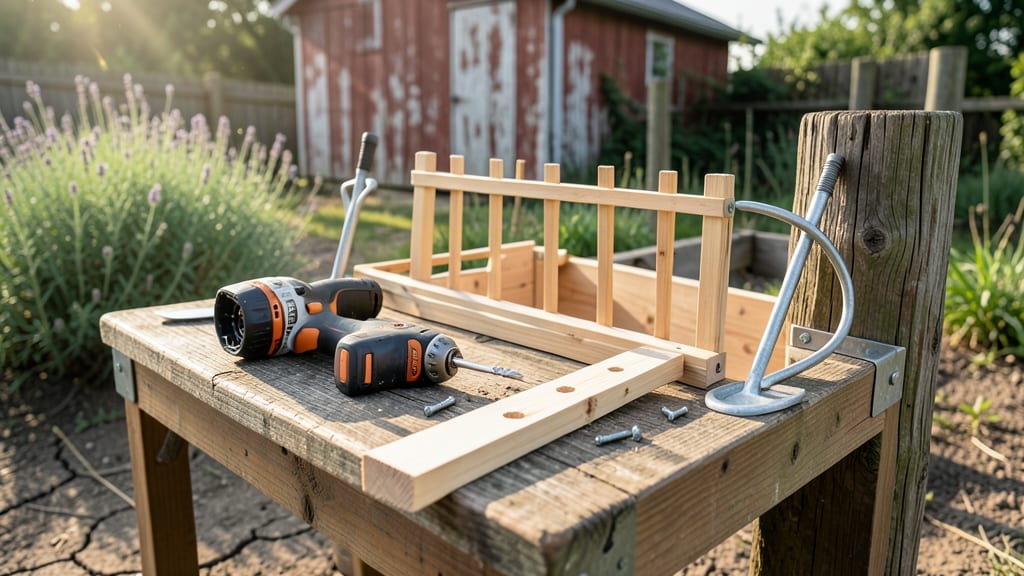
A garden drill attachment turns your power drill into a multi-purpose tool for digging, planting, and soil prep, handling everything from tree planting to fence post installation with precision and speed. The right attachment—like a spiral auger or core drill—can cut hours off your yard work.
A garden drill attachment works by converting your drill's rotational power into digging force, with different blades designed for specific tasks. Augers excel in loose soil, while core drills handle compacted earth by removing cylindrical soil plugs.
These attachments increase torque efficiency, letting you tackle tough projects like installing 4x4 posts or aerating lawns without the strain of manual digging. The key is matching the blade type to your soil conditions—sandy soil needs different attachments than clay.
For example, a spade bit is perfect for planting shrubs, while a post-hole digger attachment makes fence installation a breeze. Soil augers are ideal for mixing compost or creating drainage trenches. Most attachments require a drill with at least 1,200 watts of power to handle tough conditions.
I always recommend testing on a small area first to gauge the right speed and pressure for your specific soil type.
💡 In This Article
- How Garden Drill Attachments Work for Different Soil Types
- Top 5 Drill Attachments for Gardening Tasks and When to Use Them
How garden drill attachments work for different soil types
Garden drill attachments leverage your power drill's rotational force to create digging action through specialized blade designs.
The key difference lies in how each attachment interacts with soil particles. Spiral augers feature helical blades that cut through loose or sandy soil by pulling it upward and out of the hole, similar to a wood auger but optimized for dirt.
Their pitch (angle of the spiral) determines how efficiently they remove soil—steeper pitches work faster in loose soil, while shallower ones grip better in slightly compacted earth.
The torque your drill generates directly impacts performance. For example, a 1,200-watt drill can handle augers up to 2 inches in diameter in loose soil, but compacted clay may require a 1,800-watt model with a core drill attachment.
Core drills use a cylindrical bit to remove soil plugs, ideal for aerating lawns or creating precise holes in hardpan. The cutting edge's carbide teeth shear through roots and rocks, while the hollow center allows soil to be ejected upward.
Soil texture dramatically affects attachment choice. Sandy soil, which drains quickly and lacks cohesion, works best with spade bits or post-hole diggers that can remove large volumes without clogging. Clay, however, clings to blades, requiring attachments with serrated edges or replaceable carbide tips to prevent jamming.
I've found that adding a lubricant like vegetable oil to the blade helps in stubborn clay conditions by reducing friction.
Blade geometry matters too. Augers for planting trees use wide, aggressive spirals to create holes 12-18 inches wide, while soil augers for compost mixing have finer, more frequent threads to pull up smaller soil chunks.
The depth you need also dictates the attachment: Augers up to 3 feet work for most planting, but deeper holes (like for fence posts) require extension rods that can add 2-4 feet to your reach.
What most people overlook is how soil moisture affects performance. Wet soil sticks to blades, increasing resistance by up to 40% compared to dry conditions. In these cases, attachments with self-cleaning mechanisms—like those with spring-loaded blades—prevent clogging.
For example, a core drill in damp clay might require 20% less torque than in dry clay due to the increased weight of water-saturated soil.
Here's a quick comparison of how different attachments handle soil types:
- Loose soil (sand/gravel): Augers or spade bits with wide pitch (fast removal, minimal resistance)
- Moderate soil (loam): Standard augers with medium pitch (balanced cutting and ejection)
- Compacted soil (clay/silt): Core drills or augers with carbide teeth (shear through tough particles)
- Rocky soil: Post-hole diggers with hardened steel tips (designed to chip through small stones)
The right attachment can reduce digging time by 70-80% compared to manual tools, but only if matched to your soil's specific characteristics. Always check the manufacturer's recommended drill power for your attachment—undersized drills will struggle in tough conditions. 💫