
Landscaping
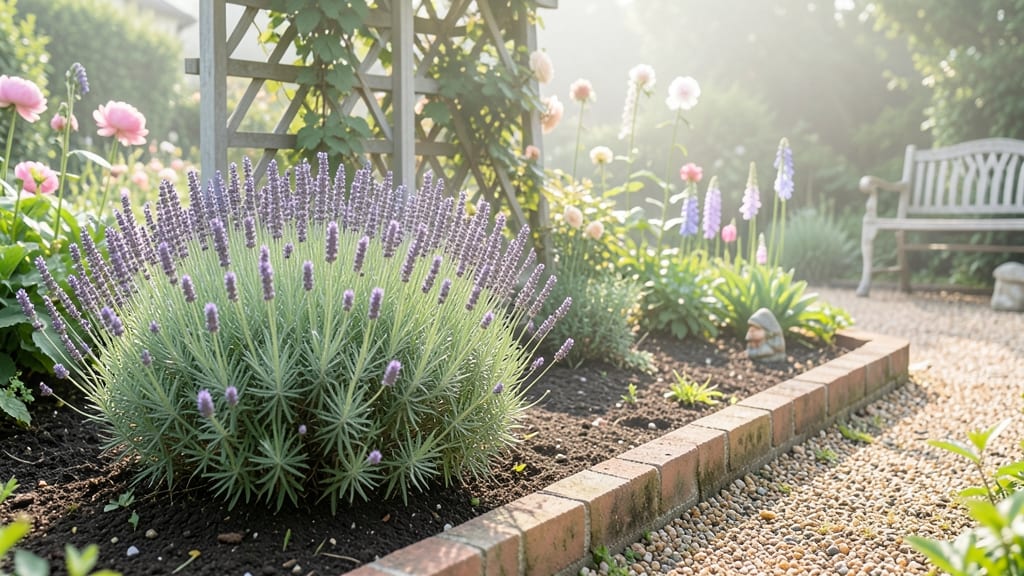
Creating English garden ideas for front yard involves layered planting with romantic blooms, lush greenery, and winding pathways to craft an inviting, timeless space. Incorporate climbing roses, lavender, peonies, and boxwood hedges for structure, complemented by seasonal flowers like delphiniums and hydrangeas.
English garden design thrives on visual depth through height variation—think ground-hugging thyme under mid-height shrubs like boxwood, topped with towering delphiniums or hollyhocks. 🌿 The magic happens in color transitions too: soft pastels near pathways gradually give way to bolder blooms at the back, creating movement.
Fragrance layers are key—I always include roses near seating areas and lavender along borders for sensory appeal.
For plant pairings, focus on textural contrasts: pair velvety lamb's ear with spiky ornamental grasses or silvery foliage with deep purple flowers. Low-maintenance combos like lavender with thyme or hydrangeas with ferns work beautifully while requiring minimal upkeep.
Regional adaptability matters too—swap heat-sensitive peonies for drought-tolerant Russian sage in warmer climates.
💡 In This Article
- Layering Techniques for an Authentic English Garden Feel
- Best Plant Pairings for a Classic English Front Garden
Layering techniques for an authentic English garden feel
The secret to an English garden's timeless charm lies in its vertical layering, which mimics natural woodland edges. Start with ground covers like creeping thyme or ajuga at 3-6 inches tall—these create a lush carpet while suppressing weeds.
Above them, place mid-height shrubs such as boxwood (2-3 feet) or hydrangeas (3-5 feet) to establish structure.
The magic happens at the top with tall perennials like delphiniums (4-6 feet) or hollyhocks (5-8 feet) that frame the space and draw the eye upward.
Color progression follows a soft-to-bold gradient—pastels near pathways (think pale pink roses or lavender) gradually intensify toward the back with jewel tones like deep purple salvias or burgundy bergenias. This creates visual movement and depth.
Fragrance layers are equally important: position heavily scented plants like climbing roses near seating areas or front doors, while lighter-scented foliage (e.g., lamb's ear) can fill gaps without overwhelming. Textural contrasts—pairing silky grasses with velvety lamb's ear or spiky yucca with rounded peonies—add tactile interest that invites closer inspection.
Seasonal transitions are where English gardens truly shine. Plant early spring bulbs like daffodils (12-18 inches) beneath deciduous shrubs so they emerge before leaves fill in.
Summer brings in heat-loving perennials> like lavender and catmint, while autumn adds ornamental grasses (e.g., fountain grass) for movement and winter interest. Mulching with wood chips (2-3 inches deep) not only suppresses weeds but also helps regulate soil temperature, protecting roots during extreme seasons.
Focal points anchor the design—consider a climbing rose trellis (6-8 feet tall) near the front door or a small ornamental tree> like a Japanese maple in a mixed border. These elements create vertical interest while providing year-round structure.
Pathways should meander gently, using stepping stones> (12-18 inches apart) or gravel for a soft, inviting feel. The key is to create a sense of discovery: every turn should reveal something new, whether it's a hidden bench or a cascade of blooms.
Botanical principles like the rule of thirds> apply here—divide the space into thirds and place your tallest elements in the back third, mid-height plants in the middle, and ground covers in the front. This creates balance while maintaining that signature English garden feel of effortless abundance.
Even in small front yards, you can achieve this effect by using vertical space> (trellises, espaliered fruit trees) and container gardening> for overflowing blooms.
Don't overlook the power of negative space>. English gardens often incorporate lawn areas> (mown to 3-4 inches>) or gravel patches to give the eye room to rest. This prevents the space from feeling cluttered while maintaining that romantic, slightly wild aesthetic.
The goal is harmony—not perfection—so embrace a little natural disorder where branches or stems spill over their allotted spaces.