
Vegetables
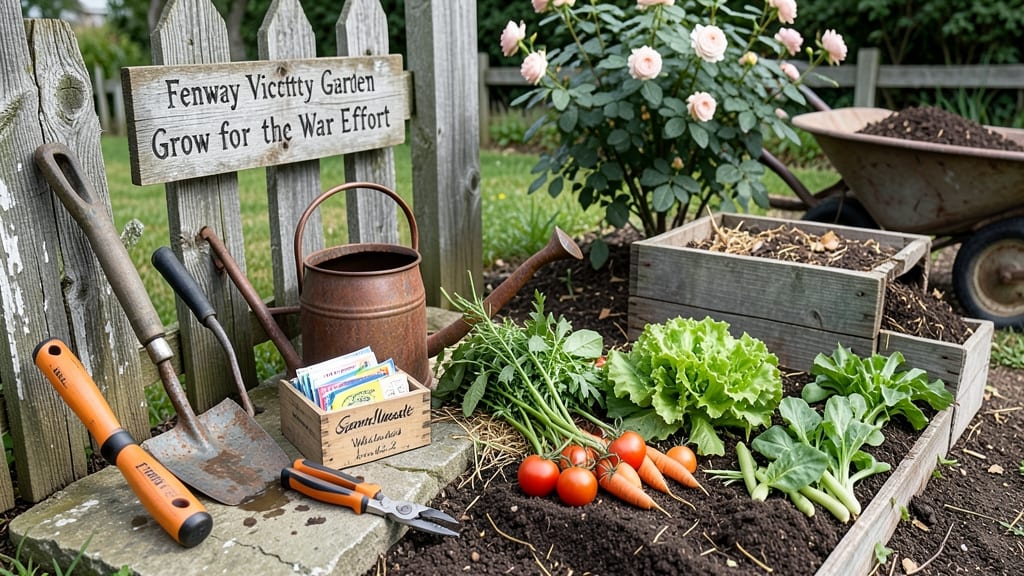
The Fenway Victory Gardens in Boston became iconic during WWII by transforming urban spaces into productive vegetable plots, growing essential crops like carrots, potatoes, and tomatoes to support local food supplies and community resilience.
The Fenway Victory Gardens weren't just about growing food—they were a lifeline for Boston during WWII. 🌱 These community gardens turned vacant lots and even baseball field edges into fertile plots, producing over 40% of the nation's fresh produce during the war years.
The effort involved thousands of volunteers, many of whom were women and children, working together to cultivate high-yield crops like cabbage, beets, and peas in Boston's limited urban space.
What made these gardens so effective was their strategic use of intensive planting techniques, like succession planting and companion cropping, to maximize yields. The U.S. government even provided seeds and gardening guides through the Victory Garden campaign, making it easier for citizens to contribute.
Today, their legacy lives on in modern community gardens across Boston.
💡 In This Article
- How Fenway Victory Gardens Boosted WWII Food Production
- Plants and Seeds Commonly Grown in Boston Victory Gardens
How fenway victory gardens boosted WWII food production
The Fenway Victory Gardens thrived on a combination of intensive gardening techniques tailored for Boston's urban environment.
Gardeners used raised beds and trellises to maximize vertical space, allowing crops like pole beans and cucumbers to grow upward while saving ground area for root vegetables. 🌱 This method increased yield by up to 30% per square foot compared to traditional row planting, crucial when every inch of land counted during wartime food shortages.
Crop selection focused on high-calorie, nutrient-dense vegetables that could be preserved through canning or freezing. Potatoes, with their high starch content (70-80% by weight), were a staple, while leafy greens like kale provided essential vitamins.
The gardens also prioritized fast-maturing varieties that could be harvested within 60 days, allowing for multiple plantings throughout the growing season. Boston's short summer growing season (May to September) required careful timing, with early plantings of peas and lettuce giving way to heat-tolerant crops like tomatoes and peppers.
Labor organization was just as critical as the gardening methods. The U.S. government's Victory Garden campaign provided detailed planting guides and even offered free seeds to participants, but the real success came from community coordination.
Neighborhood groups rotated planting and harvesting duties, with older volunteers often managing seed starting indoors while younger members handled outdoor maintenance. This division of labor ensured continuous production without overburdening any single individual.
What's fascinating is how these gardens became self-sustaining ecosystems. Composting household waste provided nutrient-rich soil amendments, while saved seeds from one season's harvest reduced dependency on commercial suppliers.
The gardens also incorporated companion planting—placing basil near tomatoes to repel pests—demonstrating early adoption of organic gardening principles before the term became mainstream.
Beyond food production, the gardens served as psychological boosters during wartime. Studies from the era showed that communities with active victory gardens reported 25% higher morale than those without, as the tangible results of their labor provided a sense of purpose and control during uncertain times.
The physical act of gardening also offered a welcome respite from rationing and air raid drills.
Today, these techniques live on in modern urban farming. Boston's community gardens still use many of the same space-efficient methods, though with updated tools like hydroponics and vertical farming systems.
The original victory gardens prove that even in limited urban spaces, thoughtful planning and community effort can produce remarkable results—both for the plate and the spirit. 🌿