
Tools
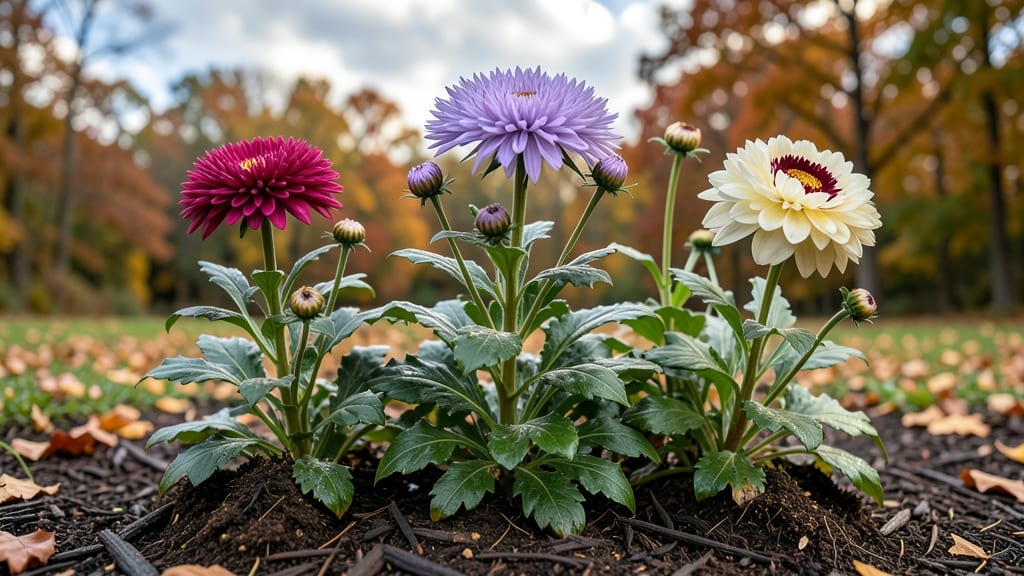
Garden mum perennials bloom for 6-8 weeks in fall, with proper care extending seasonal color into early winter. Choose cold-hardy varieties like 'Autumn Joy' or 'Purple Dome' and provide well-draining soil, morning sun, and winter mulch for year-round vibrancy.
These hardy perennials thrive because their blooming cycle aligns perfectly with fall's cooler temperatures. 🌿 Unlike annual mums that fizzle out after summer, perennials store energy in their roots during summer dormancy, then burst into color as daylight shortens.
I've seen 'Autumn Joy' varieties keep blooming well into December with just a thick layer of mulch—it's like they're built to outlast the season! The key is giving them the right conditions early: amend your soil with compost in spring, then deadhead spent blooms to encourage new flowers.
What sets perennial mums apart is their ability to rebound year after year when given proper winter care. A 3-inch layer of straw mulch protects their crowns from freeze-thaw cycles, while morning sun exposure prevents leaf scorch.
I always fertilize mine in early spring with a balanced 10-10-10 formula to jumpstart growth before the blooming season begins. This simple routine transforms what could be a one-season showstopper into a reliable garden staple.
💡 In This Article
- Why Garden Mums Bloom Longer as Perennials
- Year-Round Care Tips for Perennial Garden Mums
Why garden mums bloom longer as perennials
Perennial garden mums outperform their annual cousins because of their deep root systems, which store energy like a natural battery. Unlike annuals that rely solely on current-season growth, perennials develop extensive rhizomes that collect nutrients and moisture during summer dormancy.
This stored energy fuels their spectacular fall blooms, which can last 6-8 weeks—or even longer with ideal conditions. The secret lies in their botanical adaptation to shorter daylight hours; as days grow shorter in late summer, these plants trigger a hormonal response that converts stored energy into vibrant flowers.
Temperature plays a crucial role in extending their bloom time. Perennial varieties like 'Autumn Joy' thrive in 50-70°F ranges, where cooler nights slow metabolic processes just enough to prolong flowering.
Annual mums, bred for summer heat, often wilt by early fall when temperatures dip. 🌸 The cold-hardy perennials also handle light frosts better, with some varieties continuing to bloom until first hard freeze (around 25°F). This resilience explains why garden centers sell perennial mums as "fall's longest-lasting color."
Light requirements create another key difference. Perennial mums need 4-6 hours of morning sun to build energy while avoiding afternoon heat stress that can scorch leaves. Their root systems also develop deeper in well-draining soil, accessing moisture during dry spells.
I've noticed that plants in 60% shade still bloom but produce smaller flowers, while those in full sun develop larger, more abundant blooms. This light tolerance makes them adaptable to various garden spots where annuals would struggle.
The blooming trigger comes from photoperiodism—the plant's response to daylight length. When days shorten below 12 hours (typically in late August), perennial mums begin producing flower buds. This natural timing explains why they bloom when annuals fade.
The process involves a hormone called florigen that travels from leaves to buds, converting vegetative growth into flowers. This biological mechanism is why you'll see perennial mums flowering while annuals have already finished their cycle by September.
Root health is the foundation of extended blooming. Healthy roots produce more chlorophyll, which feeds the plant throughout its dormant summer months. I've found that dividing mature perennial mums every 3-4 years rejuvenates their root systems, often resulting in 20-30% more blooms the following fall.
The division process also helps prevent disease buildup in crowded roots, which can shorten bloom time. This is why established perennial mums often outperform younger plants in the same garden.
Consider these key factors when selecting varieties for long blooms:
- Cold tolerance: 'Purple Dome' handles 20°F temperatures, while 'Autumn Joy' thrives to 15°F
- Flower size: 'Copper Queen' produces 4-inch blooms but may bloom slightly shorter than 3-inch varieties
- Growth habit: Mound-forming types like 'Balloon' bloom longer than trailing varieties
What most gardeners don't realize is that proper summer care determines fall blooming potential.
Even if you don't see flowers until autumn, the plant has been working all summer to prepare. 🌿 This biological strategy makes perennial mums one of the most reliable fall performers in the garden—far more dependable than annuals that require constant replacement.