
Tools
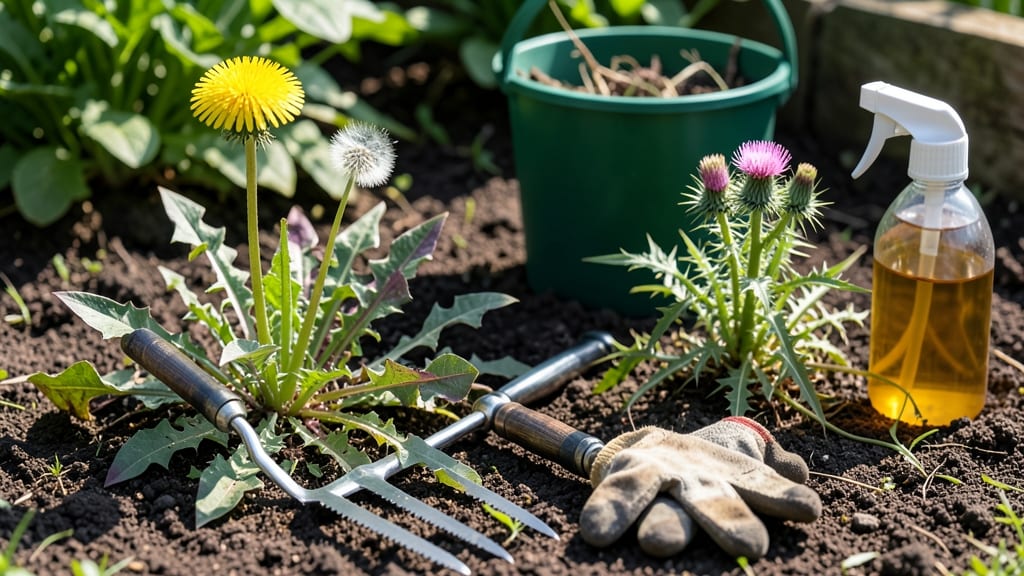
Dealing with garden weeds in the UK means first spotting persistent species like bindweed, dock, and creeping buttercup, then tackling them with the right tools or natural treatments before they take over. Getting the timing right and disposing of them properly stops them from coming back.
UK gardens face unique challenges from invasive weeds that thrive in our damp climate. 🌱 Many of these plants, like the aggressive bindweed with its heart-shaped leaves or the deep-rooted dock, can smother your flowers and veggies if left unchecked.
The key is acting fast—most weeds spread rapidly during our mild springs and autumns, so regular checks every 2-3 weeks make all the difference.
I've found that a combination of manual removal with a sturdy weeding fork and spot treatments with diluted vinegar works best for my garden, especially when dealing with stubborn patches near pathways.
What sets UK weed control apart is our climate—weeds like ground elder and creeping thistle love our rainy seasons, so prevention is just as important as removal.
Using organic mulch or cardboard barriers can block sunlight and prevent new weeds from germinating, while proper disposal (sealed bags in the trash, not compost) stops seeds from spreading.
The right tools make this job easier too—hand weeding is best for small areas, while a Dutch hoe works great for larger patches between plants.
💡 In This Article
- Common UK Garden Weeds and Their Identification
- Effective UK-Specific Weed Removal Tools and Techniques
Common UK garden weeds and their identification
UK gardens are battlegrounds against weeds that thrive in our temperate climate, particularly those with deep roots or aggressive spreading habits. Take bindweed (Convolvulus arvensis), for example—a perennial with heart-shaped leaves that can grow up to 10 feet long and buries roots 15 feet deep.
Its vines twist counterclockwise around plants, smothering them like a living rope. Then there's dock (Rumex obtusifolius), easily spotted by its broad, arrowhead-shaped leaves and red-stalked stems, which can grow 3 feet tall and produce thousands of seeds per plant.
The difference between broadleaf and grassy weeds is critical for treatment. Broadleaf weeds like creeping buttercup (Ranunculus repens) have wide leaves and shallow roots, making them easier to pull by hand when soil is moist. Their bright yellow flowers appear in spring, signaling it's time to act before seeds spread.
Grassy weeds, such as annual meadow grass (Poa annua), have narrow leaves and fibrous root systems, requiring tools like a Dutch hoe to sever roots at the base. The key is timing—most weeds germinate in spring and autumn, so regular checks every 2-3 weeks prevent them from establishing.
Visual identification is simpler than you'd think. Bindweed leaves grow in pairs along the stem, while dock leaves have a waxy texture and often develop red veins when stressed. Creeping buttercup spreads via underground runners, forming dense mats that choke out lawns.
For tricky cases, compare weeds to a UK-specific plant ID app or consult the Royal Horticultural Society's weed database, which includes high-resolution images and growth charts. The earlier you spot these invaders, the easier they are to remove before they dominate your garden.
Root systems reveal a weed's resilience. Bindweed roots fragment easily, so pulling can scatter pieces that grow into new plants—always dig out the entire root system. Dock, however, has a taproot that can regrow from small fragments, so cutting at the base with a sharp spade is more effective. Ground elder (Aegopodium podagraria), another UK menace, spreads via both seeds and underground stems called rhizomes, which can regenerate from tiny pieces.
This is why organic mulch or cardboard barriers work so well—they block sunlight and prevent new shoots from emerging.
Seasonal patterns dictate when weeds are most vulnerable. In spring, creeping buttercup sends up bright yellow flowers, signaling it's time to remove them before seeds form. By midsummer, dock produces seed heads that can remain viable for years, so deadheading is crucial.
Autumn is the best time to tackle bindweed because its energy is focused on root growth rather than foliage, making it easier to dig up. Understanding these cycles lets you time your efforts for maximum impact, reducing the need for harsh chemicals.
Don't overlook the sensory clues—weeds often have distinctive smells or textures. Dock leaves have a slightly bitter taste (and were historically used as a medicinal plant), while ground elder emits a carrot-like aroma when crushed. These traits can help you confirm identifications in the field.
For stubborn patches, a mix of hot water (80°C) and salt applied directly to the foliage can kill weeds without harming nearby plants, though it's best used sparingly to avoid soil damage.