
Trees
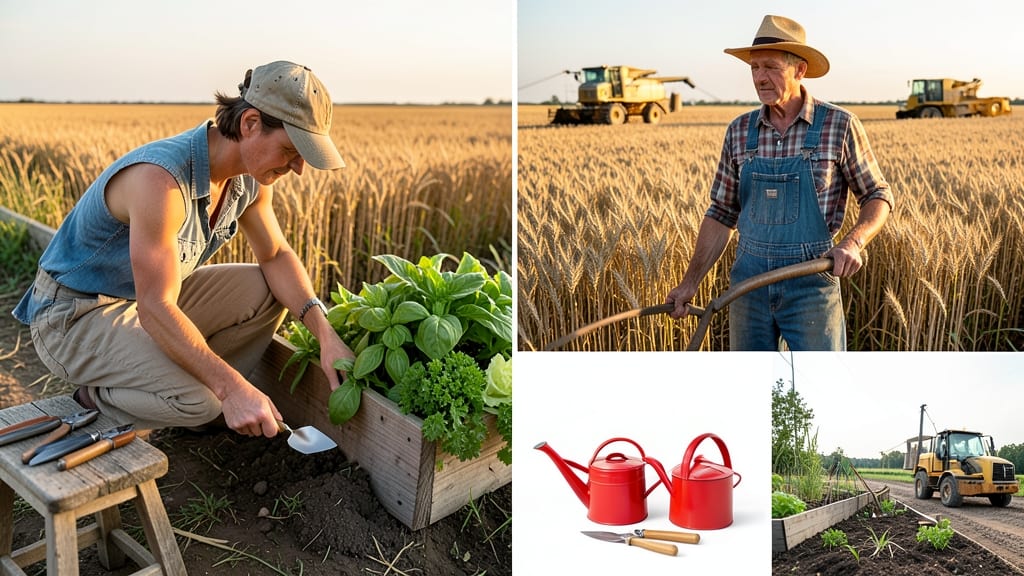
The difference between gardeners and farmers centers on their land use and production goals: gardeners tend small plots for personal enjoyment or decorative plants, while farmers work large agricultural fields to grow food crops or raise livestock for sale or subsistence. Their methods, tools, and daily responsibilities reflect these distinct priorities.
The core distinction starts with land size and purpose.
Gardeners often work in backyard plots or community gardens, nurturing flowers, herbs, or vegetables for beauty or home use. 🌱 Meanwhile, farmers manage acres of land to produce staple crops like corn, wheat, or soybeans—or raise animals—using heavy machinery and large-scale irrigation.
While gardeners focus on variety and visual appeal, farmers prioritize efficiency, yield, and market demand.
This difference shapes their daily routines too. Gardeners spend time hand-weeding, pruning, and arranging plants for aesthetic impact, while farmers operate tractors, manage harvest schedules, and coordinate with suppliers. Both roles require dedication, but their approaches reflect entirely different scales of production and purpose.
💡 In This Article
- Scale and Scope: How Land Use Defines Gardeners vs Farmers
- Daily Tasks and Tools: What Gardeners and Farmers Actually Do
Scale and scope: how land use defines gardeners vs farmers
The most fundamental difference between gardeners and farmers is their relationship with land. A typical backyard gardener might cultivate just 100-500 square feet—enough for a family's seasonal vegetables or decorative flowers.
This small scale allows for meticulous attention to detail, like selecting heirloom tomato varieties for flavor or arranging perennials for seasonal color transitions. 🌸 Meanwhile, farmers work with hundreds to thousands of acres, where efficiency becomes critical to feed communities or generate profit.
Crop selection reveals their priorities too. Gardeners often grow a diverse mix of plants—think 20+ varieties of vegetables, herbs, and flowers—prioritizing taste, texture, and visual appeal. Farmers, however, focus on 5-10 staple crops like corn, soybeans, or wheat that maximize yield per acre.
The science behind this is clear: gardeners optimize for biodiversity and ecosystem health, while farmers prioritize monoculture systems designed for high-volume production and marketability.
Economic impact highlights this divide further. A gardener's harvest might supply a household or local farmers' market, while a farmer's output feeds grocery stores or global supply chains.
Consider corn: a farmer might grow 200 bushels per acre using precision agriculture, while a gardener's 10 plants produce just a few ears for personal use. The tools reflect this too—gardeners use hand trowels and watering cans, while farmers rely on combine harvesters and GPS-guided tractors.
Sustainability approaches differ dramatically. Gardeners often practice organic methods, composting kitchen scraps and using companion planting to deter pests naturally. Farmers, while increasingly adopting sustainable practices, must balance environmental concerns with economic pressures—like using minimal tillage to preserve soil health while maintaining productivity.
The gardener's focus on beauty and self-sufficiency contrasts with the farmer's need to meet demand while managing costs.
Even irrigation systems tell the story. A gardener might use a simple drip irrigation system delivering 0.5 gallons per hour to each plant, while a farmer's center-pivot system covers hundreds of acres with thousands of gallons per minute.
The scale isn't just about size—it's about solving entirely different problems with tailored solutions. 🌱
Consider the time commitment too. A gardener might spend 10-15 hours per week tending their plot, while a farmer's schedule includes 12-hour days during harvest season managing labor, equipment, and logistics.
The gardener's work is often seasonal and flexible, while the farmer's calendar is dictated by planting windows, weather patterns, and market demands.
At its core, this difference reflects two valid approaches to working with nature. Gardeners nurture connections between people and plants, while farmers feed the world's growing population. Both roles require deep knowledge of soil science, plant biology, and weather patterns—but their applications serve entirely different purposes. 💫