
Light Requirements
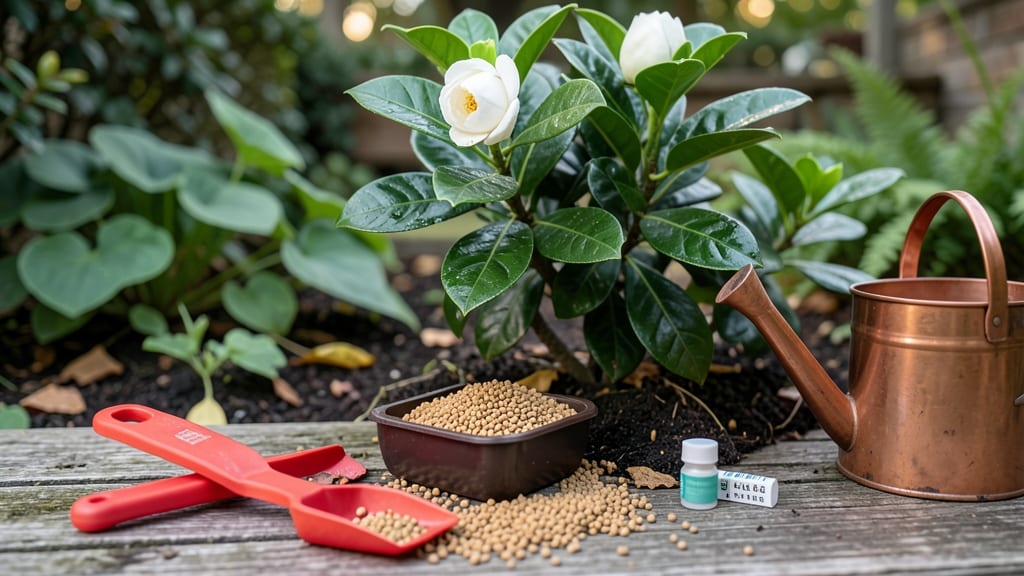
To keep your gardenia blooming beautifully, you’ll need to understand its gardenia fertilizer requirements—because these acid-loving plants are picky about their nutrition.
Picture this: your gardenia 🌸 sits there year after year, putting out lush green leaves but never a single flower. The problem isn’t the light or the water—it’s what’s (or isn’t) in the soil.
Gardenias crave a balanced, acid-friendly fertilizer, but too much of the wrong kind can actually stunt their growth or burn their roots.
In this guide, I’ll walk you through the best fertilizer types—organic and synthetic—when to apply them, and how to spot the signs of deficiency before they ruin your blooms.
You’ll learn why a simple pH test could save your plant, and how to adjust your feeding schedule for peak performance without overdoing it.
By the end, you’ll have a clear plan to feed your gardenia just enough to thrive, so you can enjoy those fragrant blooms all season long. Let’s get started.
Optimal soil pH and nutrient requirements for gardenia fertilizer success
Gardenia plants are famously finicky about their soil conditions, and their acid-loving nature is the foundation of their fertilizer needs. To unlock those fragrant blooms, you’ll need to maintain a soil pH between 4.5 and 6.0—any higher, and your gardenias will struggle to absorb essential nutrients.
Think of this range as their "sweet spot" for nutrient uptake, where iron, magnesium, and manganese become readily available.
Most gardeners overlook the importance of micronutrient balance alongside the big three: nitrogen (N), phosphorus (P), and potassium (K). While N fuels leafy growth, P and K are critical for root development and flowering.
Without the right mix, you’ll end up with lush foliage but fewer blooms, or worse, yellowing leaves signaling nutrient deficiencies. Let’s break down what your gardenias truly need to thrive.
| Nutrient | Role in Gardenia Health | Signs of Deficiency | Ideal Soil Level |
|---|---|---|---|
| Nitrogen (N) | Leafy growth, chlorophyll production | Yellowing older leaves (chlorosis) | Low to moderate (avoid excess) |
| Phosphorus (P) | Root development, flowering, fruiting | Purple stems, slow growth, poor blooms | Moderate (critical for blooms) |
| Potassium (K) | Stress resistance, disease prevention | Weak stems, brown leaf edges | Moderate (supports overall health) |
| Iron (Fe) | Chlorophyll production (prevents yellowing) | Yellowing between leaf veins (interveinal chlorosis) | High (chelated iron preferred) |
| Magnesium (Mg) | Chlorophyll activation, energy transfer | Yellowing between veins (like iron, but starts at leaf tips) | Moderate (often deficient in acidic soils) |
| Manganese (Mn) | Enzyme function, nitrogen metabolism | Brown spots on leaves, stunted growth | Low (easily deficient in high-pH soils) |
The soil pH is your first line of defense against nutrient deficiencies. Gardenias thrive in acidic soil (pH 4.5–6.0), where micronutrients like iron and manganese dissolve and become plant-available. If your soil tests higher than 6.0, these nutrients lock up, causing yellowing leaves despite your best fertilizer efforts.
To lower pH, amend with sulfur or peat moss, and avoid lime or wood ash, which raise pH.
When selecting a fertilizer, prioritize a balanced NPK ratio like 10-10-10 or 8-3-9, designed for acid-loving plants. Avoid high-nitrogen fertilizers (e.g., 30-10-10), which promote leafy growth at the expense of blooms and root strength.
Instead, opt for a low-nitrogen, high-phosphorus blend during the blooming season to encourage flowers. For example, a 5-10-5 fertilizer is ideal for gardenias in spring and summer.
Micronutrient deficiencies often sneak up on gardeners. Iron chlorosis (yellowing between leaf veins) is the most common, especially in alkaline soils. To fix it, apply chelated iron supplements every 2–3 months or use acid-forming fertilizers like Miracle-Gro Azalea.
For magnesium deficiencies, sprinkle Epsom salt (magnesium sulfate) around the base of the plant in early spring. Always water thoroughly after application to prevent root burn.
Over-fertilizing is a silent killer of gardenias. Excess nitrogen causes burnt leaf tips and stunted blooms, while too much phosphorus can lead to root damage. Stick to the 1 tablespoon per plant rule every 4–6 weeks during the growing season (spring to early fall).
In winter, pause fertilizing entirely—gardenia plants enter dormancy and don’t need extra nutrients. This rest period helps them rebound stronger in spring.
Signs of nutrient imbalance are your gardenia’s way of communicating. Yellowing leaves
Best fertilizers for gardenias: organic vs synthetic options compared
Choosing the right gardenia fertilizer can transform your struggling shrub into a blooming superstar. Gardenias thrive on acid-loving nutrients, but not all fertilizers deliver the same results. Organic options like composted pine bark and fish emulsion build soil health slowly, while synthetic acid-forming fertilizers provide quick, targeted nutrition.
Let’s break down the best choices for your gardenia care routine.
Your gardenia’s soil pH (ideal: 5.0–6.5) dictates which fertilizers will work best. Organic amendments like peat moss or composted bark naturally lower pH over time, while synthetic options like Miracle-Gro Azalea are formulated to match these needs immediately.
The trade-off? Organic fertilizers cost more upfront but improve soil long-term, while synthetics offer instant results with less effort.
Organic Fertilizers for Gardenias
- Improves soil structure over time
- Slow-release nutrients prevent burns
- Supports microorganisms in soil
- Eco-friendly and pet-safe
- Slower results (4–6 weeks to see effects)
- Higher upfront cost per application
- Requires frequent reapplication
Synthetic Fertilizers for Gardenias
- Fast-acting nutrient delivery (visible in weeks)
- Precise NPK ratios for blooms
- Lower cost per use than organics
- Convenient liquid or granular options
- Risk of over-fertilization (leaf burn)
- No soil improvement long-term
- May require pH adjusters separately
For organic gardenia fertilizer, I recommend starting with composted pine bark (mix 2–3 inches into soil annually) or fish emulsion (diluted to 1:10 ratio, applied every 6 weeks during growing season).
These options feed roots gradually while maintaining that critical acidic soil pH. Pair them with a peat moss top-dressing in spring to boost acidity naturally.
If you prefer synthetic fertilizers, opt for acid-forming blends like Miracle-Gro Azalea or Jobe’s Acid-Loving Plant Food. These are formulated with low nitrogen (to avoid leafy growth at bloom expense) and higher phosphorus for flowers.
Apply every 4–6 weeks from spring to early fall, following label rates—typically 1 tbsp per plant for granular types.
Cost-wise, organic fertilizers run $15–$30 per bag (lasts multiple seasons), while synthetics cost $10–$20 per bottle but require more frequent purchases. For example, a 5-pound bag of composted pine bark covers 3–4 plants for a year, while a 16-oz bottle of Miracle-Gro Azalea treats 6 plants for 3 months.
Weigh your budget against your patience—organics win for long-term health, synthetics for quick blooms.
Pro tip: Always water gardenias deeply before and after fertilizing to prevent root burn. And watch for yellow leaves (sign of iron deficiency) or leaf drop (over-fertilization)—adjust your approach accordingly. With the right fertilizer, your gardenias will reward you with glossy leaves and fragrant blooms all season long. 🌸