
Planting
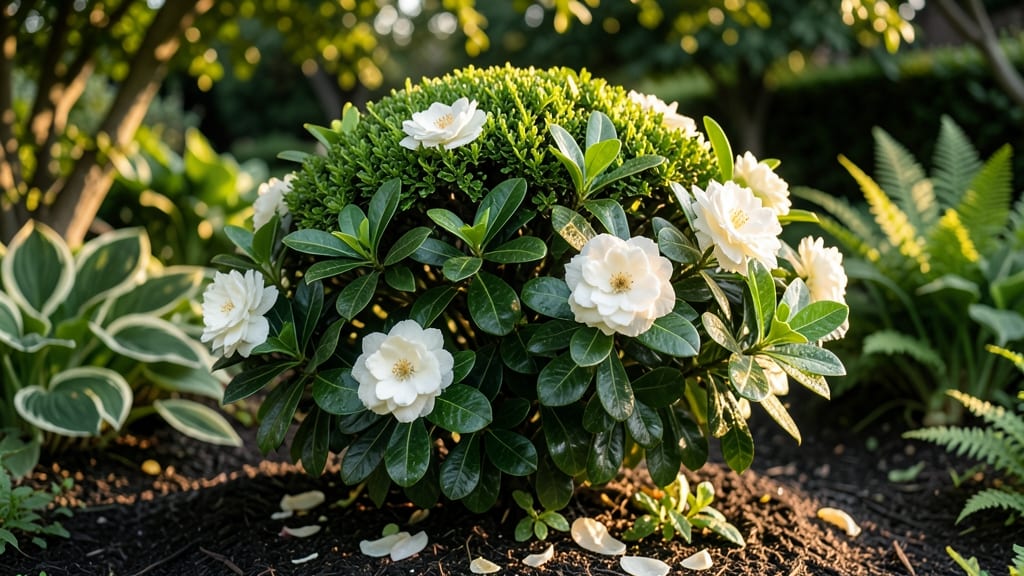
A gardenia topiary plant thrives when you start with dwarf varieties like 'Radicans' or 'Kleim's Hardy,' then carefully prune new shoots to create classic shapes like cones, spirals, or globes. Time your cuts in late spring using sharp shears, avoid cutting too aggressively, and feed with balanced fertilizer to promote lush, fragrant foliage.
Topiary gardening transforms gardenias into living art, but the key lies in choosing the right variety and timing your pruning just right. 🌿 Dwarf varieties handle shaping better because their natural growth habit stays compact—perfect for intricate designs.
I always recommend starting with young plants (1-2 years old) since their flexible branches respond best to training. The secret to keeping those glossy leaves and intoxicating blooms? Regular feeding with an acid-loving plant fertilizer (like 8-3-9) every 4-6 weeks during growing season, plus consistent moisture without soggy soil.
What sets gardenia topiaries apart is their ability to maintain shape while still producing those signature white flowers. The pruning schedule is non-negotiable—cutting back too early can stunt blooms, while waiting too long risks losing your desired form.
I've found that working in late spring (after the last frost but before summer heat) gives plants enough time to recover before their main growth spurt. For maintenance, a light trim in early summer helps keep the shape tight without shocking the plant.
💡 In This Article
- Step-by-Step Pruning Guide for Gardenia Topiary Shapes
- Best Gardenia Varieties for Topiary and Their Growing Needs
Step-by-step pruning guide for gardenia topiary shapes
The foundation of any gardenia topiary begins with understanding its natural growth pattern. Gardenias grow in a bushy, rounded form with flexible branches that respond well to directional pruning.
The key is to work with the plant's apical dominance—the tendency for new growth to emerge from the tips of branches. When you prune just above a leaf node (where leaves meet the stem), you encourage lateral buds to sprout, creating that dense, sculpted appearance.
For a cone shape, start by pinching the top bud when the plant is young to encourage vertical growth, then gradually trim the sides to create the tapered silhouette.
Timing your cuts is everything—late spring (April-May in most climates) is ideal because it allows the plant to recover before summer's heat stress. Use bypass pruners for clean cuts on smaller branches (under 1/4-inch thick) and hedge shears for larger sections.
Always cut at a 45-degree angle just above a leaf node to prevent water from pooling and causing rot.
I've found that gardenias respond best to gradual shaping rather than drastic cuts—never remove more than 25% of the plant's foliage in a single session, or you risk stunted growth or reduced blooming. For maintenance, a light trim in early summer helps preserve the shape without shocking the plant.
The magic happens in the details: when shaping a spiral topiary, wrap a thin wire (like 18-gauge floral wire) around the main stem at 2-inch intervals to guide new growth into the desired pattern. For globes, pinch back the tips of all branches evenly to encourage bushier growth.
What most people don't realize is that gardenias bloom on old wood—so avoid heavy pruning in late summer or fall, as this can remove next year's flower buds. Instead, focus on light shaping to maintain the form while preserving the plant's ability to produce those signature white, fragrant blooms.
Seasonal maintenance is where the real artistry comes in. After the first flush of blooms in spring, give your topiary a light haircut to tidy up any straggly growth. In late summer, remove any spent flowers (deadheading) to redirect the plant's energy into foliage growth rather than seed production.
For winter care, reduce watering slightly but keep the soil moist—gardenias are evergreens and need consistent moisture to maintain their lush appearance. A light mulch around the base helps retain moisture and protects roots from temperature fluctuations. 🌸 The result? A topiary that stays vibrant year-round with minimal effort.
One common mistake is over-pruning to achieve a perfect shape quickly. Remember, gardenias grow at a moderate pace (about 6-12 inches per year), so patience is key.
If you find your topiary looking sparse, it might be time to fertilize with an acid-loving plant formula (like 8-3-9) to encourage denser foliage. For extra support, especially in windy areas, use topiary frames made of flexible wire or bamboo canes to help maintain the shape during the growing season.
With consistent care, your gardenia topiary will develop that perfect balance of structure and natural beauty.
Pro tip: If you're new to topiary, start with a simple cone or globe shape before attempting more complex designs like spirals or animals.
Gardenias have a natural tendency to fill in gaps over time, so even if your initial cuts aren't perfect, the plant will help create a more polished look as it matures.
The key is to prune regularly—think of it like giving your plant a seasonal haircut—to keep the shape tight and encourage that dense, fragrant foliage we all love. 🌿