
Light Requirements
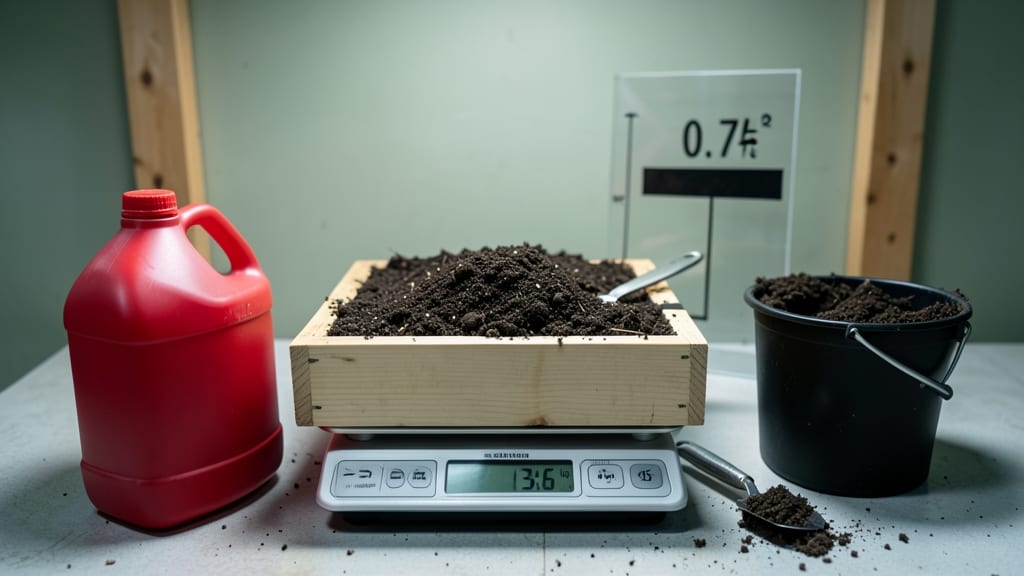
0.75 cubic feet of garden soil weighs approximately 15 to 25 pounds, depending on moisture content and compaction—loose soil falls closer to 15 lbs, while packed or moist soil can reach 25 lbs or more. This variance stems from soil composition and density variations in outdoor cultivation.
Understanding soil weight is crucial for gardeners who need precise measurements for raised beds or container gardening. 🌱 The difference between loose and compacted soil can affect everything from plant support to irrigation needs.
For example, sandy soil on the lighter end of the scale may weigh closer to 15 pounds, while clay-heavy or freshly watered soil can push toward 25 pounds or more. This variation matters when calculating how much soil to purchase or how to distribute it evenly across garden plots.
What's interesting is how moisture plays a role—just a 10% increase in water content can add up to 3 pounds to that 0.75 cubic feet volume. I always recommend checking soil moisture before estimating weight, especially if you're planning heavy containers where structural integrity matters.
💡 In This Article
- Soil Density Factors Affecting Weight in Garden Beds
- Practical Ways to Measure Soil Weight for Planting Projects
Soil density factors affecting weight in garden beds
Soil weight varies dramatically based on its composition and physical state. The primary factors are moisture content, organic matter percentage, and particle size distribution. Sandy soils, with larger particles, typically weigh less (80-100 lbs per cubic foot) because air fills the gaps between grains.
In contrast, clay soils with tiny particles pack tightly, weighing 110-130 lbs per cubic foot when dry. For your 0.75 cubic feet volume, this means sandy soil might weigh 12-15 lbs while clay could approach 20-22 lbs.
Moisture content adds another layer of complexity. Water weighs 8.34 lbs per gallon, and soil can hold up to 50% of its weight in water when saturated. That means a 15 lb dry sandy soil could swell to 22.5 lbs after heavy rain.
Organic matter—like decomposed leaves or compost—also increases weight because it's denser than mineral particles. A soil with 10% organic content can weigh 10-15% more than purely mineral-based soil of the same volume.
Compaction plays a critical role too. When soil is tamped down—like in a freshly dug garden bed—its density increases, reducing air pockets and increasing weight.
For example, loose topsoil might measure 75 lbs per cubic foot, but the same soil after tilling could reach 95 lbs per cubic foot.
This explains why freshly tilled beds feel heavier than untouched garden soil. 🌱 Understanding these factors helps gardeners anticipate structural needs, like reinforced container bases for heavy clay mixes.
Particle size distribution creates measurable differences. A silt-loam soil (common in gardens) typically weighs 90-100 lbs per cubic foot, while loamy sand might be 85-95 lbs. For your 0.75 cubic feet measurement, this translates to 13-15 lbs for loamy sand versus 16-18 lbs for silt loam.
These variations matter when calculating how much soil to transport or how deep to plant—heavier soils require more effort to move and may need additional support for tall plants.
Temperature also subtly affects weight through seasonal moisture changes. In winter, frozen soil can appear lighter due to ice crystals displacing water, but once thawed, the weight returns. Summer droughts reduce moisture content, making soil lighter—sometimes by 20-30%—until irrigation restores it.
This seasonal fluctuation explains why spring planting often requires heavier soil adjustments than summer maintenance.
For practical gardening, knowing these factors helps with container weight limits and irrigation planning. A 5-gallon bucket of sandy soil (≈12 lbs) feels significantly lighter than the same volume of clay soil (≈18 lbs).
This difference becomes critical when stacking containers or designing raised beds with weight-bearing considerations. 💫