
Light Requirements
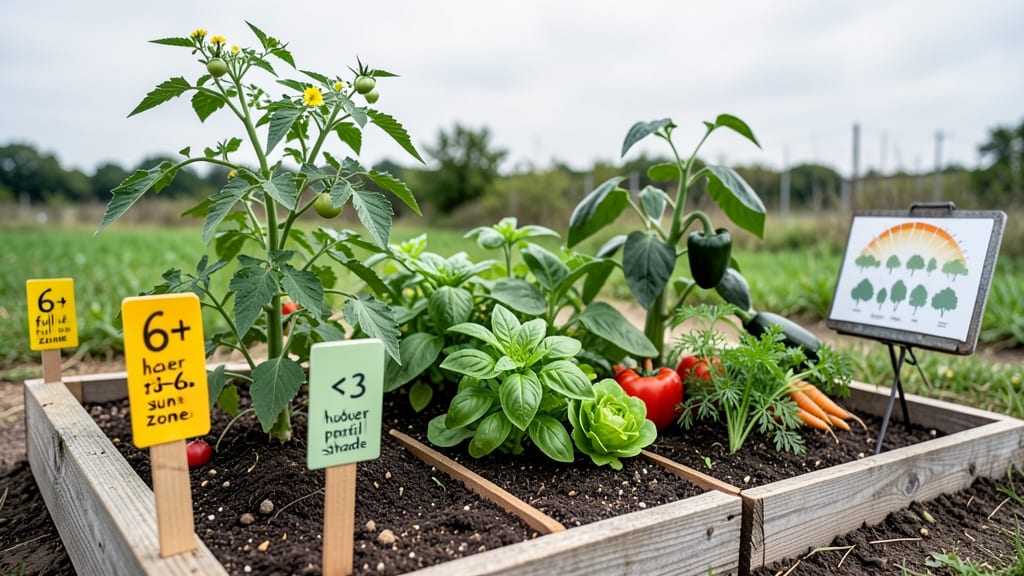
A veggie garden needs how much sun does a veggie garden need—that’s the magic number for most plants to thrive, but too much or too little can spell disaster for your harvest.
Wondering why your tomato plants are wilting or your lettuce bolting too early? Sunlight is the secret ingredient your veggie garden might be missing—or getting too much of.
Too little, and you’ll end up with leggy, weak plants. Too much, and delicate greens like spinach will turn bitter or bolt before you can enjoy them.
Not all vegetables are created equal when it comes to light. While sun-lovers like tomatoes and peppers demand full sun, leafy greens and herbs can handle partial shade. Understanding these differences is the key to a productive garden that gives you the harvest you’re dreaming of.
In this guide, I’ll break down exactly how much sun your veggie garden needs, which plants thrive in full sun versus partial shade, and how to troubleshoot common sunlight mistakes—so you can grow a garden that’s as happy as it is bountiful.

Sunlight requirements for vegetable gardens: full sun vs partial shade explained
Sunlight is the lifeblood of your vegetable garden, but not all plants need the same amount. Full sun means 6+ hours of direct sunlight daily, while partial shade offers 3-6 hours. Understanding these categories helps you place each plant perfectly for a thriving harvest.
For example, tomatoes crave full sun, while lettuce thrives in partial shade. Let’s break down what each category means and how to measure sunlight in your garden.
Before you start planting, assess your garden’s sunlight using a simple method: place a sunlight tracker (like a white board or app) in your garden for a week. Mark the hours of direct sunlight each day to determine which category your space falls into.
This step is critical—misjudging sunlight can lead to leggy plants or poor yields. For instance, a pepper plant in partial shade will produce fewer fruits, while a spinach plant in full sun may bolt prematurely.
| Sunlight Category | Hours of Sunlight | Best Vegetables | Avoid Planting |
|---|---|---|---|
| Full Sun | 6+ hours | Tomatoes, Peppers, Cucumbers, Corn, Eggplants | Lettuce, Spinach, Kale (may bolt) |
| Partial Shade | 3-6 hours | Leafy Greens (Lettuce, Spinach), Radishes, Green Onions, Bush Beans | Pumpkins, Squash, Melons (need more sun) |
| Low Light | <3 hours | Herbs (Parsley, Cilantro), Microgreens, Arugula | Most Fruiting Veggies (Tomatoes, Peppers, Eggplants) |
If your garden receives full sun, it’s ideal for heat-loving crops like tomatoes and peppers. These plants need intense sunlight to produce flavorful fruits and strong stems. However, overheating can be an issue in hot climates.
To mitigate this, use shade cloth during peak afternoon hours or plant tall crops like corn to provide natural shade for shorter plants below.
Partial shade is perfect for leafy greens and herbs that prefer cooler conditions. Plants like bush beans and radishes thrive here because they avoid the stress of intense heat. In partial shade, focus on moisture retention—mulch around plants to keep soil cool and hydrated. This category is also great for container gardening on patios or balconies where direct sunlight is limited.
For low-light gardens, focus on fast-growing crops like microgreens or herbs. These plants tolerate indirect light but may require supplemental grow lights if your space is extremely dim.
Avoid planting fruiting vegetables in low light—they won’t produce well. Instead, opt for leafy greens or herbs that prioritize foliage over fruit production.
One common mistake is assuming all sun is equal. Morning sun is gentler than afternoon sun, especially in hot climates. If your garden gets intense afternoon sun, consider planting heat-tolerant varieties like cherry tomatoes or okra.
For northern climates, where sun is less intense, you can push the limits slightly—6 hours of sun may still work for some partial-shade plants.
To maximize your garden’s potential, rotate crops annually to prevent soil depletion and adjust sunlight exposure. For example, plant heavy sun-lovers in the southern part of your garden where they get the most light, and reserve northern or shaded areas for partial-shade plants.
This simple layout trick can double your harvest by matching each plant to its perfect spot.
If you’re still unsure about your garden’s sunlight, observe your space for a full day. Note when shadows move and how long they linger. Use this information to map out your garden before planting.
For instance, a 6-foot-tall fence can cast a 3-hour shadow in the afternoon, turning a full-sun spot into partial shade. Adjust your planting plan accordingly to avoid disappointing results.
Remember, sunlight needs vary by season. A spring garden may get longer daylight hours, while a winter garden might struggle with shorter days. Plan ahead by choosing seasonal crops that match your garden’s sunlight trends.
For example, winter squash can handle partial shade in summer but needs full sun to mature properly.
By understanding these sunlight categories and applying them to your garden, you’ll create an environment where every plant thrives. Start with a sunlight audit, then match your crops to their ideal conditions. With the right approach, your vegetable garden will be productive, healthy, and bountiful all season long. 🌱☀️
Best vegetables for low-sun, Medium-sun, and high-sun garden spots
Not all vegetables thrive under the same sunlight conditions. Some, like leafy greens, love partial shade, while others, like tomatoes, demand full sun. Matching your plants to the right spot in your garden can mean the difference between a bountiful harvest and struggling seedlings.
Let’s explore the best vegetables for each sunlight category to maximize your garden’s potential.
Understanding your garden’s sunlight map is key. Observe which areas get morning sun only, afternoon shade, or full-day sun. This will help you place your vegetables in the ideal spots.
For example, a north-facing bed might only get a few hours of sun, while a south-facing area could be bathed in light all day. Knowing these differences ensures you’re planting in the right places.
- 🌿 Low-Sun (<3 hours/day):
- 1. Spinach – Thrives in partial shade, perfect for under trees.
- 2. Lettuce – Bolts in heat; morning sun with afternoon shade works best.
- 3. Kale – Tolerates low light and even frost, ideal for cool climates.
- ☀️ Medium-Sun (3-6 hours/day):
- 1. Swiss Chard – Handles partial shade well and produces colorful stems.
- 2. Green Onions – Grows quickly in moderate sunlight and can be harvested early.
- 3. Radishes – Fast-growing and drought-tolerant, great for cooler, shadier spots.
- 🔥 High-Sun (6+ hours/day):
- 1. Tomatoes – Need full sun for maximum fruit production and flavor.
- 2. Peppers – Require intense sunlight to prevent blossom end rot.
- 3. Cucumbers – Love warm, sunny spots and vertical trellises for support.
If your garden has mixed sunlight conditions, consider intercropping—planting sun-loving and shade-tolerant vegetables together. For example, pair tomatoes with basil (which also needs full sun) but place lettuce nearby to utilize any dappled shade. This way, you’re making the most of every inch of your garden.
For container gardening, choose compact varieties like bush beans or dwarf peppers for high-sun spots, while mesclun mixes or arugula work well in lower-light containers. Just ensure your pots have adequate drainage and are placed where they’ll get the right amount of light for the plants you’ve chosen.
Experiment with your garden layout each season. What worked in spring might change in summer when the sun arcs higher in the sky. Keep a garden journal to track which vegetables thrive in which spots, and adjust your planting plan accordingly.
With the right placement, even a shady corner can yield a surprising harvest!