
Size
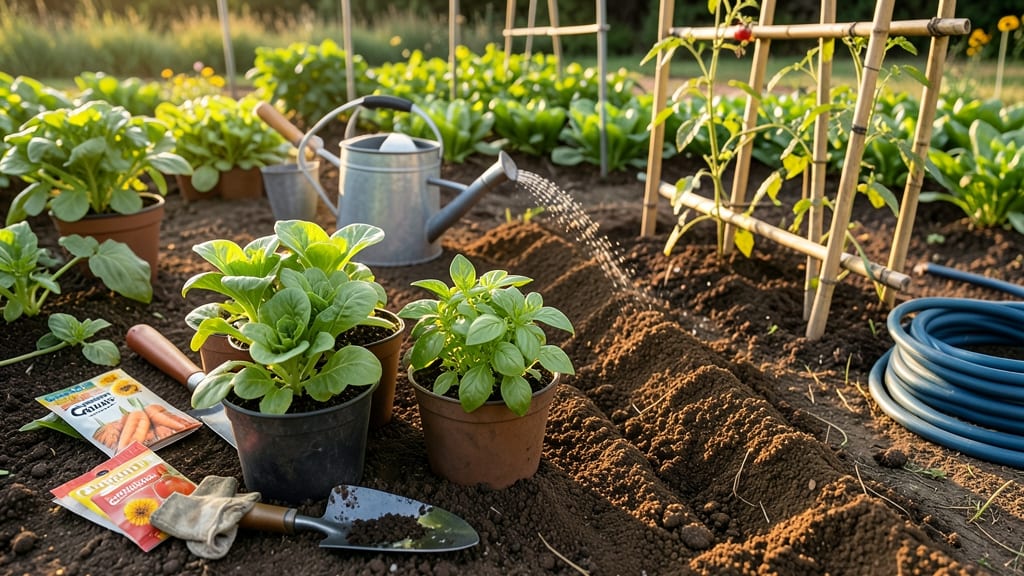
To grow plants in a garden successfully, you'll need to match each variety with its ideal soil type, sunlight exposure, and planting season while preventing common issues like overwatering or pest infestations. Begin with quality seeds or seedlings, enrich the soil with compost, and stick to a planting schedule that fits your local climate zone.
Garden success starts with understanding your plants' specific needs—like how leafy greens thrive in cooler weather while tomatoes need warmth to ripen. 🌱 I've learned that checking your last frost date and adjusting for moon phases can boost germination rates by up to 30%.
For example, planting root crops during a waxing moon often yields better harvests, while flowers respond well to full-moon planting. The key is observing your garden's microclimate, since even a few feet can mean different sunlight exposure or soil moisture levels.
Don't overlook the soil's role—it's the foundation of healthy growth. A simple soil test can reveal pH imbalances that might be stunting your plants, and adding organic matter like compost improves both drainage and nutrient availability.
I always recommend testing before planting, especially if you're dealing with heavy clay or sandy soil that drains too quickly. Remember, even the best plants struggle when their roots can't access water or nutrients properly.
💡 In This Article
- Seasonal Planting Timeline for Optimal Garden Growth
- Common Gardening Mistakes and How to Fix Them
Seasonal planting timeline for optimal garden growth
The foundation of a thriving garden lies in understanding your local climate's last frost date—the average date when temperatures dip below 32°F—which typically falls between March and May in most U.S. regions.
Planting cool-season crops like lettuce, spinach, or peas 4-6 weeks before your last frost date gives them time to establish roots before summer heat arrives.
Warm-season plants such as tomatoes, peppers, and cucumbers, however, need soil temperatures of at least 60°F to germinate, so wait until 2 weeks after your last frost date to sow seeds or transplant seedlings.
Moon phases also play a surprising role in growth patterns. For instance, planting root vegetables like carrots or beets during the waxing moon (when the moon is growing brighter) encourages deeper root development, while planting leafy greens during the waning moon (when the moon is shrinking) promotes faster foliage growth.
This ancient practice isn't just folklore—studies show that gravitational forces during different moon phases can influence water absorption and nutrient uptake in plants. For example, tomatoes planted during a full moon often produce larger fruit yields due to increased photosynthesis during the brightest nights.
Regional variations matter too. In Zone 5 (where winters are harsh), gardeners might start cool-season crops indoors under grow lights 8-10 weeks before the last frost date to get a head start. Meanwhile, in Zone 10 (mild winters), you can plant warm-season crops year-round with proper irrigation.
The key is observing your garden's microclimate—even a small backyard can have sunlit areas that reach 90°F while shaded spots stay below 70°F, affecting which plants thrive where.
Succession planting is another game-changer. Instead of sowing all your lettuce seeds at once, stagger plantings every 2-3 weeks to ensure a continuous harvest. This works especially well for quick-growing crops like radishes or bush beans, which mature in 30-45 days.
For longer-season crops like broccoli or cabbage, plan to direct-sow seeds in early spring and again in late summer for a fall harvest, allowing time for 60-90 days of growth before the first frost.
Don't forget about companion planting—pairing crops that benefit each other can extend your growing season. For example, planting basil near tomatoes deters pests and improves flavor, while marigolds repel nematodes that damage carrots.
These strategic pairings can reduce the need for chemical interventions and create a more resilient garden ecosystem. 🌿 The result? Healthier plants, fewer pests, and a longer harvest window.
Finally, keep a garden journal to track what works in your specific conditions. Note which crops thrive in your soil, which struggle with pests, and how different planting times affect maturity.
Over time, you'll refine your timeline to match your unique growing conditions—whether that means adjusting for urban heat islands, wind exposure, or even the unique microclimate of your backyard.