
Tools
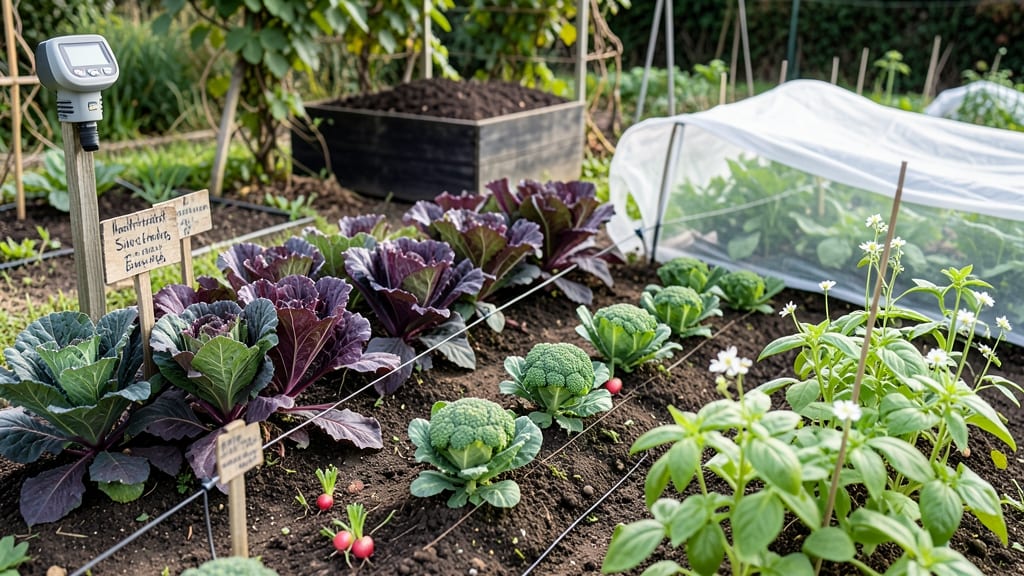
The best market gardening climate exists in USDA Zones 5-9, where warm growing seasons and moderate winters create ideal conditions for diverse crops. Strategic microclimate solutions like row covers and cold frames let you push limits in cooler zones for continuous harvests of greens, herbs, and root vegetables.
These zones were chosen because their temperature ranges—from 50°F to 90°F—align perfectly with the needs of most commercial crops. 🌱 For instance, Zones 7-9 handle heat-loving crops like tomatoes and peppers with ease, while Zones 5-6 benefit from protective structures to shield delicate plants from late frosts.
The key is understanding your specific zone's frost dates and heat thresholds to plan planting windows that maximize yield potential.
What sets successful market gardeners apart is their ability to fine-tune conditions through simple but effective microclimate hacks. A 3-foot-tall cold frame can add 10-15°F of warmth during chilly nights, while reflective mulch made from aluminum foil boosts soil temperatures by 5-8°F in early spring.
These adjustments don't just extend seasons—they transform marginal climates into productive growing powerhouses.
For those in Zones 4 or below, the good news is that modern techniques make year-round production possible with minimal investment. Low tunnels and hoop houses create protected environments where spinach and kale thrive even when outdoor temperatures dip below freezing.
The secret lies in layering these solutions—combining windbreaks with row covers, for example, creates a buffer that lets you grow crops 4-6 weeks earlier in spring or 2-3 weeks later in fall.
💡 In This Article
- USDA Zones for High-Yield Market Gardening
- Microclimate Strategies to Boost Growing Seasons
USDA zones for high-yield market gardening
USDA Zones 5-9 represent the sweet spot for market gardening because their temperature ranges align perfectly with the needs of high-value crops.
Zone 5, with average minimum temperatures of -20°F to -10°F, can grow cold-hardy crops like kale and carrots with protection, while Zone 9's 20°F to 30°F minimums allow year-round production of heat-loving staples like tomatoes and peppers.
The transition between zones creates a gradient where gardeners can fine-tune plant selection—Zone 6's 0°F to 10°F range makes it ideal for both brassicas and tender greens.
The real magic happens in Zones 7-8, where the growing season stretches from 180 to 240 days, giving you time for multiple harvests of fast-growing crops like radishes (25 days) and lettuce (30-50 days).
These zones also support heat-sensitive crops through strategic planting: tomatoes thrive when transplanted after the last frost (typically April 15-May 1 in most Zone 7 areas), while peppers need soil temperatures above 60°F to germinate properly.
The key is matching crop heat requirements with your zone's frost-free period—Zone 9's 300+ days allows for winter production of spinach and broccoli that would freeze in colder zones.
What most people don't realize is how winter hardiness varies even within these zones. For example, a Zone 6 garden might handle 10°F for kale but require row covers for lettuce, while Zone 8's 15°F minimum lets you grow overwintering onions without protection.
The USDA's 10°F increments between zones mask these micro-variations—this is why local frost data becomes critical. In my Zone 7 garden, I've found that 32°F kills basil plants, but 28°F is safe for Swiss chard, demonstrating how precise temperature thresholds determine crop survival.
Heat tolerance thresholds create another layer of complexity. Most commercial tomatoes (like 'Celebrity') bolt when night temperatures exceed 80°F for extended periods, while heat-tolerant varieties like 'Solar Fire' can handle 90°F+ days.
This explains why Zone 9 gardeners focus on heat-resistant varieties while Zone 7 growers might opt for early-maturing types to avoid summer stress. The same principle applies to peppers—bell peppers need consistent 70-85°F days to set fruit, while jalapeños thrive in 85-95°F conditions.
For brassicas (cabbage, broccoli, cauliflower), the story is different: they prefer cooler temperatures (60-70°F) and actually bolt when days get too long and hot. This is why successful market gardeners in Zones 8-9 plant these crops in fall or early spring rather than summer.
The same strategy works for leafy greens—spinach and arugula grow best when daytime highs stay below 75°F, making them perfect for Zone 5's cooler summers or Zone 9's winter months when temperatures drop.
One often-overlooked factor is how elevation affects growing conditions within the same zone. A 1,000-foot elevation gain can drop temperatures by 3.5°F, creating microclimates where Zone 7 crops might struggle.
This is why mountain gardeners in Zone 7 often grow the same varieties as Zone 6 gardeners at lower elevations—the temperature adjustment is more significant than the zone designation. Understanding these elevation effects lets you make precise crop selections that match your specific microclimate.
Here's what this means for your garden planning: Start by identifying your exact zone (down to the a/b designation) using the USDA's interactive map, then cross-reference with your last frost date and first frost date.
Most Zone 7 areas have 150-180 frost-free days, while Zone 8 extends this to 210-240 days.
Use this information to calculate planting windows that maximize your growing season—knowing that a 60-day tomato variety needs 90 days from transplant to harvest in Zone 7 gives you precise timing for your first planting.