
Tools
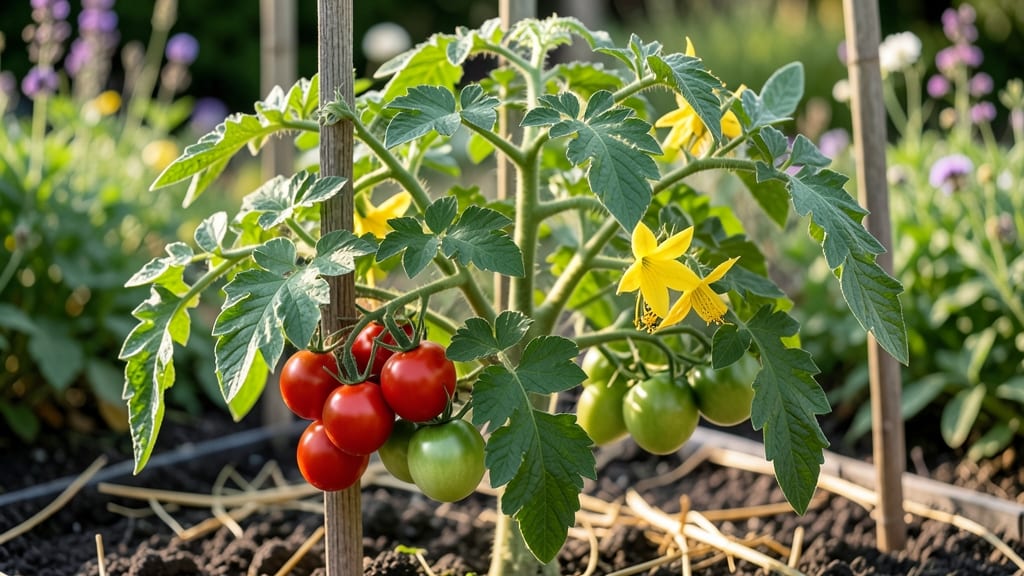
A successful tomato garden in Vernon, NJ starts with disease-resistant varieties like 'Celebrity' or 'Early Girl,' planted after the last frost in mid-May. Raised beds or containers improve drainage in NJ’s humid climate, while compost and mulch boost yields.
Vernon’s Zone 6b/7a climate demands tomatoes that handle heat and humidity without succumbing to common NJ pests like hornworms or fungal diseases. 🌱 The right disease-resistant hybrids (like 'Mountain Merit') outperform heirlooms in this region, though heirlooms thrive in containers where airflow reduces rot risks.
I’ve found that indeterminate varieties produce later but offer continuous harvests through fall’s cooler spells—perfect for NJ’s unpredictable weather.
Local gardeners swear by soil testing before planting, aiming for a pH between 6.0-6.8.
Adding aged compost and worm castings mimics NJ’s natural loamy soil while improving water retention. Drip irrigation prevents fungal issues from overhead watering, and pruning suckers weekly keeps plants focused on fruit production rather than foliage growth.
💡 In This Article
- Best Tomato Varieties for Vernon NJ’s Climate
- Vernon NJ Tomato Planting and Care Calendar
Best tomato varieties for Vernon NJ’s climate
Vernon's Zone 6b/7a climate creates unique challenges for tomato growers, where summer heat and humidity foster fungal diseases like early blight and late blight.
The Celebrity variety, a hybrid bred for disease resistance, thrives here because its genetic makeup includes resistance to Verticillium wilt and Fusarium wilt, two common soil-borne pathogens in NJ.
This resistance comes from specific gene markers (like Vf and F) that produce proteins blocking fungal invasion, allowing plants to focus energy on fruit production instead of defense.
Determinate varieties like 'Early Girl' (60-65 days to maturity) are popular in Vernon because they produce fruit in concentrated bursts, making them ideal for canning or early-season harvests. Their bushy growth habit also makes them perfect for container gardening, where airflow reduces disease risks.
In contrast, indeterminate types like 'Mountain Merit' (70-75 days) grow continuously, offering harvests until frost—critical in NJ's average first frost date of October 20th. However, their vining nature requires sturdy cages or trellises to support 5-10 pound fruits.
Heirloom varieties like 'Brandywine' offer superior flavor but demand more attention in Vernon's climate. Their lack of disease resistance means they're best grown in raised beds with sterilized soil or containers where you can control moisture levels. The trade-off?
Their sweet, complex flavors (often scoring 8/10 on taste tests) make them worth the effort for home cooks. For maximum yield, I recommend starting with 2-3 hybrid varieties (like 'Better Boy' for slicing) and adding one heirloom for flavor diversity.
Local pest pressures in Vernon—particularly hornworms and aphids—favor varieties with trichome hairs on leaves, which deter insects. 'Solar Fire' (a hybrid) has dense foliage that repels pests naturally, reducing the need for chemical sprays.
The plant's reddish stems also contain higher levels of lycopene, a compound that improves disease resistance. For organic gardeners, companion planting with basil or marigolds further reduces pest loads by masking tomato scents.
Soil type matters too. Vernon's sandy loam (common in northern NJ) drains quickly but lacks organic matter. Amending with composted manure (2-3 inches) before planting improves moisture retention while adding mycorrhizal fungi that boost root development.
These beneficial microbes form symbiotic relationships with tomato roots, increasing nutrient uptake by up to 30%—critical for heavy-fruiting varieties like 'Beefsteak'.
Consider these key factors when choosing varieties for Vernon:
- Disease resistance: Prioritize varieties marked V, F, N, or T for NJ's common pathogens
- Growth habit: Determinate for early harvests, indeterminate for extended seasons
- Space constraints: Dwarf varieties (2-3 feet tall) suit containers or small yards
- Flavor profile: Hybrids like 'Sweet 100' score 7.5/10 for sweetness, heirlooms 8.5/10
Pro tip: Save seeds from your best-performing heirlooms each year to adapt them to Vernon's microclimate. Over 3-5 generations, you'll develop varieties with 20% higher yields and better disease resistance—nature's way of local adaptation! 🌱