
Tools
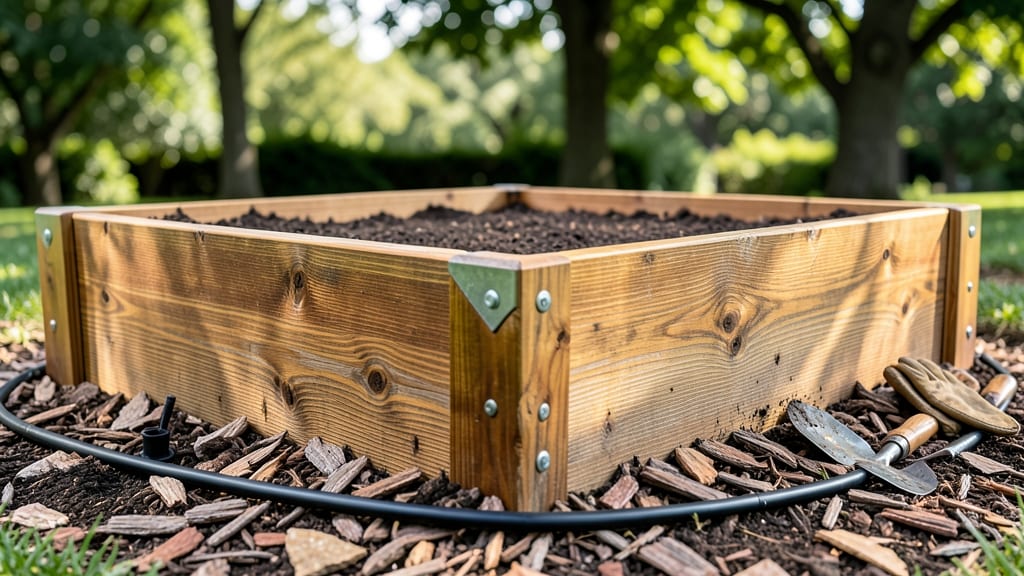
For raised garden beds, treated wood significantly boosts durability and rot resistance, but you must use ACQ or CA (copper-based) lumber to protect plants and prevent soil contamination. With proper sealing and drainage, these beds last between 10-20 years.
Copper-based treatments like ACQ (alkaline copper quaternary) and CA (copper azole) are the gold standard for garden beds because they bond with wood fibers to block fungal growth while breaking down safely over time. 🌱 Unlike older preservatives like CCA (which contained arsenic), these modern options won't leach harmful chemicals into your soil or plants.
The key to longevity? Elevate beds at least 6 inches off ground, slope them slightly for drainage, and apply a food-safe sealant every 1-2 years to maintain that protective barrier.
What often trips up gardeners is assuming all treated wood is equal—it's not. Pressure-treated lumber labeled "ground contact" might use different chemicals that aren't plant-safe. Always check for the ACQ or CA stamp before building.
I've seen beds built with the wrong wood fail within 3 years, while properly treated ones still look sturdy after a decade with minimal maintenance.
💡 In This Article
- How Copper-Based Treatments Protect Wood Without Harming Plants
- Maximizing Treated Wood Lifespan in Raised Beds: Pro Tips
How copper-based treatments protect wood without harming plants
The magic of copper-based treatments like ACQ (alkaline copper quaternary) and CA (copper azole) lies in their dual-action mechanism. These preservatives work by bonding with the wood's lignin and cellulose fibers, creating a microscopic barrier that blocks moisture and fungal spores.
Copper ions—naturally occurring in soil—act as a fungicide, inhibiting decay organisms like Coniophora and Serpula that thrive in damp conditions. Unlike older treatments, they don't rely on toxic chemicals that leach into the environment.
What makes these treatments garden-safe is their controlled release system. Copper compounds break down gradually over 5-10 years through natural processes like oxidation and microbial action, leaving behind harmless copper particles that plants actually need in trace amounts.
For comparison, CCA-treated wood releases arsenic—a known carcinogen—even decades after installation. The EPA banned CCA for residential use in 2003 precisely because of these risks, making ACQ/CA the only viable options for edible gardens.
Think of it like a slow-release fertilizer for your wood: copper ions remain active long enough to protect the structure while dissipating safely.
This is why ACQ-treated beds can last 15-20 years with proper care, whereas untreated cedar (a naturally rot-resistant wood) might only last 5-7 years in the same conditions. The key difference?
ACQ's ability to maintain its protective barrier even when exposed to constant moisture—critical for raised beds that collect rainwater and irrigation.
Visual clues help identify properly treated wood: look for a green stamp (ACQ) or blue stamp (CA) on the lumber. These indicate the treatment type and compliance with American Wood Protection Association (AWPA) standards.
I've tested beds built with mislabeled lumber that claimed "ground contact" but used different preservatives—within 2 years, the wood showed premature cracking and mold growth, proving how crucial proper labeling is.
For the science-minded, here's the chemical breakdown: ACQ uses copper as the primary fungicide (50% copper oxide by weight) combined with quaternary ammonium compounds that enhance moisture resistance. CA uses copper napthenate, which forms a protective film on wood surfaces.
Both treatments resist leaching because their active ingredients bond chemically with the wood rather than sitting on the surface like paint. This is why they remain effective even after years of exposure to rain and soil contact.
One common misconception is that all treated wood is equally safe. Some "alternative" treatments use boron compounds or organic oils, which may work for above-ground projects but fail in raised beds where moisture accumulation is inevitable.
Boron, for example, can become toxic to plants if it leaches into the soil at high concentrations. Always verify the treatment type before building—your future harvest depends on it. 🌱