
Size
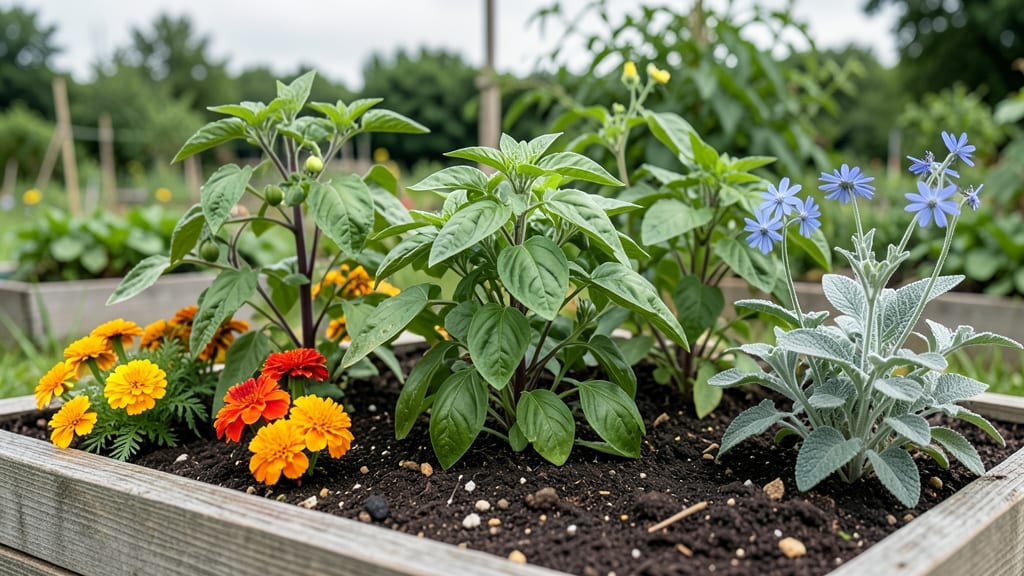
Garden plants that grow well together include basil with tomatoes to repel pests, marigolds alongside vegetables to deter insects, and onions near carrots to improve flavor and growth. Strategic pairings maximize space and health while minimizing competition for nutrients.
When you pair plants thoughtfully, you're not just saving space—you're creating a self-sustaining ecosystem. 🌱 For example, planting basil near tomatoes doesn't just deter pests; it actually enhances the tomatoes' flavor. Similarly, marigolds act as natural insect repellents, protecting nearby vegetables while attracting beneficial pollinators.
The key is understanding each plant's needs and how they interact, whether through shared nutrients, pest control, or complementary growth habits. This approach reduces the need for chemical interventions and often leads to healthier, more productive gardens.
Many gardeners also discover that root crops like carrots benefit from being planted near onions or leeks, as the onions' strong scent confuses pests that might otherwise target the carrots.
Meanwhile, comfrey planted at the garden's edge can serve as a dynamic accumulator, drawing nutrients from deep soil layers and making them available to neighboring plants. These relationships aren't just theoretical—they're proven strategies used by organic farmers worldwide to create thriving, low-maintenance gardens.
💡 In This Article
- Science-Backed Reasons for Plant Pairings
- Top 10 Proven Garden Plant Combinations
Science-backed reasons for plant pairings
At the heart of successful plant pairings are allelopathic interactions, where one plant releases chemicals that either benefit or inhibit others. Take marigolds, for instance—they emit alpha-terthienyl, a compound that repels nematodes and aphids while attracting predatory insects like ladybugs.
Studies from the Journal of Chemical Ecology show that marigolds planted near tomatoes can reduce pest damage by up to 70%, thanks to this natural defense mechanism. 🌼 The key here is timing: marigolds should be sown 4-6 weeks before the main crop to establish their protective presence.
Another critical factor is nutrient competition and sharing. Plants like comfrey have deep roots that access nutrients like nitrogen and phosphorus from lower soil layers, then shed leaves rich in these minerals.
When comfrey leaves decompose near shallower-rooted plants (such as lettuce or strawberries), they create a nutrient-rich "green manure" effect. Research from the Rodale Institute demonstrates that comfrey mulch can increase soil nitrogen by 20-30% over a growing season, reducing the need for synthetic fertilizers.
Shade and moisture relationships also play a role. Lettuce and radishes thrive when planted under taller companions like corn or sunflowers, which provide shade that keeps their leaves crisp and prevents bolting (premature flowering) during hot weather.
The sunflowers' deep taproots also draw up water from lower soil layers, making it available to the shallower-rooted lettuce during dry spells. This mutual benefit is why many gardeners use the "three sisters" method—corn, beans, and squash—where each plant supports the others structurally and nutritionally.
Root compatibility is another science-backed principle. Plants with similar root structures (like carrots and onions) can share space without competing aggressively, whereas deep-rooted plants (such as dill) should avoid shallow-rooted crops (like potatoes) to prevent nutrient theft.
The University of Minnesota Extension notes that onions release sulfur compounds that deter carrot flies, while carrots' fibrous roots help loosen soil, improving onion growth. This synergy explains why these two are often planted just 3-4 inches apart in rows.
Finally, pollinator attraction can't be overlooked. Flowers like basil and borage draw bees and hoverflies, which pollinate nearby vegetables like tomatoes and cucumbers. A study in Nature Plants found that gardens with diverse flowering plants had 2-3 times more pollinator activity, directly correlating with higher fruit yields.
The scent of basil alone can increase tomato production by 15-20% by encouraging pollinators to linger in the garden. 🐝
Understanding these mechanisms allows gardeners to design layouts that mimic natural ecosystems, where every plant plays a role—whether as a pest repellent, nutrient provider, or pollinator magnet. The result? A garden that's not just productive but also resilient and low-maintenance.