
Planting
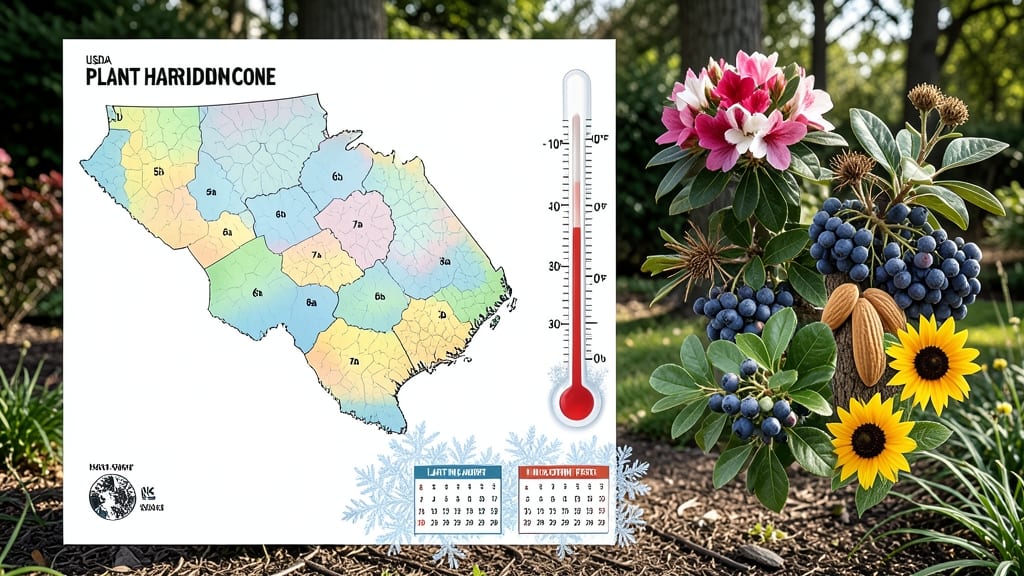
North Carolina's gardening zones range from 5 through 9, with most areas falling between 7a and 8b. Coastal regions typically fall into 8a-9a, while mountain areas drop to 5b-6b due to elevation's impact on temperatures.
North Carolina's diverse geography creates a patchwork of growing conditions. The state's coastal plains experience milder winters and longer growing seasons, while the mountain regions face earlier frosts and shorter summers.
This variation means gardeners in Asheville might struggle with the same plants that thrive in Wilmington. 🌿 Understanding these differences helps you select the right plants for your specific microclimate, whether you're in the Piedmont or the Outer Banks.
For example, zone 5b plants like Siberian pea shrub will survive mountain winters, while zone 9a favorites like bougainvillea need coastal heat. Even within a single county, elevation changes of just a few hundred feet can shift your effective growing zone.
That's why many NC gardeners keep a small "test garden" with plants from multiple zones to see what truly thrives in their yard.
💡 In This Article
- How USDA Zones Break Down Across North Carolina’s Regions
- Choosing Plants for North Carolina’s Mixed Gardening Zones
How USDA zones break down across north Carolina’s regions
The USDA Hardiness Zone Map divides North Carolina into distinct bands based on average annual minimum temperatures. Here's what's actually happening: the state's geography creates dramatic temperature shifts over short distances.
The mountain regions (like the Blue Ridge Parkway) drop to zones 5b-6b, where winter lows can reach -15°F to 0°F. Meanwhile, the coastal plains (including Wilmington and Morehead City) stay in zones 8a-9a, with winters rarely dipping below 10°F.
This creates a 10°F difference in minimum temperatures between mountain and coast—enough to make some plants thrive where others freeze. 🌡️
Elevation is the key driver of these differences. For every 1,000 feet gained in altitude, temperatures drop about 3.5°F. That's why Asheville (zone 7a) sits just 1,000 feet higher than Charlotte (zone 7b) but experiences 5°F colder winters.
The Piedmont region (including Raleigh and Greensboro) typically falls into zones 7a-7b, acting as a transitional zone between mountains and coast.
What most people don't realize is how these zones shift vertically within cities—a backyard on a hill might be zone 6b while the street-level garden next door stays zone 7a.
Microclimates add another layer of complexity. Coastal areas experience warmer winters due to the Gulf Stream's influence, while inland valleys can get colder than surrounding areas because cold air sinks.
For example, the Roanoke River Valley in western NC often drops into zone 6a despite being at similar elevations to nearby zone 7a areas. This is why gardeners should never rely solely on the USDA map—actual frost dates can vary by 2-4 weeks from the official averages. 🌿
Understanding these regional patterns helps explain why some plants struggle in unexpected places. A zone 7b plant like crepe myrtle might survive in Raleigh but get damaged in the mountains, while a zone 8a plant like oleander thrives in Wilmington but would die in the Piedmont.
The 10°F rule (each zone represents about 10°F difference) becomes your guide for plant selection—choose varieties that match your specific microclimate's extremes, not just the general zone.
For practical application, consider these key factors when selecting plants: Mountain gardeners should focus on cold-hardy varieties (like serviceberry or rhododendron), while coastal gardeners can experiment with heat-loving plants (such as citrus or bougainvillea).
The Piedmont's transitional zones offer the most flexibility, allowing gardeners to grow both cool-season and warm-season crops successfully. 🌱
Here's what this means for your garden: if you're in zone 7a (like most of the Piedmont), you can push the limits with zone 6b plants in sheltered microclimates while still growing zone 8a plants in heat-tolerant spots.
The secret lies in observing your local frost patterns—most NC gardeners find their actual last frost date occurs 2-3 weeks later than the USDA averages suggest. That extra time can mean the difference between a failed crop and a bountiful harvest.