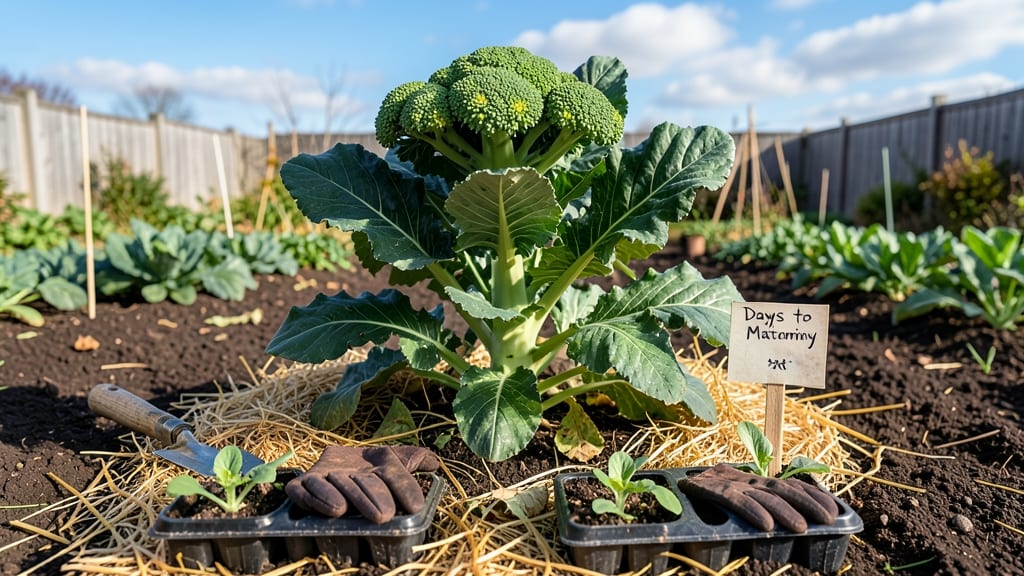
To plant a fall garden in Texas, aim for late summer—typically mid-August to early September—when soil temperatures dip below 85°F and before the first frost threatens.
Texas gardeners know the summer heat can be brutal—but with the right timing, you can beat the frost and grow a thriving fall garden. Plant too early, and you’ll battle scorching temperatures; too late, and early frosts will ruin your harvest.
This guide breaks down the exact planting windows for Texas’ 11 heat zones, from the Gulf Coast’s mild winters to the Hill Country’s sudden chills. You’ll also learn how to adjust for soil conditions, choose the best cool-season crops, and extend your harvest well into December.
Skip the guesswork: discover the heat-zone map that matches your location, the top-performing fall crops for Texas, and the one trick to protect seedlings from unexpected cold snaps.
🌱
When to Plant Fall
Jan
❄️
Feb
❄️
Mar
🌱
Apr
🌱
May
🌱
Jun
🌱
Jul
☀️
Aug
☀️
Sep
🍂
Oct
🍂
Nov
🍂
Dec
❄️
Texas heat-zone planting calendar: exact dates by region
Texas’ 11 heat zones (A–K) create wildly different planting windows for fall gardens. The key is knowing your last frost date and soil temperature thresholds—some zones like Zone A (South Texas) can plant 6 weeks earlier than Zone K (Panhandle).
I’ll break down the exact timing for each zone, plus the best cool-season crops to grow.
For example, Zone A (Houston area) can start heat-tolerant greens like Swiss chard as early as August 15, while Zone K (Lubbock) must wait until September 15 to avoid frost. The difference comes down to average first frost dates and soil cooling after summer’s peak heat.
Here’s your heat-zone planting calendar with exact dates, soil temps, and top crops for each region:
| Heat Zone |
Last Frost Avg. |
Soil Temp Threshold (°F) |
Start Cool Crops |
Best Varieties |
| Zone A (South TX) |
Dec 15 |
75°F (min) |
Aug 15–Sept 1 |
Swiss chard, collards, okra |
| Zone B (East TX) |
Nov 20 |
70°F (min) |
Aug 20–Sept 5 |
Kale, turnips, bush beans |
| Zone C (Austin) |
Nov 25 |
68°F (min) |
Aug 25–Sept 10 |
Lettuce, carrots, radishes |
| Zone D (Central TX) |
Nov 30 |
65°F (min) |
Sept 1–Sept 15 |
Broccoli, cabbage, spinach |
| Zone E (Dallas) |
Dec 5 |
62°F (min) |
Sept 10–Sept 20 |
Peas, onions, beets |
| Zone F (North TX) |
Dec 10 |
60°F (min) |
Sept 15–Sept 25 |
Brussels sprouts, cauliflower |
| Zone G (West TX) |
Dec 15 |
58°F (min) |
Sept 20–Oct 1 |
Potatoes, garlic, leeks |
| Zone H (High Plains) |
Dec 20 |
55°F (min) |
Sept 25–Oct 5 |
Radishes, mustard greens |
| Zone I (Panhandle) |
Dec 25 |
52°F (min) |
Oct 1–Oct 10 |
Turnips, kohlrabi, peas |
| Zone J (Far West) |
Jan 5 |
50°F (min) |
Oct 10–Oct 15 |
Spinach, lettuce, arugula |
| Zone K (High Plains) |
Jan 10 |
48°F (min) |
Sept 15–Oct 1 |
Cold-hardy kale, Swiss
How to adjust planting dates for microclimates and soil conditions
Even within the same heat zone, your garden’s microclimate can shift planting dates by 2–4 weeks. For example, a north-facing slope in Zone D (Central Texas) may stay cooler longer than a south-facing bed, letting you plant lettuce 10 days earlier.
Start by testing your soil temperature with a soil thermometer—cool-season crops like broccoli thrive when soil is between 55–65°F.
Use row covers or floating row covers to extend your planting window by 3–4 weeks in cooler zones. These lightweight fabrics trap heat during the day and protect seedlings from unexpected nighttime chills.
I’ve used them in Zone G (West Texas) to start spinach in early September when ambient temps still hover near 90°F.
🚨 CALLOUT WARNING 🚨
⚠️ Avoid These 3 Deadly Fall Planting Mistakes in Texas
- Planting lettuce in August—it bolts in 90°F+ heat within days.
- Ignoring soil moisture—Texas clay holds heat; water deeply 2–3 days before planting to cool it down.
- Skipping frost protection—even Zone A (South Texas) can drop to 30°F in December.
Pro Tip: Use Texas A&M’s Heat-Zone Map to cross-check your local frost dates—it’s free and updated annually.
For precision, leverage Texas A&M’s heat-zone data to adjust your schedule. Their AgriLife Extension reports include localized frost probabilities—for instance, Dallas (Zone E) has a 30% chance of frost by November 15, while Austin (Zone C) waits until December 1.
I’ve used these stats to stagger plantings: broccoli in early September (for a late-November harvest) and kale in mid-October (to survive until January).
Don’t overlook soil organic matter—amend heavy clay with compost or aged manure to improve moisture retention. In my Zone F (North Texas) garden, amending beds raised the soil’s ability to cool by 5°F faster after summer heat waves.
Test your soil’s pH (6.0–7.0 ideal for most fall crops) and add lime or sulfur as needed.
Finally, watch for unpredictable weather patterns. Use weather alerts from the National Weather Service to adjust planting if a cold front is forecasted. In 2022, a sudden freeze in October wiped out unprotected seedlings in Zone H (High Plains)—I’ve since added hoop houses for critical seedlings.
With these adjustments, you’ll beat the frost and grow a fall garden that thrives—no matter your Texas microclimate. 🌱
★★★★★4.7(3 reviews)
|