
Planting
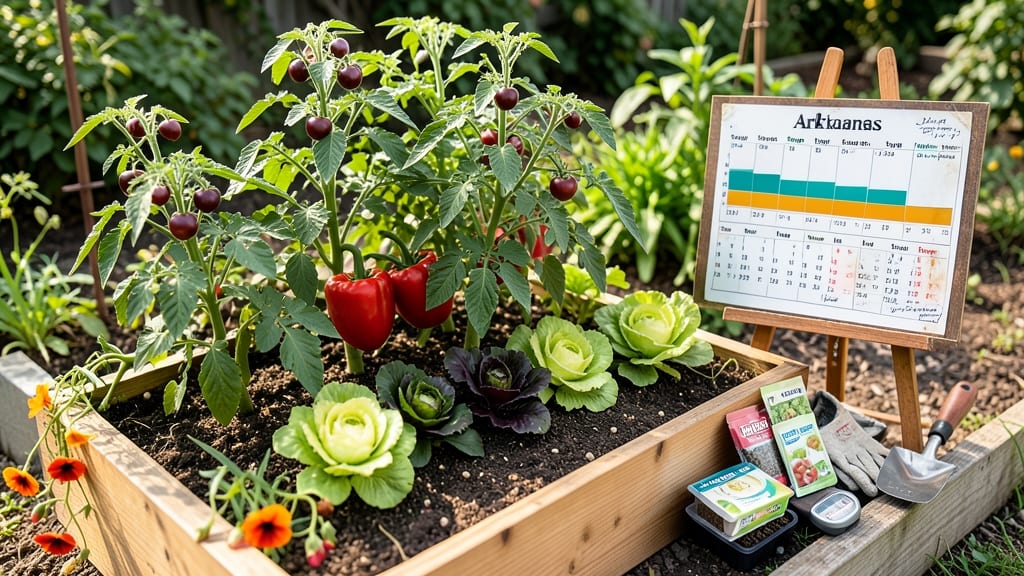
Planting a garden in Arkansas depends on your region’s frost dates and microclimates, with North Arkansas gardeners waiting until mid-April while South Arkansas can start as early as late February.
Arkansas gardeners know timing is everything—plant too early and face frost, too late and miss peak harvests. But with the state’s diverse microclimates (from the Delta’s humidity to the Ozarks’ cooler nights), the ‘perfect’ planting window varies wildly—even just miles apart.
Cool-season crops like broccoli and spinach thrive when soil temperatures hit 40°F, while warm-season favorites such as tomatoes and peppers need 60°F+ to germinate. Using a soil thermometer and checking local frost-free averages ensures you’re not left with wilted seedlings or empty harvests.
In this guide, I’ll break down the exact planting windows for Arkansas’ three key regions—Delta, Ozarks, and River Valleys—plus soil temperature tricks and moon-phase hacks to maximize your garden’s success.
Arkansas planting zones & frost-free date maps by region
Arkansas spans USDA Hardiness Zones 6b through 8a, creating dramatic differences in frost dates across just 200 miles. In the northwest mountains (Zone 6b), gardeners face last-frost dates around April 15, while the southeast Delta (Zone 8a) enjoys zero frost risk by March 1.
These variations mean your neighbor’s planting schedule might be 6 weeks off from yours!
Understanding these zones helps you time cool-season crops like spinach and broccoli for early spring planting, while warm-season crops like tomatoes and peppers need to wait until soil warms to 60°F+.
The Arkansas Extension Service recommends using local frost-free date maps (available via UAEX) to pinpoint your exact window.
Below is a region-by-region breakdown of Arkansas’ planting zones, including average last-frost dates, zero-frost-risk windows, and ideal planting periods for both cool and warm-season crops. Use this as your guide to avoid frost damage or missed harvests.
For cool-season crops, like kale, lettuce, and peas, plant as soon as soil is workable—typically 4-6 weeks before your last frost date. In Zone 6b, this means starting seeds indoors by February 1, while Zone 8a gardeners can direct-sow as early as January 1.
Warm-season crops, such as tomatoes, peppers, and cucumbers, require soil temperatures above 60°F. Use a soil thermometer to confirm readiness—most Arkansas regions hit this mark between April 15 and May 15, depending on elevation.
In the Delta (Zone 8a), you can plant 2 weeks earlier than in the Ozarks (Zone 7a).
Pro tip: Extend your growing season by using row covers or cold frames to protect early plantings. In Zone 6b, this can push your last-frost window back by 2-3 weeks, giving you more time for broccoli and spinach harvests before summer heat arrives.
Always check local weather trends—some years, unpredictable late frosts can hit as late as April 30 in Zone 7a. The Arkansas Climate Observatory provides real-time updates to help you adjust your schedule. For interactive maps, visit the UAEX Planting Calendar and enter your ZIP code.
Remember: Microclimates matter. A south-facing slope warms up faster than a north-facing valley, so adjust planting dates accordingly. Urban areas like Little Rock may experience heat islands, delaying frost slightly compared to rural zones.
By aligning your planting schedule with these region-specific windows, you’ll maximize yields and avoid common Arkansas gardening pitfalls. Happy planting—your tomatoes and peppers will thank you! 🌱
Microclimate adjustments: when to plant in Arkansas’ 3 key areas (Delta, Ozarks, River Valleys)
Arkansas’ three distinct regions—Delta, Ozarks, and River Valleys—each demand unique planting strategies. The Delta’s humid heat allows longer growing seasons, while the Ozarks’ cooler nights shorten them.
Even the River Valleys’ variable humidity can shift ideal planting windows by weeks. Understanding these microclimates helps you avoid frost damage or missed harvests.
In the Delta region (e.g., Pine Bluff, Helena), gardeners enjoy 100-120 frost-free days, perfect for warm-season crops like tomatoes and peppers. Meanwhile, the Ozarks (Eureka Springs, Fayetteville) typically have 80-100 frost-free days, favoring quicker-maturing varieties.
The River Valleys (Little Rock, Hot Springs) sit in between but face unpredictable humidity swings.
Here’s how to adjust your planting schedule for each region, including local heat island effects (like urban Pine Bluff) that can extend growing seasons by 1-2 weeks. Use these adjustments to maximize yields while avoiding frost risks.
For cool-season crops like lettuce or kale, the Delta’s early start (mid-March) gives you a 2-week head start over the Ozarks. In contrast, warm-season crops like okra or sweet potatoes thrive in the Delta’s heat but may struggle in the Ozarks’ shorter summers.
Use row covers in cooler regions to push early plantings.
In the River Valleys, monitor humidity levels—high moisture can delay germination. If your area experiences unpredictable rain, opt for drought-tolerant varieties like black-eyed peas or collard greens. These adapt better to Arkansas’ variable conditions.
Pro tip: Check your local Arkansas Cooperative Extension Service reports for real-time adjustments. For example, Pine Bluff’s urban heat island often allows earlier tomato plantings by 10-14 days compared to rural Delta areas. Adjust your schedule accordingly!
By aligning your planting with these region-specific windows, you’ll avoid common pitfalls like frost damage or bolting greens. Happy gardening—your Arkansas harvest awaits! 🌱