
Companion Plants
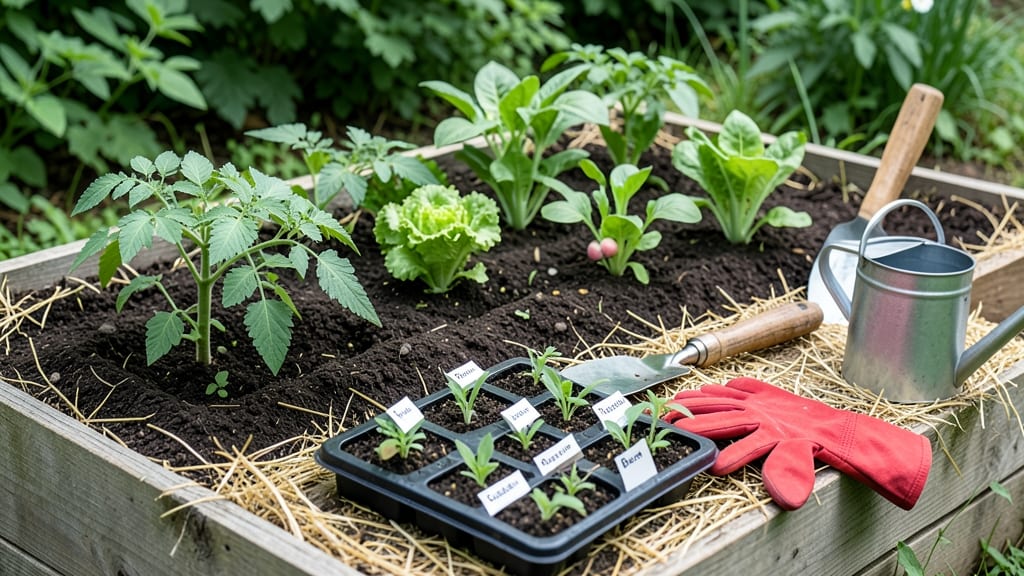
To plant a vegetable garden in Kansas, time your crops around frost dates: sow cool-season vegetables like peas and spinach 4-6 weeks before the last spring frost (late February to early April), and plant warm-season crops such as tomatoes and peppers 2-3 weeks after the last frost (mid-April to early May). Always verify with local USDA Zone 6 guidelines for accuracy.
Kansas's USDA Zone 6 climate means frost dates shift slightly between northern and southern regions, but the general rule holds: wait until soil temperatures consistently stay above 50°F for warm-season plants. 🌱 I've learned that checking a 10-day forecast helps avoid false starts—nothing's worse than planting too early and losing seedlings to a surprise frost.
For cool-season crops, starting seeds indoors 6-8 weeks before the last frost date gives them a head start, while direct-sowing hardy varieties like kale can happen as soon as soil is workable in early spring.
Microclimates play a huge role too—gardens near lakes or on south-facing slopes often warm up faster than those in low-lying areas. That's why I always test soil temperature with a simple thermometer before planting heat-lovers like peppers.
And don't forget succession planting: in Kansas's short growing season, staggered plantings every 2-3 weeks keep your harvest going for weeks longer than single plantings would.
💡 In This Article
- Kansas Frost Dates and USDA Zone 6 Planting Calendar
- Best Vegetables to Grow in Kansas by Season
Kansas frost dates and USDA Zone 6 planting calendar
Kansas's frost dates are influenced by its continental climate, where cold Arctic air clashes with warmer Gulf moisture.
The state spans USDA Zones 6a (average minimum -10°F) and 6b (-5°F), with northern regions like Salina typically seeing their last spring frost around April 15, while southern areas like Wichita may warm up by April 1.
These dates aren't fixed—historical records show a 14-day variation either side due to weather patterns like El Niño or La Niña. 🌡️
The key to accurate planting is monitoring soil temperature, not just air temperature. Warm-season crops like tomatoes need soil at 60°F for 10+ days straight, while cool-season crops tolerate 40-50°F soils. I've found that a simple soil thermometer (around $15) is worth its weight in saved seedlings.
For example, in Topeka (Zone 6a), the average last frost is April 20, but soil may not reach 60°F until May 5—planting too early risks stunted growth.
Microclimates create planting opportunities even outside average dates. South-facing walls or raised beds can warm 2-3°F faster than open ground, while low spots stay colder.
That's why I always scout my garden in late winter—last year, my south-facing raised bed was ready for peppers 10 days earlier than my north side. Container gardens also benefit, as potted soil warms up 30-50% faster than in-ground plots. 🌱
For precise timing, combine frost date averages with a 10-day forecast from the National Weather Service. Look for three consecutive days above 50°F nighttime temps before planting warm-season crops.
I've lost count of how many times I've seen "safe to plant" dates in the almanac only to get a -2°F dip the next week. Pro tip: Set calendar reminders for March 15 and September 15 to start tracking soil temps consistently.
Fall planting follows a similar logic but works backward from the first frost date. In Kansas, this typically occurs between October 15 (south) and November 1 (north).
Cool-season crops like spinach and radishes can handle light frosts, while tender greens like lettuce should be sown 6-8 weeks before your area's first frost. Last fall, my kale survived until December 10 after a 15°F night—proof that some plants thrive with frost's sweet touch. ✨
Advanced gardeners use a "planting window" approach rather than single dates. This means having two planting periods for many crops: one in early spring and another in late summer. For instance, bush beans can go in May 1-June 15 and again July 15-August 1 for a double harvest.
This strategy maximizes Kansas's 180-200 day growing season and accounts for our unpredictable weather.