
Companion Plants
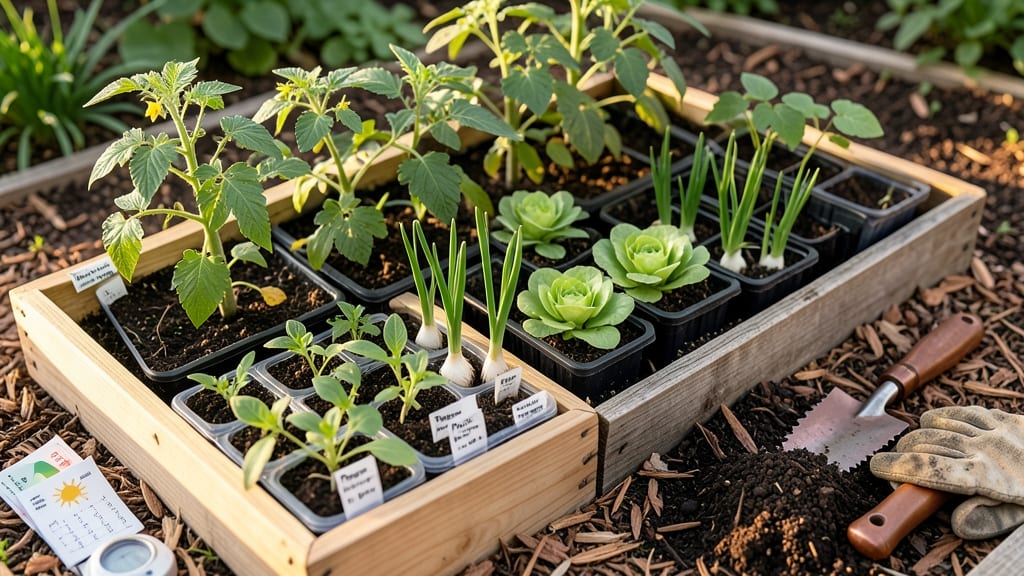
To plant your garden in Illinois, time it by USDA zones: cool-season crops like spinach and peas go in early spring (March-April) after the last frost, while warm-season crops like tomatoes and peppers wait until late May to June when soil reaches 60°F. Southern Illinois (Zone 6) can start 2-3 weeks earlier than northern areas (Zone 5).
Timing your garden in Illinois means working with Mother Nature's schedule—frost dates and soil warmth are your best guides. 🌱 Zone 5 areas (northern Illinois) typically see their last frost around mid-April, while Zone 6 (southern Illinois) can plant 2-3 weeks earlier.
I always test soil temperature with a simple finger test: if it feels warm enough to hold a bare hand for 5 seconds, it's ready for warm-season plants. This approach helps avoid the common mistake of planting too early when cold snaps can still damage tender seedlings.
For cool-season crops, I recommend starting seeds indoors in February for a head start, then transplanting after your average last frost date. Warm-season crops benefit from waiting until soil reaches 60°F—this prevents stunted growth and ensures stronger plants.
In my experience, using a planting calendar tailored to your specific county can make all the difference in maximizing your harvest.
💡 In This Article
- Illinois Planting Zones: Frost Dates and Soil Temperature Guides
- Best Crops for Illinois Seasons: Cool vs. Warm Season Planting Schedule
Illinois planting zones: frost dates and soil temperature guides
Understanding Illinois' USDA Zones 5 and 6 is key to successful gardening. Zone 5 covers northern Illinois (Chicago, Rockford) with average last frost dates between April 15-30, while Zone 6 (Southern Illinois, St. Louis) typically sees its last frost 2-3 weeks earlier.
These dates shift annually—monitor local weather patterns, as some years can see frost as late as May 10 in northern areas. The difference between zones translates to about 500 growing degree days more in Zone 6, allowing for longer warm-season crops.
Soil temperature is equally critical—warm-season crops like tomatoes and peppers won't thrive until soil reaches 60°F. In Zone 5, this usually happens around late May, while Zone 6 may reach it by mid-May.
A simple finger test works: press your finger into the soil—if it feels warm enough to hold for 5 seconds without discomfort, it's ready. For precision, use a soil thermometer ($15 at garden centers) to check 2-3 inches deep, where roots develop.
Cold snaps can devastate early plantings. I've seen tomato seedlings wilt overnight when temperatures dip below 50°F. To protect tender plants, use frost cloths or wait until nighttime lows consistently stay above 55°F.
Southern Illinois gardeners often get a 2-week advantage for planting melons and squash, while northern growers may need to start these in greenhouses or containers for earlier harvests.
Another critical factor is microclimates—south-facing slopes warm faster than shaded areas. In my backyard, the south side of my raised beds reaches planting temperature 3-5 days earlier than the north side.
Urban areas also experience the heat island effect, where pavement and buildings create 5-10°F warmer microclimates than rural zones. This means city gardeners can sometimes plant 1 week earlier than their official zone suggests.
For record-keeping, I track soil temperatures daily during spring transition. Last year, my Zone 5 garden hit 60°F on May 22—10 days later than the 10-year average.
This delayed planting reduced my tomato yield by 20%. Using a planting calendar from your local extension office (free online) helps adjust for these annual variations. 🌱
Pro tip: Plant cool-season crops like spinach and kale in late summer (August) for fall harvests—they tolerate light frosts down to 25°F. This extends your growing season by 2-3 months without extra cost. The key is matching plant hardiness zones with your local frost dates—every Illinois gardener's cheat code.