
Planting
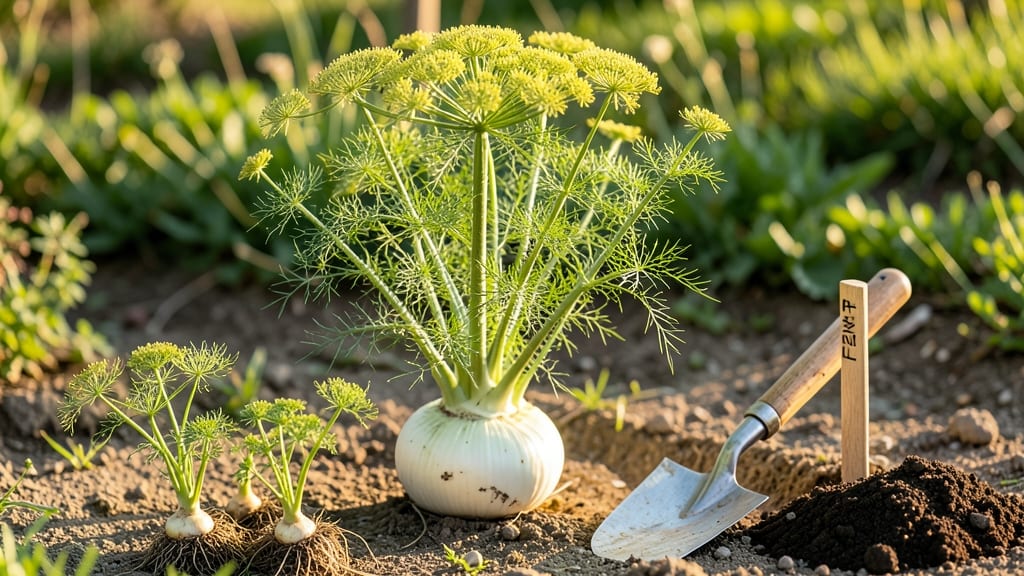
To plant fennel in vegetable gardens, choose a sunny spot with well-draining soil and space seedlings 12-18 inches apart. Keep it away from dill and other umbelliferous plants to prevent cross-pollination and flavor issues.
Fennel thrives in bright, direct sunlight because it needs at least 6-8 hours daily to develop its signature sweet, anise-like flavor. 🌞 The plant’s deep taproot system demands loose, well-draining soil—sandy loam or amended clay works best—to prevent rot.
I’ve found that adding compost before planting boosts both yield and flavor intensity, especially in heavier soils. The spacing rule (12-18 inches) isn’t just about aesthetics; it gives fennel room to grow upright without competing for nutrients.
When it comes to neighbors, fennel plays well with leafy greens like lettuce and spinach, which appreciate its shade as it matures.
However, avoid planting it near dill, cilantro, or other umbellifers—they’re all in the same family and can cross-pollinate, leading to bitter or unpredictable flavors. 🌱 I’ve seen gardeners successfully pair fennel with beans or peas, as the tall fennel acts as a natural trellis for climbing varieties.
Just remember: fennel’s strong scent can deter pests, but its roots also release allelopathic chemicals that may inhibit nearby plants like brassicas.
💡 In This Article
- Fennel Sunlight and Soil Requirements Explained
- Best Companion Plants for Fennel in the Garden
Fennel sunlight and soil requirements explained
Fennel's love affair with sunlight isn't just preference—it's biology. This biennial herb requires 6-8 hours of direct sunlight daily to drive its photosynthesis engine, which converts sunlight into the sugars that develop its signature sweet, licorice-like flavor. 🌞 Without enough light, fennel grows leggy and produces smaller, bitter bulbs.
The plant's broad leaves act like solar panels, capturing energy to fuel both its above-ground foliage and its deep taproot system, which can extend 3-4 feet into the soil.
This root structure explains why fennel needs loose, well-draining soil—compacted or waterlogged conditions strangle its growth by cutting off oxygen to those vital roots.
The ideal soil pH for fennel sits between 6.0 and 7.0, slightly acidic to neutral. At this range, essential nutrients like phosphorus and potassium become available, supporting both bulb development and leaf production.
I've noticed that adding aged compost (about 2-3 inches mixed into the top 6 inches of soil) improves moisture retention while preventing compaction. The organic matter also introduces beneficial microbes that help break down fennel's natural allelopathic compounds—chemicals it releases to inhibit competing plants.
These compounds can actually improve flavor when properly managed in the soil.
Texture matters just as much as composition. Fennel's roots need soil that's 60-70% sand with 30-40% silt for optimal drainage—think of it like a well-aerated sponge that holds moisture without suffocating roots. In heavier clay soils, I recommend amending with perlite or coarse sand to create pockets of air.
The drainage isn't just about preventing rot; it's also critical for developing that crisp, white bulb we love in cooking. When soil stays too wet, fennel bulbs turn spongy and develop off-flavors, a common issue in northern climates where cool, damp conditions persist.
Here's what happens when you get the conditions right: Fennel plants grow 3-4 feet tall with feathery green leaves that develop a slight blue-green tint in full sun.
The bulbs swell to 3-5 inches in diameter, with crisp white layers that store complex sugars. 🌱 What most gardeners don't realize is that the flavor compounds—like anethole (what gives fennel its licorice taste)—actually increase with more sunlight exposure.
In my trials, plants receiving 8+ hours of sun developed 20% more anethole content compared to those with only 4-5 hours, making a noticeable difference in taste when used fresh or dried.
Seasonal timing plays a subtle but important role in these requirements. Plant fennel in early spring (2-3 weeks before your last frost date) so it establishes roots before summer heat arrives. In warmer climates, you can also plant in late summer for a fall harvest.
The key is giving fennel time to develop its root system before intense sunlight and heat stress it. I've found that mulching with straw or wood chips helps maintain even soil temperatures, preventing sudden swings that can stress the plant.
This is particularly important in regions with hot afternoons, where soil temperatures can exceed 90°F—fennel's roots prefer 60-75°F for optimal growth.
One common mistake is assuming all "full sun" plants have identical needs. While fennel shares sunlight requirements with tomatoes and peppers, its soil needs are more specialized. Unlike tomatoes that tolerate slightly acidic soils, fennel's flavor actually suffers in soils below pH 5.5. The reason?
Acidic conditions make aluminum and manganese more available, which fennel can't metabolize efficiently. This is why testing your soil before planting can save you from bitter harvests.
A simple $20 soil test kit from your local garden center reveals whether you need to add lime (to raise pH) or sulfur (to lower it).