
Tools
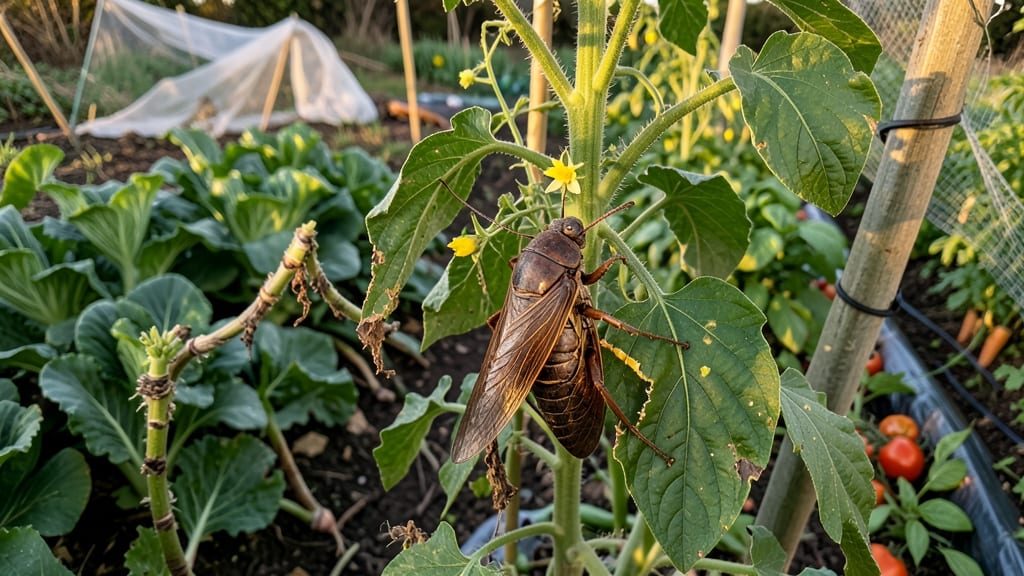
Your garden won’t be eaten by cicadas—they target tree sap and roots, leaving vegetables and ornamental plants untouched. While nymphs can harm young tree roots and adults may strip bark, they ignore most edible crops and foliage.
Cicadas have a specialized diet that focuses on trees, not your garden beds. 🌳 Adults use their sharp mouthparts to tap into xylem vessels in tree bark, sipping sap like nature’s straws, while their nymphs spend years underground feeding on root fluids.
This explains why you’ll rarely see them nibbling on lettuce or tomato leaves—they’re not equipped for that. The real damage comes when young trees are involved, where root-feeding nymphs can weaken structural support, but even then, mature plants usually shrug off the attack.
What’s fascinating is how cicadas avoid most garden plants entirely. Their biology is hardwired for xylem sap, which contains the nutrients they need to survive their dramatic life cycles.
This specialized diet means gardeners can relax about their veggies and flowers—unless you’re growing saplings that need extra protection during peak cicada years.
💡 In This Article
- How Cicadas Interact With Plants: Sap-Sucking vs Root Damage
- Protecting Trees and Sensitive Plants From Cicada Damage
How cicadas interact with plants: sap-sucking vs root damage
Adult cicadas don’t chew—they pierce. Their specialized mouthparts, called stylets, function like hypodermic needles, injecting enzymes into tree bark to break down cell walls and access the xylem sap beneath. This sap contains the sugars and nutrients cicadas need to fuel their 3-5 year life cycle above ground.
The process leaves behind small, precise holes about 1/16-inch wide, which is why you might notice vertical rows of tiny puncture marks on tree trunks during peak emergence seasons.
The real damage occurs underground where nymphs spend 13-17 years as root feeders. These subterranean stages tunnel into root systems, particularly targeting young trees with shallow root networks.
Their feeding creates a honeycomb pattern of tunnels that can weaken structural support, but mature trees with deeper roots typically recover. 🌱 What’s surprising is how selective cicadas are—they avoid herbaceous plants entirely because their mouthparts aren’t designed to penetrate softer tissues like leaves or stems, which explains why your vegetable garden remains untouched.
This biological specialization means cicadas act more like tree parasites than generalist pests. Their feeding strategy creates what entomologists call "sap-feeding pressure," which can stress trees during drought conditions when they’re already water-deprived.
The bark stripping by adults creates additional entry points for fungal infections, though the cicadas themselves aren’t spreading disease—they’re just opening doors for opportunistic pathogens.
What makes this even more interesting is how cicadas time their emergence with tree physiology. Many species emerge when trees are actively growing, maximizing their access to sap flow.
This synchronized timing explains why you’ll see cicadas most active during late spring to early summer—the perfect window when tree xylem pressure is highest and defenses are down from winter dormancy.
The exceptions occur with certain ornamental trees like willows, maples, and fruit trees, which cicadas find particularly appealing due to their high sap content. These species often show more visible damage from both adult feeding and nymph activity.
The key difference is that cicadas avoid plants with thick, fibrous bark or those that produce toxic sap compounds, which explains why your rose bushes and herb gardens remain cicada-free zones.
Understanding this plant-cicada dynamic reveals why gardeners rarely need to worry about their vegetable patches. The cicada’s entire life strategy revolves around trees, making them more of a forest management issue than a home gardener’s concern.
This biological specialization actually works in your favor—nature’s built-in protection system for your edible plants! 🌿