
Tools
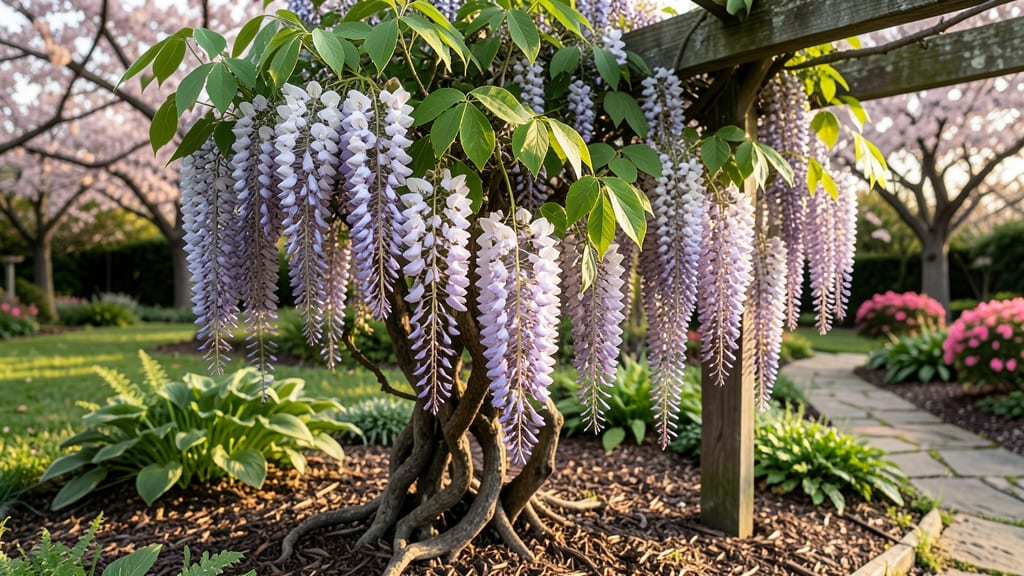
Wisteria in Japanese gardens embodies cultural depth as a symbol of humility and endurance, often cultivated as dramatic cascading trellises or sprawling ground covers. Its intoxicating lavender blossoms mark seasonal transitions, while meticulous pruning sustains its legendary, sprawling beauty across generations.
Japanese gardeners revere wisteria (fuji) for its dual role as both a living art form and spiritual symbol. 🌸 The plant's delicate yet resilient nature mirrors Zen principles of impermanence and harmony with nature, often featured in temple gardens alongside stone lanterns.
Its early spring blooms—before cherry blossoms—create a fragrant prelude to seasonal renewal, while traditional pruning techniques (like yorimizu shaping) transform it into iconic arched canopies or ground-hugging carpets.
What makes wisteria truly special in Japanese design is its adaptability—whether trained along verandas (engawa) or woven into bamboo frameworks (katsura).
The key to maintaining its signature form lies in seasonal pruning: aggressive cuts after flowering to encourage dense growth, and lighter trims in winter to shape the skeletal structure. Many gardeners swear by using sharp bypass pruners and sterilizing tools between cuts to prevent disease in these long-lived plants.
💡 In This Article
- Symbolism and Seasonal Significance of Wisteria in Japanese Culture
- Mastering Wisteria Pruning for Japanese Garden Design
Symbolism and seasonal significance of wisteria in Japanese culture
Wisteria's cultural significance in Japan stems from its embodiment of mono no aware, the bittersweet awareness of impermanence. The plant's fleeting lavender blooms—typically appearing in late March to early April, just before cherry blossoms—serve as a poignant reminder of nature's transient beauty.
In Zen gardens, wisteria's sprawling vines symbolize humility through their ground-hugging growth patterns, while their ability to climb and adapt mirrors the Japanese concept of wabi-sabi, finding beauty in imperfection.
The fragrance plays a crucial role too. Wisteria's intoxicating scent, described as a mix of grape and honey, creates sensory connections to Shinto purification rituals.
During Hana Matsuri (Flower Festivals), wisteria-lined paths become sacred spaces where visitors offer prayers. 🌸 This timing aligns with the Japanese lunar calendar's first month, marking the transition from winter's dormancy to spring's renewal—similar to how plum blossoms (ume) precede cherry blossoms (sakura) in the seasonal progression.
Architecturally, wisteria's training methods reflect Japanese design principles. The katsura style—where vines are woven through bamboo frameworks—creates living sculptures that frame garden views, while shakkei (borrowed scenery) techniques use wisteria to connect interior spaces with outdoor landscapes.
These methods demonstrate how wisteria bridges the spiritual and physical realms, much like the tsukubai stone basins used in tea ceremonies.
Color psychology also matters. The lavender blooms represent modesty and grace in Japanese aesthetics, contrasting with the more vibrant reds of maple leaves (momiji) that arrive later in autumn. This color harmony extends to traditional furisode kimono patterns, where wisteria motifs appear alongside cherry blossoms and bamboo.
The plant's ability to change from vibrant flowers to lush green foliage then golden hues mirrors the Japanese appreciation for seasonal transformation.
What most people overlook is wisteria's connection to water symbolism. In Japanese gardens, wisteria often grows near tsukubai or chozubachi (water basins), where its vines create natural canopies that reflect light onto the water's surface.
This interplay between plant, water, and stone embodies the three treasures of Buddhism—Buddha, Dharma, and Sangha—where wisteria represents the Sangha (community) through its communal growth patterns.
For modern gardeners, this means selecting varieties like Wisteria floribunda (Japanese wisteria) for its 15-20 foot vines and 6-inch flower clusters, or Wisteria sinensis for its slightly earlier blooming cycle.
The key is planting near structural supports that allow the vines to climb while maintaining their natural cascading habit—a balance that takes 5-7 years to achieve but lasts for centuries.