
Blooming
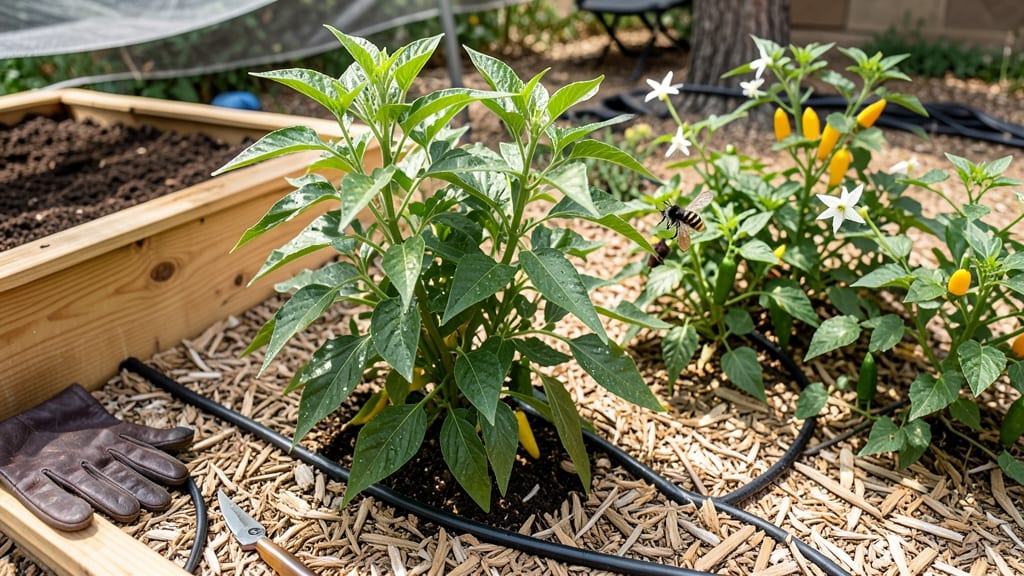
Gardening in New Mexico means embracing its arid climate and USDA Zones 4-9 by focusing on hardy plants like native shrubs, chiles, and squash while conserving water through mulch and drip systems. Begin with soil amendments to combat alkaline conditions and plant during cooler months to protect crops from extreme heat.
New Mexico's high desert environment presents unique challenges, but the right approach turns these into opportunities. 🌵 The state's elevation creates microclimates where Albuquerque's Zone 7 can grow peppers year-round while Santa Fe's Zone 5 needs frost protection for tender crops.
I've found that morning planting during spring's mild temperatures gives seedlings a head start before summer's intense sun arrives.
Water conservation is key here—drip irrigation delivers moisture directly to roots while mulch locks in soil moisture. Native plants like yucca and piñon pine thrive with minimal watering once established, making them perfect for beginners.
For edibles, New Mexico chile varieties and heirloom squash varieties have developed natural drought resistance over generations.
💡 In This Article
- New Mexico Plant Zones and Microclimates
- Top Drought-Tolerant Plants and Water-Saving Techniques
New Mexico plant zones and microclimates
New Mexico's gardening landscape is shaped by dramatic elevation changes that create distinct USDA plant zones. The state spans Zones 4 through 9, with the northern mountains reaching Zone 4 where winters dip below -30°F, while the southern deserts sit in Zone 9 with mild winters.
Albuquerque (Zone 7) experiences 100+ days above 90°F annually, while Santa Fe (Zone 5) has 120 frost-free days compared to Albuquerque's 180 days. This variation means your neighbor's successful tomato plants might struggle in your backyard.
The real magic happens in microclimates—small areas with unique conditions. A north-facing slope might stay 5-10°F cooler than your south-facing yard, creating pockets where you can grow Zone 8 plants in Zone 7 areas.
I've seen chile gardens thrive in sunken beds that stay 15°F cooler than surrounding soil during summer afternoons. Elevation also shifts growing seasons: plants at 7,000 feet (like in Los Alamos) may need 2-3 weeks longer to mature than those at 5,000 feet (like in Rio Rancho).
To identify your microclimate, observe these key factors: sunlight patterns (how long different areas stay in shade), wind exposure (which can dry soil faster), and moisture retention (low spots collect more winter snowmelt).
Plant a test crop like bush beans—if they thrive in one spot but fail in another, you've found a microclimate boundary. 🌱 For precise zone mapping, check the New Mexico State University Extension resources which include detailed county-specific growing degree day calculations.
Timing is everything in New Mexico's short growing seasons. In Zone 7 areas, start cool-season crops like lettuce and peas in late February for harvest before summer heat arrives. Zone 5 gardeners should wait until mid-May when soil temperatures reach 55°F.
The key is planting when daytime highs are 70-75°F and nights stay above 50°F—this sweet spot gives plants optimal energy without stress. I've learned that planting too early leads to bolting (when plants flower prematurely) in crops like spinach.
Elevation affects more than just temperatures—it changes atmospheric pressure, which impacts plant respiration. At higher elevations, plants grow more slowly but develop stronger root systems to access limited oxygen. This is why many New Mexico chile varieties have thicker stems and deeper roots than their lower-elevation cousins.
For container gardening in high zones, use well-draining potting mixes with added perlite to prevent waterlogging from reduced evaporation rates. 💧
One surprising adaptation is how some plants actually prefer New Mexico's conditions. Native yuccas and agaves thrive in Zone 5-7 areas because their deep root systems access groundwater while their thick leaves minimize water loss.
Even non-native crops like New Mexico's famous Hatch chiles have adapted to grow best when transplanted after the last frost in late April, maturing just in time for the 90°F+ summer heat that enhances their sweetness.
For gardeners new to the state, begin with a soil test to understand your specific conditions—New Mexico soils often have high pH (alkaline) that affects nutrient availability. The New Mexico State University Soil Testing Lab offers affordable tests that reveal your exact calcium, magnesium, and potassium levels.
Armed with this data, you can make precise amendments like sulfur to lower pH or gypsum to improve soil structure. Remember, the goal isn't to fight New Mexico's climate but to work with its natural rhythms. ✨