
Shrubs
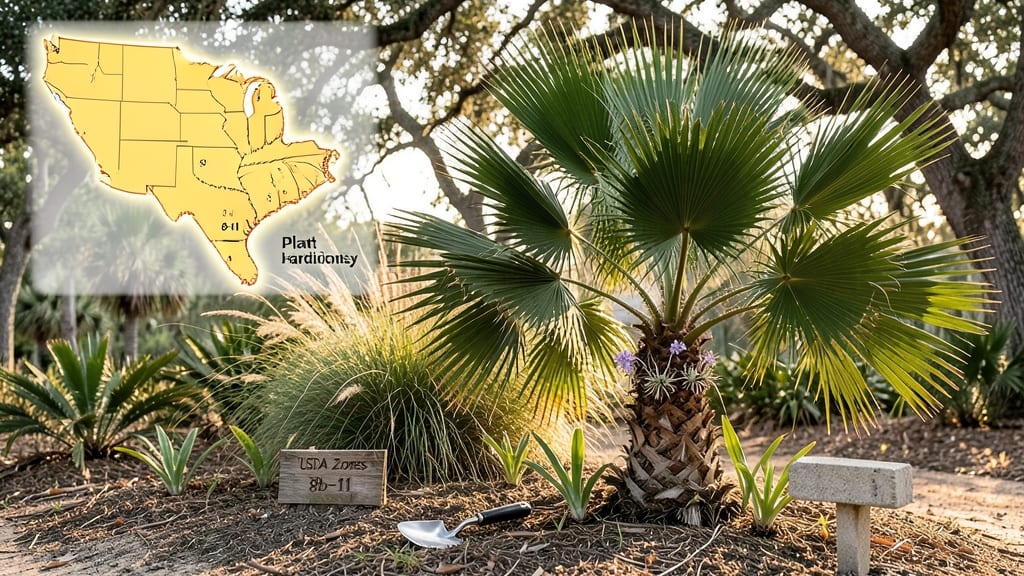
Understanding Florida’s gardening zones helps you select plants that thrive in your specific area, as the state spans USDA Zone 8a in the Panhandle to Zone 11 in the Keys. Microclimates mean even neighboring counties may have different frost risks, so always verify your exact location on the USDA Plant Hardiness Zone Map.
Florida’s unique geography creates dramatic differences in growing conditions.
Coastal areas like Miami experience nearly frost-free winters, while inland regions near Gainesville can see light freezes. 🌿 For example, citrus trees flourish in North Florida’s Zone 9, but the same variety might struggle in South Florida’s Zone 10 if not properly acclimated.
The Florida Climate Center’s county-specific data can help you fine-tune your selections beyond just the USDA zones.
What makes this especially important is Florida’s humidity and seasonal rainfall patterns. Tropical plants like hibiscus and bougainvillea thrive in the southern zones, while North Florida gardeners often opt for drought-tolerant shrubs like yaupon holly.
Even within a single zone, elevation changes—like those in the Everglades versus the Ocala National Forest—can create microclimates that affect planting success.
💡 In This Article
- How Florida’s Microclimates Affect Plant Hardiness Zones
- Best Plants for Each Florida Gardening Zone by Region
How Florida’s microclimates affect plant hardiness zones
Florida’s gardening zones aren’t just about temperature—they’re shaped by complex interactions between humidity, coastal winds, elevation, and even urban development. For instance, the Panhandle’s Zone 8a experiences 2,000-2,400 heating degree days annually, while Miami’s Zone 11 sees over 10,000 heating degree days, creating a 5x difference in heat accumulation.
This gradient explains why citrus thrives in North Florida but requires winter protection in Central Florida’s Zone 9.
The Atlantic and Gulf coasts create dramatic variations. Coastal areas like Fort Lauderdale benefit from moderating ocean breezes that prevent extreme temperature swings, while inland cities like Orlando experience higher nighttime lows due to urban heat islands.
Even elevation matters—hills in the Apalachicola region can drop temperatures 5-10°F colder than nearby valleys during rare freezes. 🌊 These microclimates mean a plant that survives in Jacksonville’s Zone 8b might struggle just 50 miles south in Gainesville’s Zone 9a.
Humidity plays a critical role too. Southern Florida’s 80-90% relative humidity year-round supports tropical plants like royal palms, while North Florida’s 50-70% humidity favors more drought-tolerant species.
The Florida Climate Center tracks these patterns, showing how coastal areas have fewer than 50 frost-free days annually (Zone 11), compared to over 300 frost-free days in the Panhandle. This explains why frost-sensitive plants like avocados grow only in South Florida.
Urban areas add another layer. Cities like Tampa create "heat domes" where pavement and buildings trap warmth, pushing microclimates into higher zones. Meanwhile, rural areas maintain cooler conditions. This is why a Zone 9b plant might thrive in downtown Tampa but require winter protection just 10 miles outside the city.
The USDA map shows these variations through 10°F increments, but Florida’s real-world differences often occur in 5°F shifts over short distances.
Water availability compounds these factors. South Florida’s high water tables support mangroves and cypress, while North Florida’s sandy soils drain quickly, requiring drought-resistant plants. Even within zones, rainfall patterns vary—Central Florida gets 50 inches annually, while the Keys receive over 60 inches.
These moisture differences explain why some plants thrive in one region but wilt in another despite similar temperature zones.
What this means for gardeners is that zone alone isn’t enough—you must consider your specific microclimate. Coastal? Expect salt spray tolerance. Inland? Plan for drought. Urban? Account for heat retention.
The Florida-friendly Landscaping™ program recommends checking local extension offices for hyper-local advice, as even 1-mile elevation changes can shift your effective growing zone by half a letter.