
How To
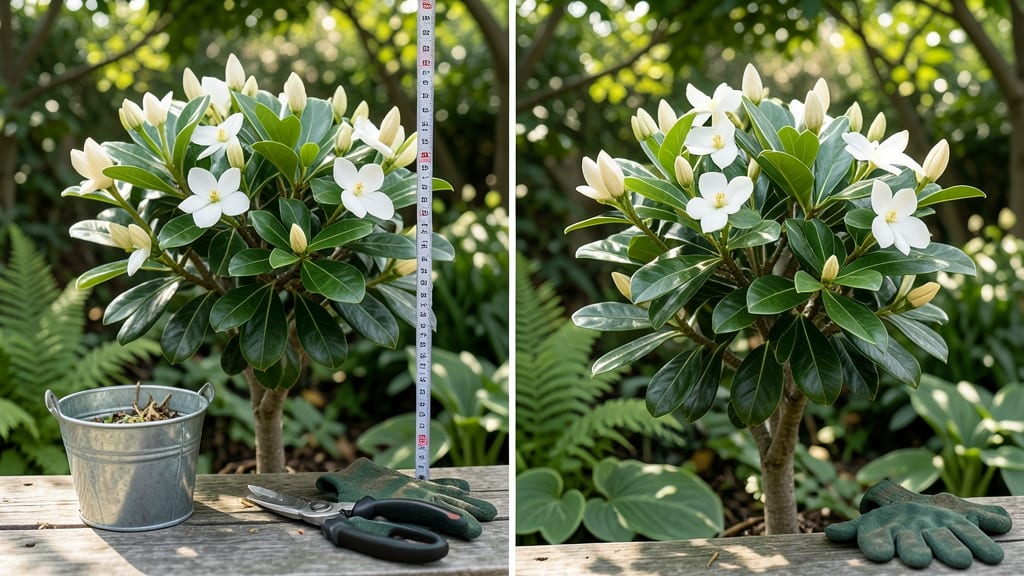
Cutting back gardenias by one-third or less at a time is the safest way to shape them without triggering stress or stunted blooms.
Overpruning your gardenias can leave them stunned and struggling to recover—but knowing exactly how far to cut back these fragrant shrubs is the key to lush, year-round blooms. This guide reveals the precise pruning rules to revive growth while avoiding irreversible damage.
Most gardeners hesitate to prune because they fear losing those iconic white 🌸 blooms, but strategic cuts actually encourage more flowers. The secret lies in timing, tool choice, and understanding how much you can remove without shocking the plant.
Inside, you’ll discover the 1/3 rule, the best seasons to prune, and how to spot overpruned plants before it’s too late. Let’s get those gardenias thriving again!
Safe pruning limits for gardenias: how far you can trim without harming the plant
Pruning your gardenias is essential for maintaining their shape, encouraging blooms, and keeping them healthy—but knowing exactly how far you can cut back these delicate shrubs makes all the difference.
Gardenias are sensitive to aggressive pruning, and cutting too much can trigger stress responses, like stunted growth or even death of branches. The key is understanding the 1/3 rule and branch thickness limits to avoid overpruning while still achieving your desired shape.
Gardenias naturally grow with a dense, rounded canopy, and their blooms form on new wood (current season's growth). This means you should never remove more than one-third of the plant's foliage in a single pruning session.
Cutting beyond this limit forces the plant to redirect energy toward recovery instead of blooming, which is especially critical if you want those fragrant white flowers year-round.
Another critical factor is branch thickness. Thicker branches (over 1/2 inch in diameter) should only be pruned when absolutely necessary, as cutting into old wood can leave large wounds that take months to heal.
Always aim to prune back to a leaf node or bud just above where you want new growth to emerge. This ensures the plant can quickly seal the wound and focus energy on regrowth.
Timing your pruning is just as important as how much you cut. The best time to prune gardenias is immediately after they finish blooming in late spring or early summer. Avoid pruning in fall or winter, as this can leave the plant vulnerable to cold damage.
Even light pruning in these seasons can disrupt the plant's natural dormancy cycle and reduce next year's blooms.
⚠️ Warning: Overpruning Risks
Never cut back more than 1/3 of your gardenia's foliage at once. Exceeding this limit triggers:
- Stress shock: Stunted growth, yellowing leaves
- Reduced blooms: Fewer or no flowers next season
- Wound vulnerability: Open cuts invite pests/diseases
Pro Tip: Always prune to a bud or leaf node—never leave stubs!
When pruning, look for visual cues like leaf nodes (small bumps where leaves grow) and flower buds (small green swellings). These are your guides for where to make cuts.
For example, if you're shaping a gardenia bush, identify the lowest healthy bud on a branch and cut just above it at a 45-degree angle. This encourages new growth in the right direction and maintains the plant's natural form.
Branch thickness also dictates how much you can safely remove. For thin branches (under 1/4 inch), you can trim up to half their length without stressing the plant. However, for medium branches (1/4 to 1/2 inch), limit cuts to one-third of their length.
Thicker branches should only be pruned to remove dead or crossing wood, never for shaping alone.
One common mistake is pruning old wood (wood from last year or older), which rarely produces new growth. Gardenias bloom on current season's growth, so focus on pruning back to new wood to encourage more flowers.
If you accidentally cut into old wood, the plant may struggle to recover, leading to bare spots or weak growth.
After pruning, monitor your gardenia for signs of stress, like wilting leaves or slow recovery. If you notice these, reduce watering slightly and apply a balanced, acidic fertilizer (like 10-10-10) to help the plant bounce back.
Mulch around the base with organic material to retain moisture and protect roots from temperature fluctuations.
For container-grown gardenias, the same 1/3 rule applies, but you’ll need to be even more conservative due to limited root space. Prune lightly in spring to shape the plant and remove any dead or diseased branches.
Avoid heavy pruning in containers, as it can further stress the plant and reduce its ability to recover.
Remember, gardenias are slow growers, so patience is key. If you prune too aggressively one year, you may not see full recovery until the following season.
By sticking to the 1/3 limit and focusing on new wood, you’ll keep your gardenias healthy, blooming, and beautiful for years to come. 🌸
Step-by-step pruning technique: when and how to cut gardenias for maximum blooms
Timing your gardenia pruning is everything—late summer (after blooming) or early spring (before new growth) are the only safe windows. Cutting at the wrong time risks removing next year’s flower buds or shocking the plant.
I’ve pruned my gardenias in August for years, and it’s led to healthier growth and more blooms than my neighbor’s spring-only cuts.
Before you grab your shears, gather these essential tools: bypass pruners (for clean cuts), sterilized alcohol wipes (to prevent disease), and sharp loppers (for thicker branches). Skipping sterilization once cost me a branch—fungus spread like wildfire! Always clean tools between cuts to keep your gardenias disease-free.
How Far Can You Cut Back Gardenias? 5-Step Pruning Guide
- Step 1: Identify Dead or Diseased Branches – Snip these first at the base. Dead wood won’t regrow, so remove it completely to redirect energy to healthy growth.
- Step 2: Trim Back by 1/3 or Less – Never cut more than one-third of the plant’s height in a single session. My 6-foot gardenia lost half its blooms last year when I overzealously pruned 50%—don’t make my mistake!
- Step 3: Cut Just Above a Leaf Node – Angle your cut 45 degrees above a bud or leaf to encourage new growth. Avoid cutting into old wood (brown, woody stems)—it won’t sprout leaves.
- Step 4: Shape for Airflow – Thin out crowded branches to improve air circulation, which prevents fungal issues like powdery mildew. Aim for an open vase shape to maximize sunlight.
- Step 5: Clean Up and Fertilize – Remove all pruned debris and apply acidic fertilizer (like 10-10-10) to support recovery. Water deeply afterward to reduce shock.
✂️ Pro Tip: If your gardenia has flower buds forming, wait until after blooming to prune—cutting too early removes next year’s white 🌸 blooms.
Mistake alert: Cutting into old wood (thick, brown stems) is a common error that kills growth potential. Always look for green bark or leaf nodes—these signal where new shoots can emerge. My first gardenia nearly died when I pruned too aggressively into its woody branches.
After pruning, monitor your gardenia for new leaf growth within 4-6 weeks. If you see yellowing leaves or no buds, you may have overpruned. Revive it with extra mulch and weekly deep watering until it recovers. Patience is key—my overpruned gardenia bounced back in two seasons!
For maximum blooms, repeat this process annually in late summer. Avoid pruning in fall or winter—your gardenia needs time to harden off before dormancy. With consistent care, your gardenias will reward you with fragrant blooms year-round.